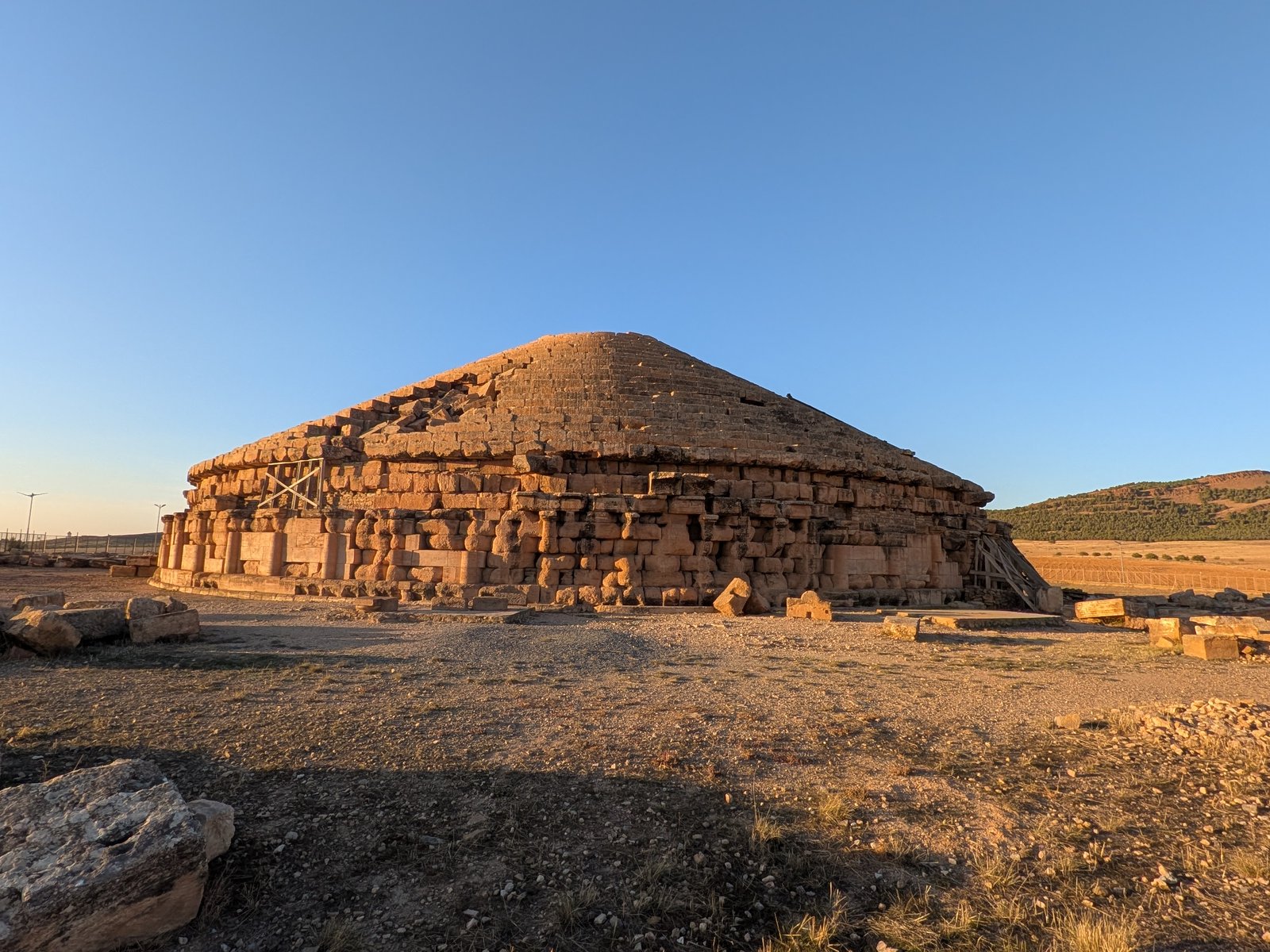
A massive circular stone tomb standing alone on a hill about 15 kilometres east of Tipasa, visible from the main highway. The Romans called it the "Tombeau de la Chretienne" — the Tomb of the Christian Woman — though it predates Christianity by centuries. It was built in the 3rd century BC as a royal burial monument for the kings of Mauretania, the Berber kingdom that once controlled much of North Africa.
The structure is about 60 metres in diameter and 30 metres high, built from huge stone blocks arranged in a stepped cone shape that clearly echoes Egyptian pyramid design. A narrow passage spirals through the interior to a central burial chamber. The tomb was looted in antiquity and little was found inside when it was excavated, but the architecture itself is the attraction — a monumental reminder of a powerful North African civilisation that existed long before the Romans arrived.
The site is not always staffed and facilities are minimal. It sits on an exposed hilltop with wide views over the Mitidja Plain and the sea. Combined with the main Tipasa ruins, it makes for a full day of ancient history.