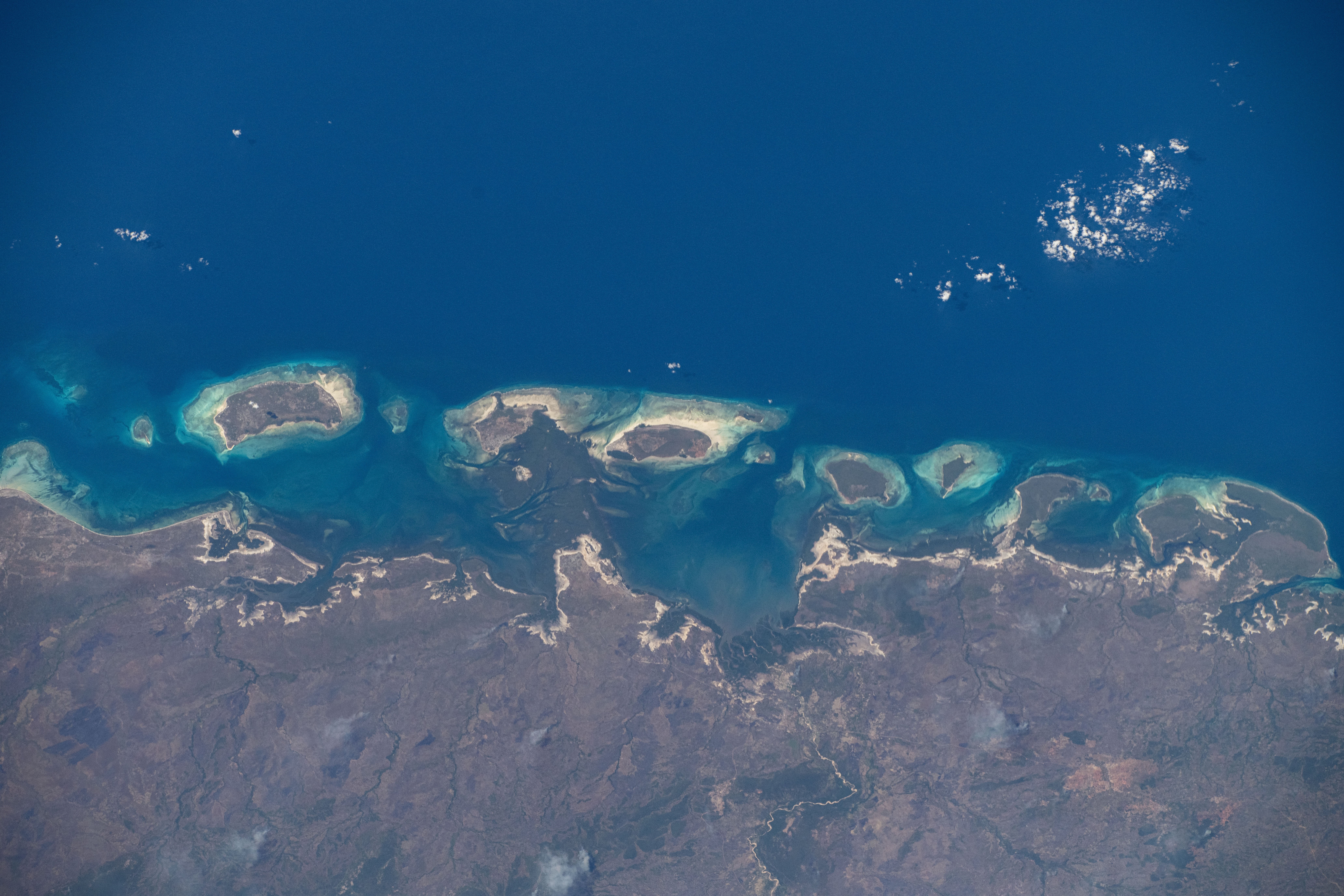
Northern Mozambican coral archipelago of Swahili islands, old Portuguese forts, and remote reef systems.
The Quirimbas Archipelago is a chain of around thirty coral islands stretching 250 kilometres down the northern Mozambican coast from near the Tanzanian border to just north of Pemba. The islands vary from barely-there sandbars exposed only at low tide to larger inhabited islands with centuries of Swahili history. Most fall within the Quirimbas National Park, established in 2002, which protects one of the least-disturbed coral reef systems in the western Indian Ocean.
The most historically significant island is Ibo, a Swahili trading settlement that later became one of the most important Portuguese colonial towns on the East African coast. Its three Portuguese forts, crumbling colonial mansions, and silversmiths working with techniques unchanged for generations give it a texture rare anywhere in Africa. North of Ibo, the islands become progressively more remote: Quirimba Island (which gives the archipelago its name), Matemo, and Medjumbe have varying levels of tourist infrastructure, from low-key fishing communities to exclusive lodge operations.
The reef system that runs the length of the archipelago is in excellent condition compared to much of the East African coast. The Quirimbas has been less impacted by bleaching events than the reefs of Kenya or Tanzania to the north, and the fishing villages on the islands have traditionally used reef fish sustainably. Diving visibility is typically 20-30 metres; the walls outside the main channels drop steeply and attract large pelagics. Whale sharks pass through between November and March, and humpback whales are present from July to October.
The main base for the archipelago is Pemba, the provincial capital of Cabo Delgado, 30 kilometres to the south. Pemba has an airport with connections to Maputo, and boat or charter plane transfers to the islands. Note that Cabo Delgado has experienced a serious insurgency since 2017 in its northern districts; the Quirimbas islands and the Pemba area have been less directly affected, but travellers should check current security advice before visiting.
Destinations in the Quirimbas Archipelago
Guide
Getting There
The gateway to the Quirimbas Archipelago is Pemba, the provincial capital of Cabo Delgado, served by daily flights from Maputo (about 1 hour 40 minutes). LAM Mozambique operates regular services; check current schedules as frequencies change.
From Pemba, getting to the islands requires either a speedboat (1.5–3 hours to Ibo depending on sea conditions), a local dhow (half a day to a full day), or a charter flight (15–30 minutes). Most lodges on Ibo and the northern islands arrange transfers from Pemba airport. Individual travellers without a lodge booking can hire a speedboat from Pemba waterfront or arrange a dhow from the fishing village at Wimbi Beach.
Security note: The northern part of Cabo Delgado province has experienced a serious insurgency since 2017, particularly around Mocímboa da Praia and Macomia to the north. The Pemba and Ibo area has been less directly affected, but the security situation can change. Check current travel advisories from your government before booking.
Guide
When to Go
The best time to visit is during the dry season, from May to October. June, July, and August offer the most reliable weather: low humidity, light winds from the south, and excellent diving visibility. This is also the period when humpback whales (July to October) congregate in the channels between the islands, and boat trips for whale watching are available from Ibo.
The wet season runs November to April. December and January are the hottest and most humid months; the cyclone season peaks between January and March and can make sea crossings uncomfortable or impossible. That said, whale shark aggregations occur November to March, and operators from Ibo run snorkelling trips with these animals when they are present.
April and May (the tail of the wet season) can offer good value: the rains have mostly finished by May, the vegetation is green, and lodge prices are lower than in the dry-season peak. The sea is typically calm by late April.