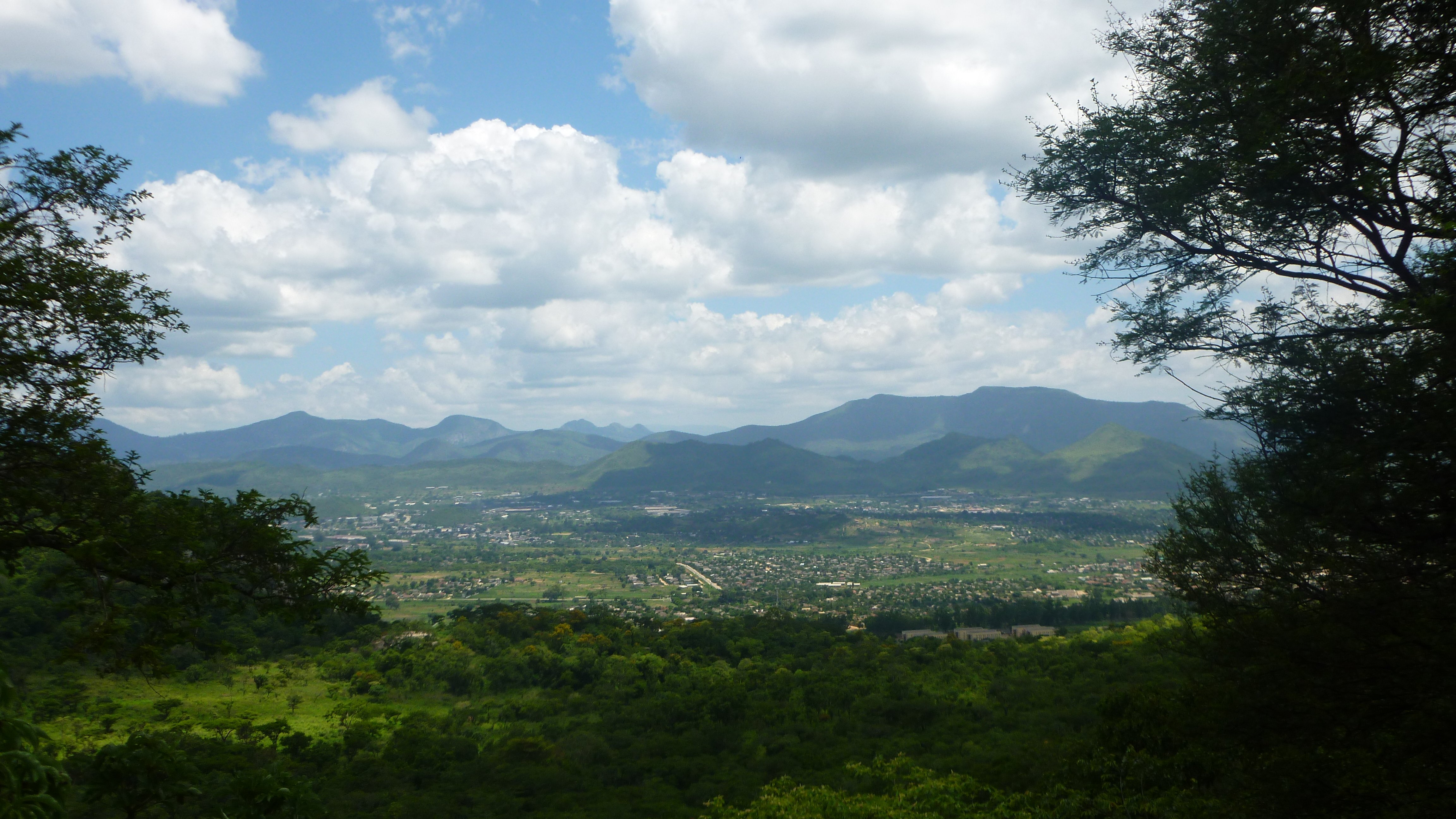
The Eastern Highlands are Zimbabwe's most dramatic landscape — a chain of mountain ranges running along the Mozambique border from Nyanga in the north to Chimanimani in the south. After the flat bushveld that covers most of the country, the sudden rise of forested peaks, mist-draped valleys and rushing streams comes as a genuine surprise. Altitude brings cooler temperatures and higher rainfall, which together produce ecosystems found nowhere else in Zimbabwe.
Mutare is the main town and the natural gateway to the region, a practical base in a narrow valley with good transport connections. From here, the highlands fan out in three directions. North of Mutare, Nyanga National Park holds Mount Nyangani — Zimbabwe's highest peak — and the Mtarazi Falls, which drop nearly 800 metres into the Honde Valley. South of Mutare, the Vumba Mountains rise into montane forest thick with orchids, ferns and forest birds, with the Bvumba Botanical Gardens the most visited point. Further south still, Chimanimani National Park offers the most serious walking in Zimbabwe, through a remote quartzite range where the trails are rough and the rewards considerable.
The region is among the finest birdwatching destinations in southern Africa, with species profiles that shift dramatically with altitude. The Eastern Highlands get far fewer visitors than Zimbabwe's better-known parks, which is part of their appeal. Roads are mostly in reasonable condition by local standards, and much of the scenery is accessible by car.