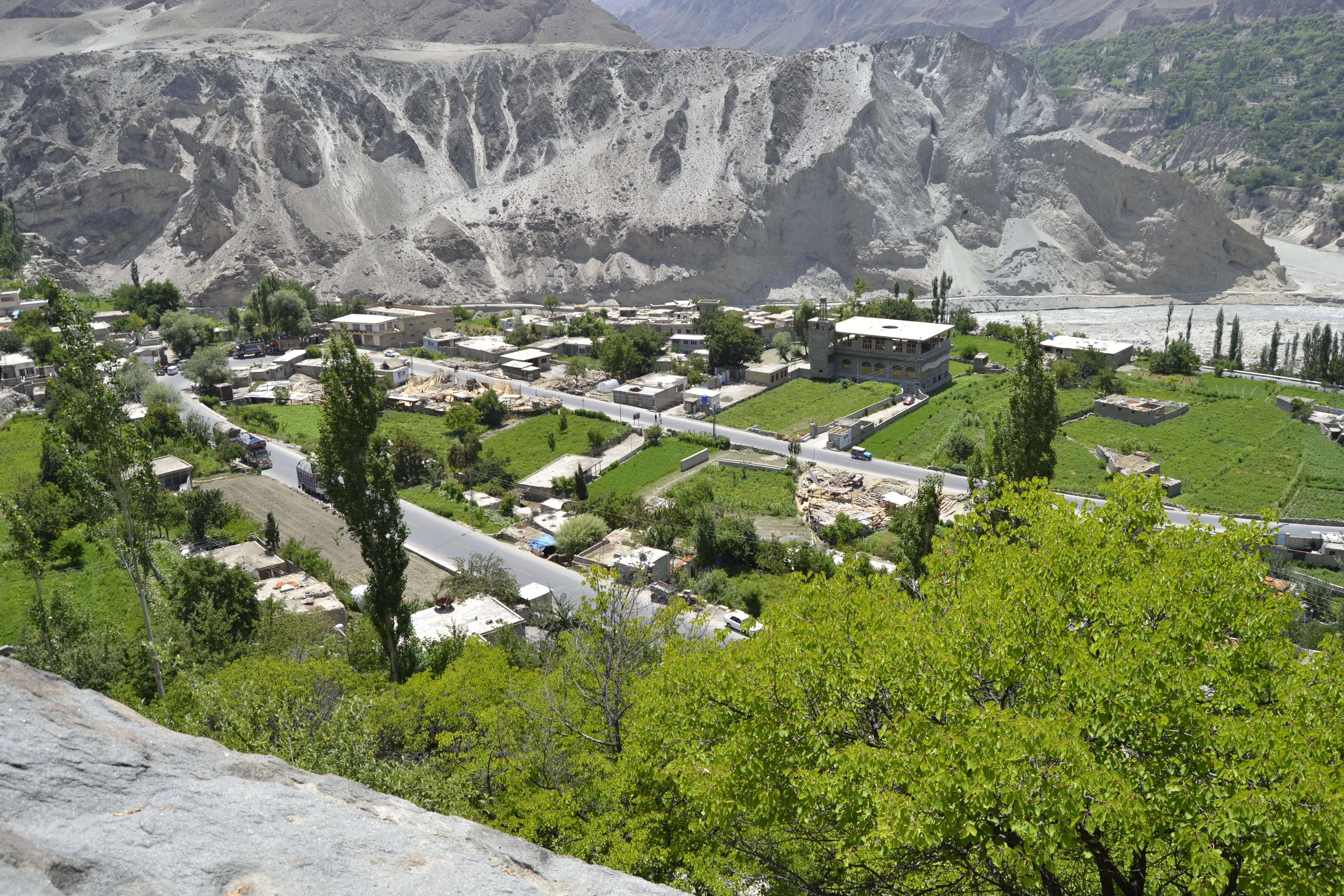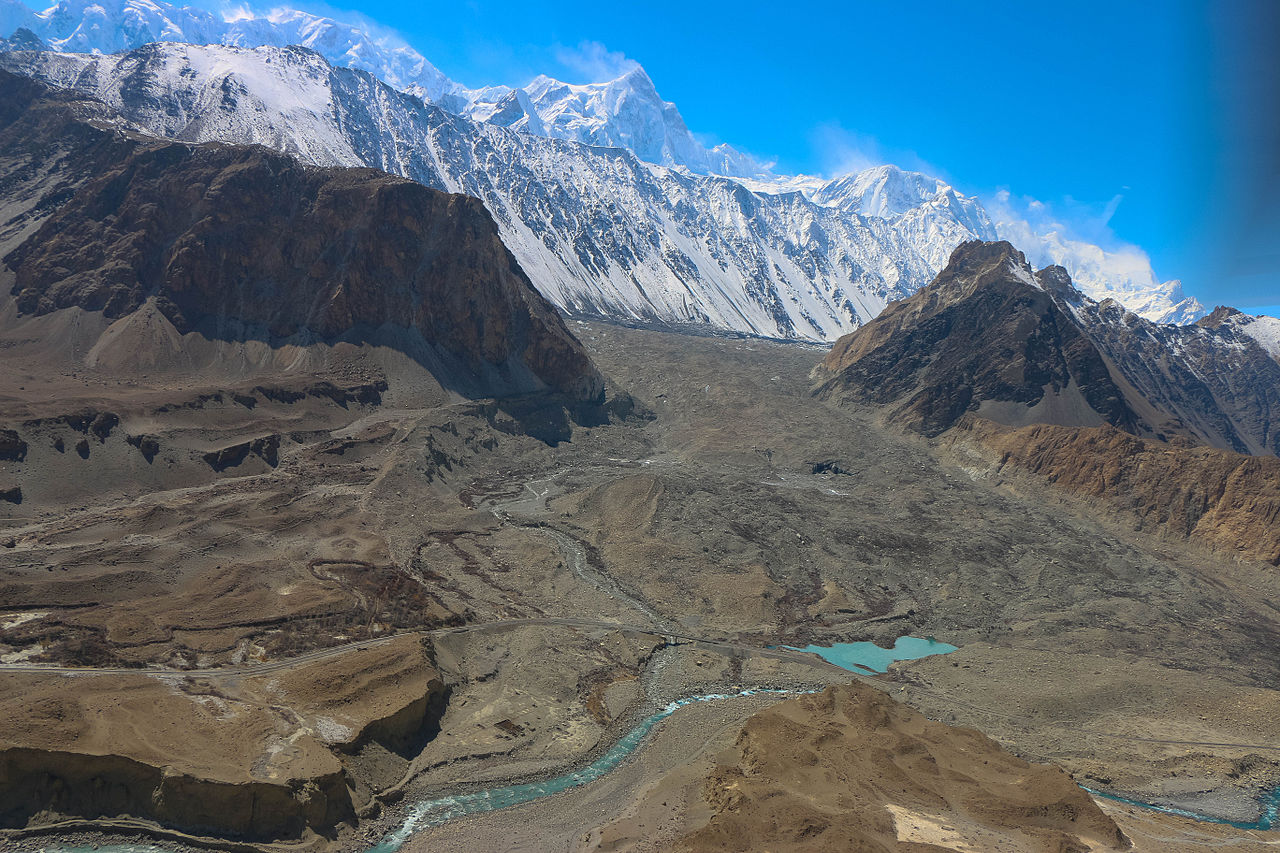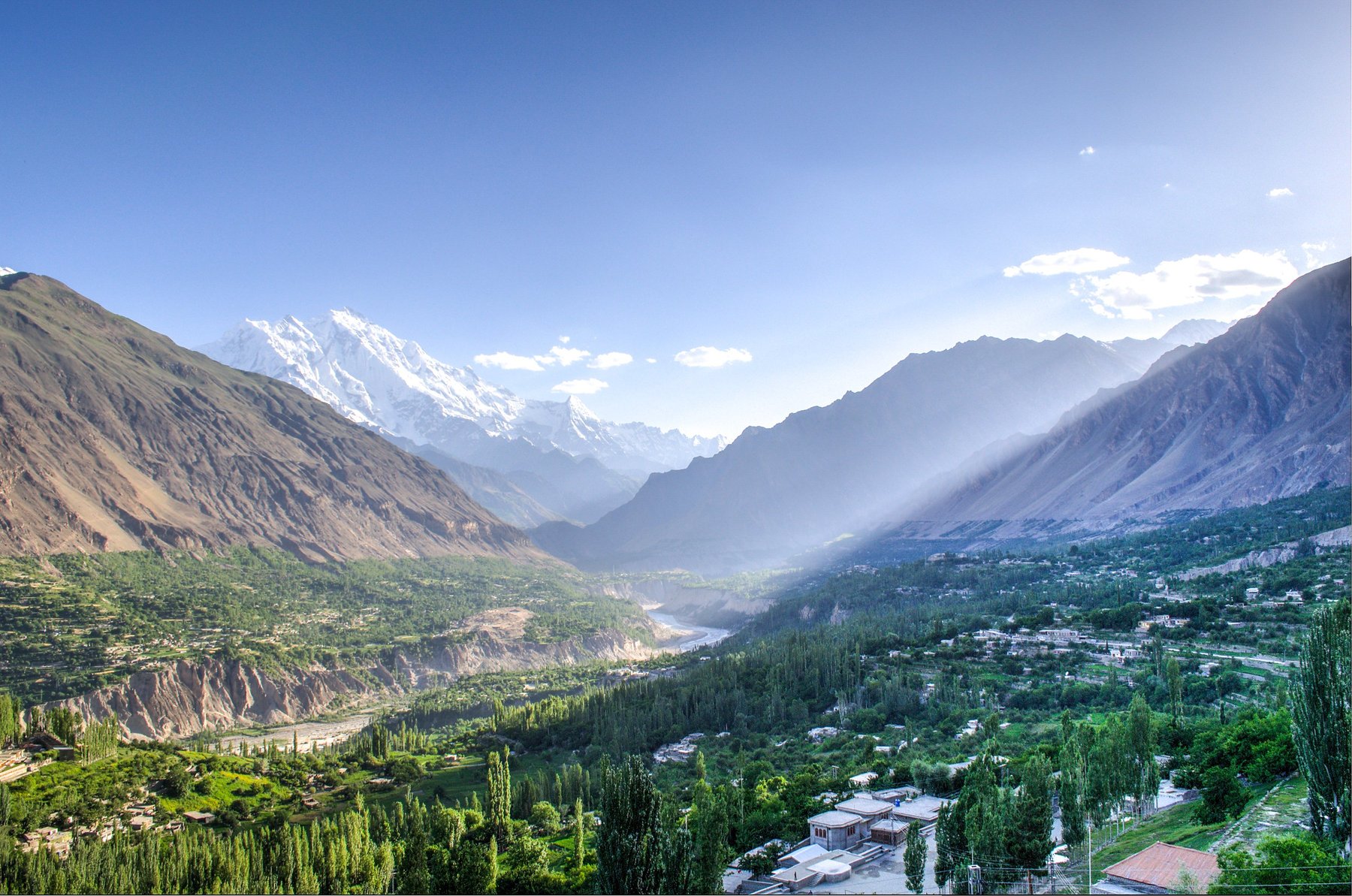
The Hunza Valley is the great prize at the top of Pakistan — a long, irrigated green slot in the Karakoram, ringed by 7,000-metre peaks, with the Karakoram Highway threading down its length and apricot orchards spilling off every terrace. Coming up from Gilgit you round a bend and there it is: Rakaposhi (7,788 m) filling the windscreen, snow on its summit and pasture at its base, and across the river, the old fort town of Karimabad with Baltit Fort perched above it on a knob of rock. For many travellers, this is the moment they have been waiting for since the plane to Islamabad.
For centuries Hunza was effectively cut off from the world. When a British emissary first paid his respects, the Mir of Hunza is said to have informed him that there were four great empires on earth — China, Britain, Russia, and the Valley of Hunza. Today the kingdom is gone but the self-confidence is not, and Hunza remains its own place: largely Ismaili, unusually literate, famously hospitable, and quietly proud of an irrigation system so ingenious that the channels look engineered for a sci-fi film.
Karimabad is the natural base. Wander up to Baltit Fort (rebuilt with Aga Khan funding and worth the climb), then across the slope to the older Altit Fort in its tangle of stone-and-timber alleys. Walk the channel above town to the Eagle's Nest viewpoint at sunset, when Rakaposhi, Diran, Ultar I and II, and Ladyfinger all light up in turn. Serious walkers should hire a guide and head up the Ultar gorge above Karimabad — a steep day-hike to the meadow at the foot of Ultar Sar that ranks with anything in the range. North up the highway, the valley opens into Gojal: the Passu Cones on the back of the 50-rupee note, the Hussaini suspension bridge, Attabad Lake, and the road climbing all the way to the Khunjerab Pass and China.
The best time to come is contested. Spring (April) is apricot blossom season — the orchards turn pink and white against the snow peaks, and the valley is at its prettiest. Summer (June to September) is high trekking and fruit-harvest season, with long warm days and the high passes open. Autumn (October) brings gold and red poplars and the clearest mountain air of the year. Winter shuts down most of the lodges but rewards anyone who comes anyway with empty trails and unbroken silence.
A note on the practicalities: the Karakoram Highway is one of the great roads of the world but it is also a working mountain highway, prone to landslides and long delays. Allow buffer days. And try the apricots — fresh, dried, in soup, in bread, and pressed into oil. Hunza claims ten ways of preparing them and may be underselling itself.