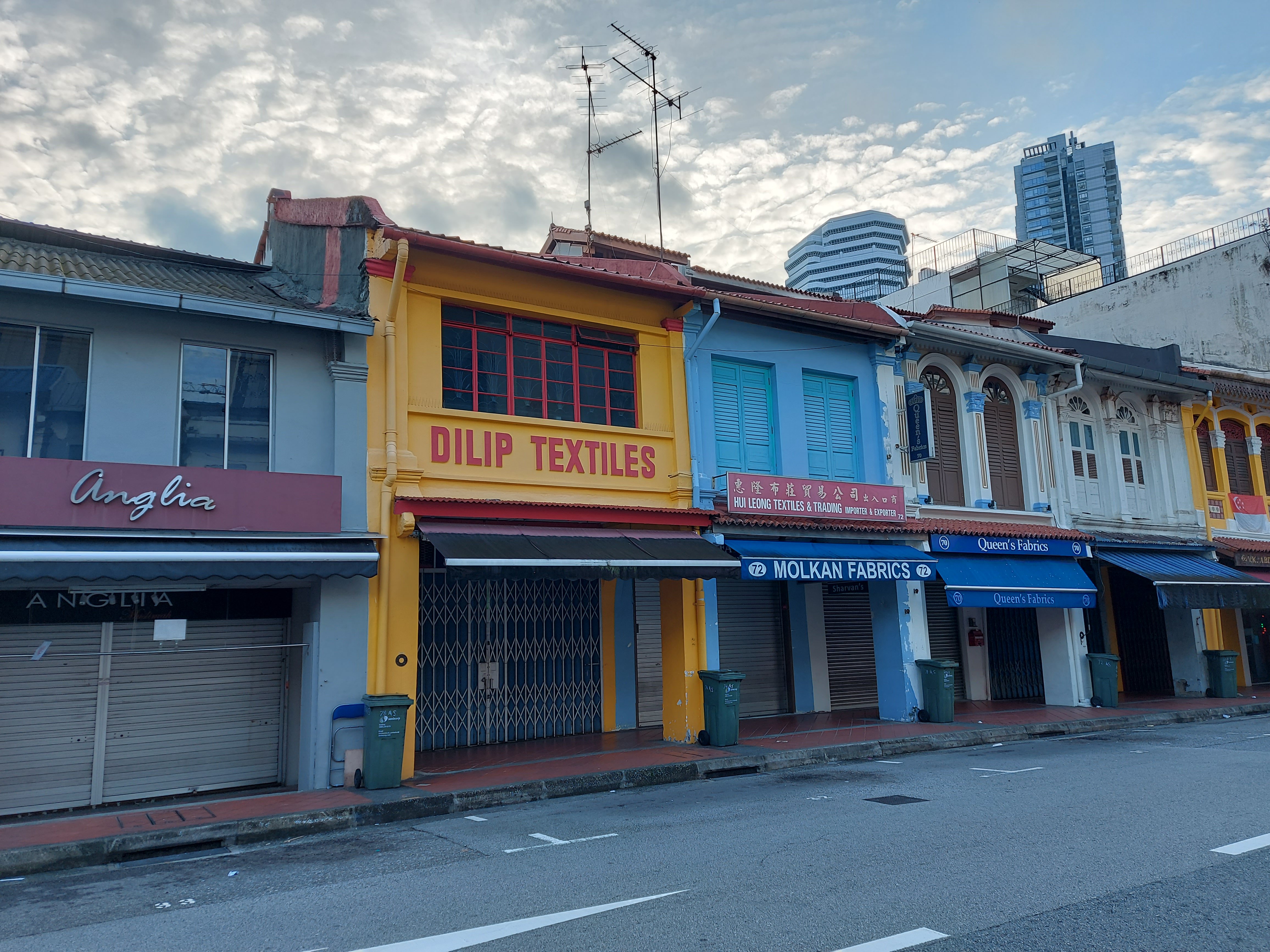
Bugis takes its name from the Bugis seafarers from Sulawesi who traded here in the colonial era, and the district has gone through more reinventions than almost any other in Singapore — from a notorious nightlife quarter to a cleaned-up shopping and student district that now sits between the colonial centre, Kampong Glam, and Little India. It is one of the most crowded and energetic parts of the city centre.
Bugis Street, once infamous, is now Singapore's largest street-market, a covered warren of stalls selling clothes, accessories, and street food at low prices, packed with students and bargain-hunters. Around it, Bugis Junction and Bugis+ are large air-conditioned malls. But the district's older character survives in pockets: the Kuan Im Thong Hood Cho Temple, one of the busiest Chinese temples in the city, draws a constant stream of worshippers, and the Sri Krishnan Temple stands beside it in a rare bit of religious neighbourliness. The flower sellers outside cater to both.
The area around Waterloo and Queen Streets has become an arts quarter, with the Singapore Art Museum's spaces and a cluster of galleries and converted school buildings. Bugis works as a hinge between Singapore's ethnic quarters — a short walk takes you from here into Kampong Glam's mosque district or up to Little India — and its mix of cheap shopping, temples, and arts venues gives it a scrappier energy than the polished districts nearby.