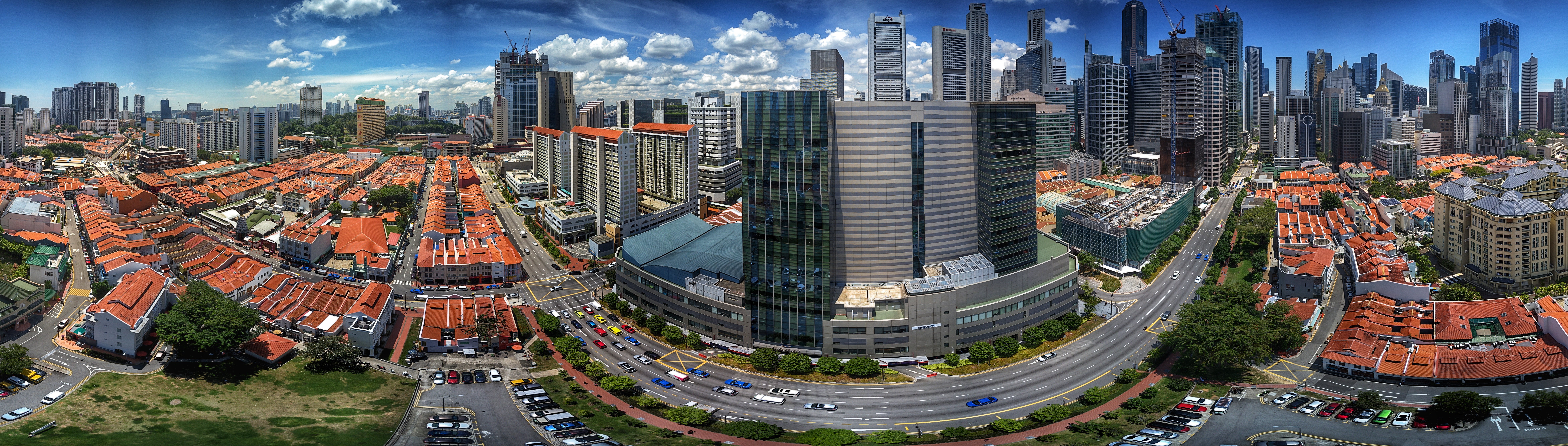
Singapore's Chinatown is not a relic but a working district, where five-foot-way shophouses painted in faded pastels still trade in herbs, paper offerings, and roasted meats while a glass-and-steel financial centre rises a few blocks away. It grew from the mid-nineteenth century as the area south of the Singapore River where Chinese immigrants settled, and the street names — Temple Street, Pagoda Street, Sago Lane — still carry the trades and communities that filled them.
The heart of it is the stretch around Pagoda, Temple, and Smith Streets, where the restored shophouses now hold souvenir stalls, teahouses, and clan associations. The Buddha Tooth Relic Temple anchors the southern end with its gilded Tang-dynasty-style hall, and the older Sri Mariamman Temple, Singapore's oldest Hindu temple, sits incongruously and beautifully among the Chinese shops. The Chinatown Complex hawker centre, the largest in the city, is where locals actually eat — its food stalls have collected more attention than any other in Singapore.
Come at dusk when the lanterns light up and the night market fills Pagoda Street, or early morning when the wet market in the basement of the complex is at its busiest. The area around Ann Siang Hill and Club Street, just uphill, has become the city's cocktail-bar quarter, the old shophouses converted into some of Singapore's best drinking.