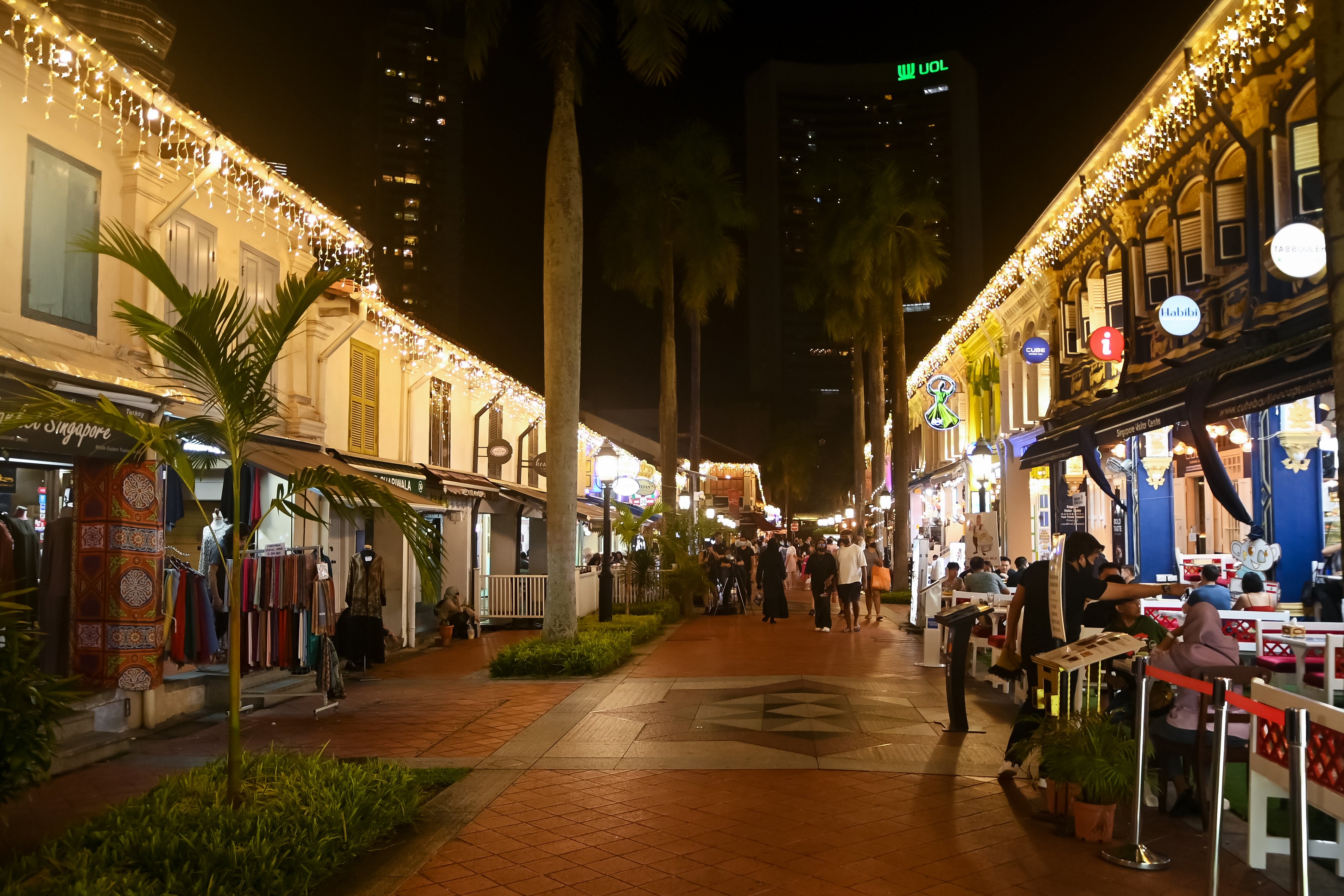
Kampong Glam was the seat of Malay royalty in colonial Singapore, the area set aside for the Sultan and the Muslim community under the 1822 town plan, and its history still shapes its character. The golden domes of the Sultan Mosque rise over a district that is now Singapore's most fashionable melding of the old and the deliberately hip — Arab traders' shophouses turned perfume merchants, textile shops, and the city's densest concentration of independent boutiques and bars.
Arab Street is the traditional commercial heart, lined with shops selling fabrics, carpets, and rattan; the streets behind it — Bussorah, Baghdad, Kandahar — radiate from the mosque in a tight, walkable grid. Bussorah Street, pedestrianised and palm-lined, gives the best view of the Sultan Mosque framed at its end. Haji Lane, a narrow back alley, has become the most photographed street in Singapore, its walls covered in murals and its shophouses packed with vintage clothing shops, cafes, and bars. The Malay Heritage Centre occupies the former Istana Kampong Glam, the Sultan's palace.
The neighbourhood works as a day-to-night district: textile and perfume shopping in the afternoon, Middle Eastern restaurants and shisha cafes along Arab Street in the evening, and a young bar scene on Haji Lane after dark. The Sultan Mosque remains the spiritual centre, and the call to prayer over the rooftops is a reminder that this is a living Muslim quarter, not a themed one.