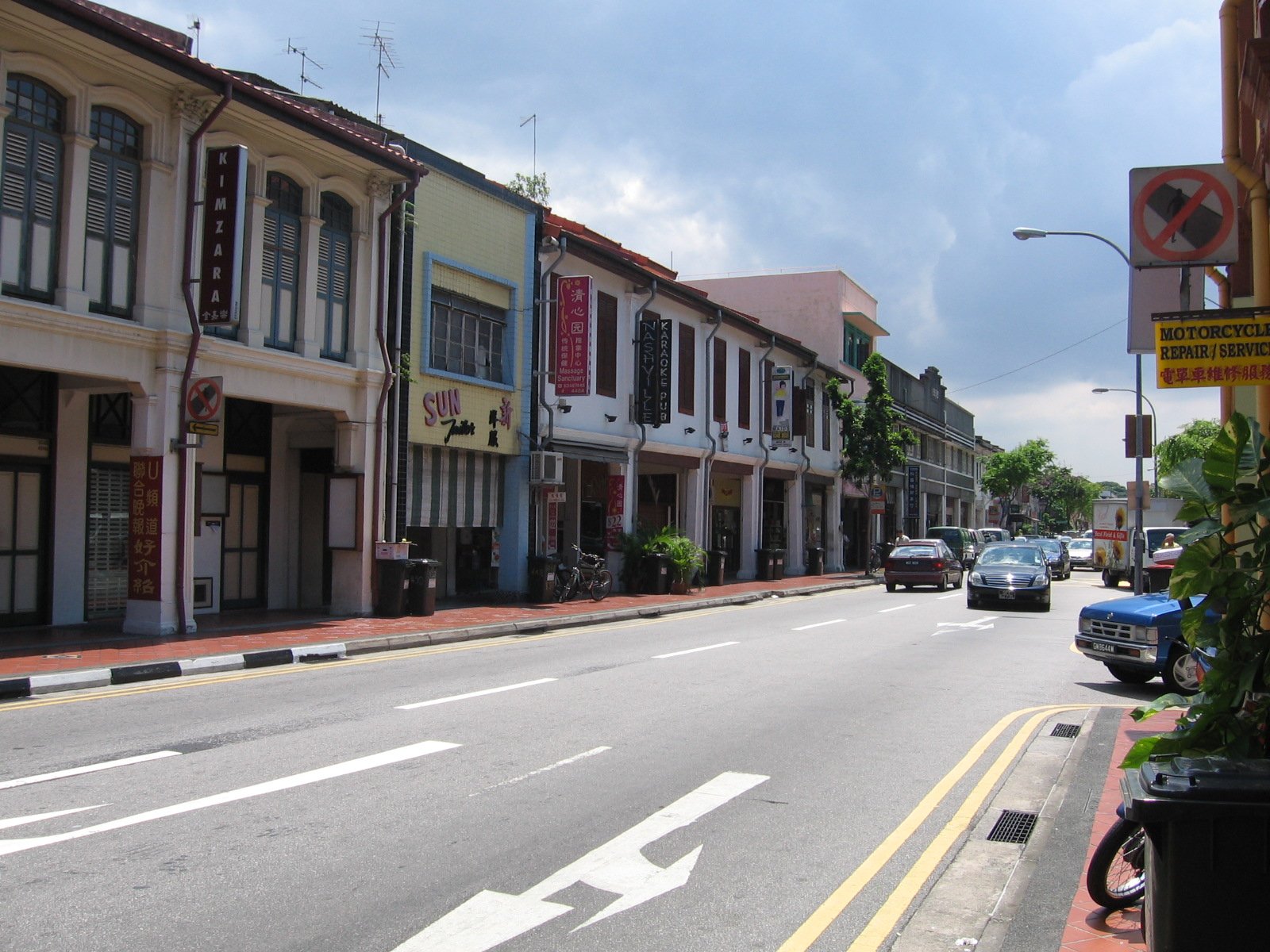
Katong and Joo Chiat, a pair of adjoining districts in the east of the city, are the heart of Singapore's Peranakan culture — the hybrid Chinese-Malay community that produced the city's most distinctive food and its most colourful architecture. The streets here hold the best-preserved and most vividly painted shophouses in Singapore, and the area is the place to come for the cuisine that the Peranakans created.
Joo Chiat Road and the lanes off it, particularly Koon Seng Road, are lined with two-storey shophouses decorated in the elaborate Peranakan style: pastel facades, glazed tiles, carved swing doors, and ornate plasterwork. Koon Seng Road's terrace, painted in turquoise, pink, and yellow, is among the most photographed in the city. The district is also the home of Katong laksa, a particular style of the coconut-based noodle soup eaten with a spoon, and several long-running shops claim to be the original.
The area has gentrified — old kopitiams now share the street with cafes and boutiques — but it remains a residential neighbourhood with a strong identity, less polished than the central districts and more lived-in. The Sri Senpaga Vinayagar Temple, the Eurasian Heritage Centre, and the strip of Peranakan restaurants and antique shops give it depth beyond the architecture. It rewards a wandering afternoon: the shophouses, a bowl of laksa, and the slower rhythm of the east coast.