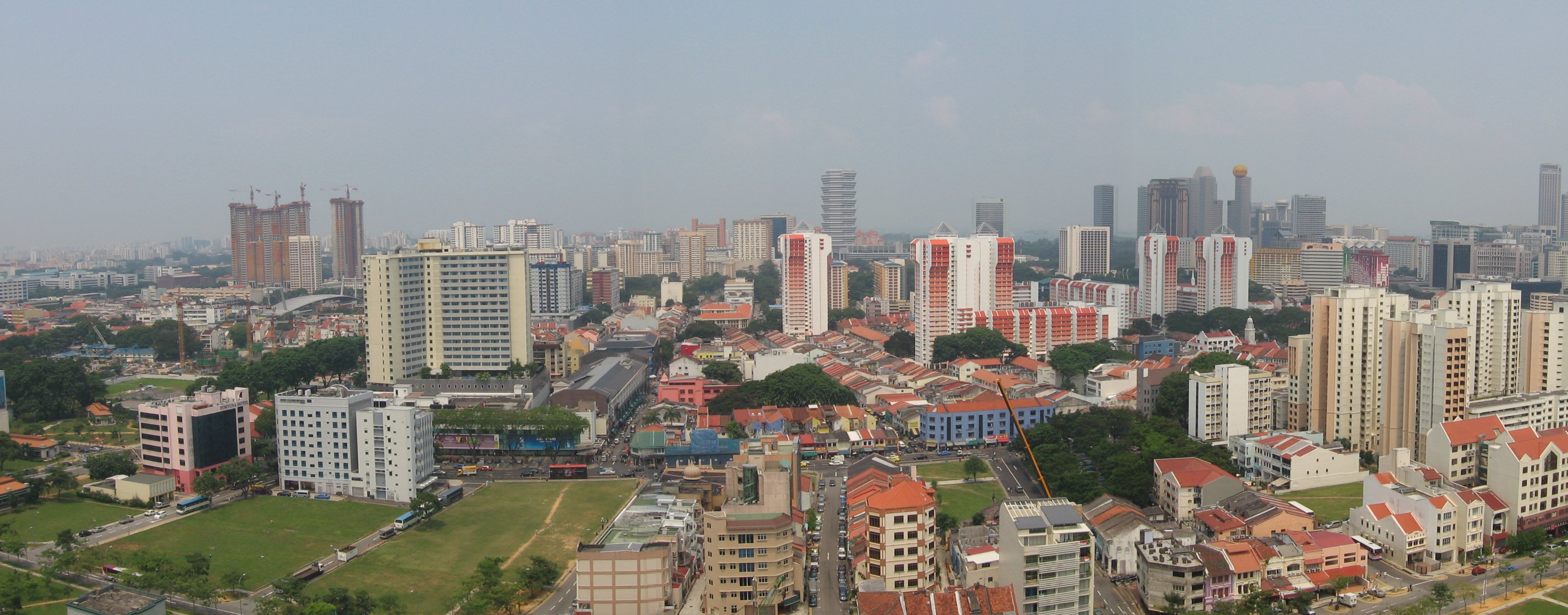
Little India is the loudest, most pungent, most unfiltered corner of Singapore — a deliberate contrast to the city's reputation for order. Garland-makers thread jasmine on the five-foot ways, Tamil film music spills out of music shops, and the smell of cumin and frying ghee hangs over Serangoon Road from morning to night. The district grew around cattle yards and brick kilns that drew Indian labourers in the nineteenth century, and it remains the cultural centre for Singapore's Indian community.
Serangoon Road is the spine, running northeast from the edge of the colonial district. Off it, the lanes are dense with sari shops, gold merchants, vegetarian canteens, and temples — the Sri Veeramakaliamman Temple, dedicated to the fierce goddess Kali, is the most visited. The Tekka Centre at the southern end combines a wet market, a hawker centre serving some of the best biryani and dosa in the city, and floors of textile stalls above. The Mustafa Centre, open around the clock, is a sprawling emporium where you can buy gold, electronics, spices, and luggage at three in the morning.
The neighbourhood is at its most vivid during Deepavali, when Serangoon Road is strung with lights for weeks, and during the Thaipusam procession that passes through. The restored shophouses along Kerbau Road, painted in vivid colours, and the Indian Heritage Centre give the area a more curated face, but the appeal of Little India is its refusal to be tidied.