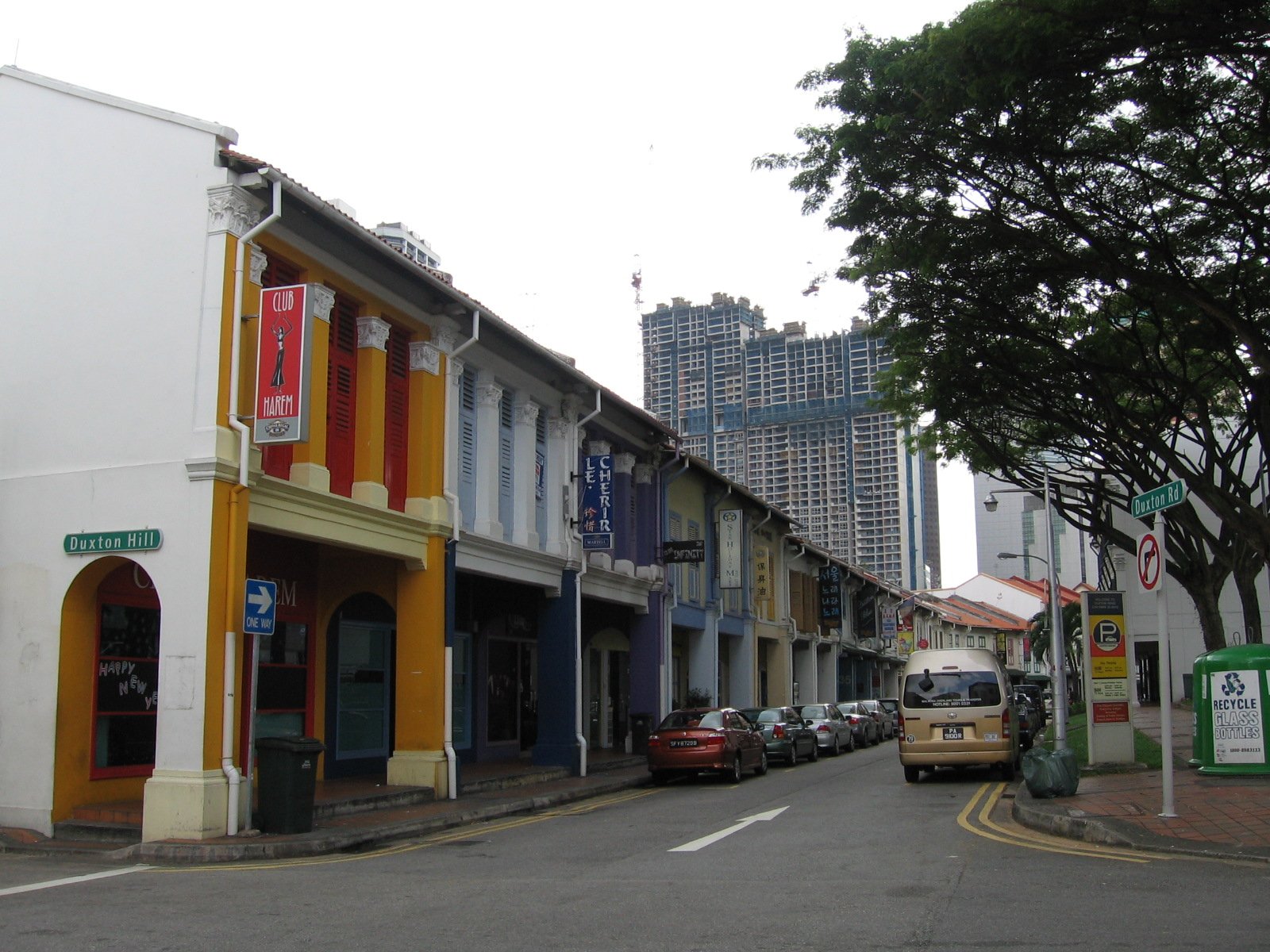
Tanjong Pagar sits at the southern edge of the old town, where the colonial port district meets the financial centre, and it has reinvented itself as one of Singapore's best eating and drinking neighbourhoods. Once a fishing village and then a working dock area — the name means "cape of stakes" — its long terraces of restored shophouses along Duxton Road and Neil Road now hold some of the city's most ambitious restaurants and bars.
Duxton Hill and Duxton Road form the centre of gravity, a cluster of two- and three-storey shophouses converted into restaurants, cocktail bars, and a growing number of places that turn up on regional best-of lists. Keong Saik Road, a curved street that was once Singapore's red-light district, has become perhaps the densest dining street in the city. The Maxwell Food Centre, one of the most famous hawker centres in Singapore — home to the chicken rice stall that drew global attention — sits at the district's edge by the Buddha Tooth Relic Temple.
The neighbourhood layers the very old and the very new: the conserved shophouses, the Tanjong Pagar Railway Station (the former terminus of the line from Malaysia), and Singapore's tallest residential towers all within a few blocks. It is a place to come hungry — hawker lunch at Maxwell, cocktails on Duxton Hill, dinner on Keong Saik — and it shows how Singapore has reused its colonial fabric rather than clearing it.