Pitcairn Islands
©
Pitcairn Islands

Pitcairn Islands

Remote South Pacific territory settled by Bounty mutineers, reached by sea at surf-washed Bounty Bay.

Pitcairn is the most remote inhabited island on Earth. It sits in the South Pacific roughly halfway between New Zealand and Peru, 2,170 kilometres southeast of Tahiti. The nearest airport is in Mangareva, French Polynesia — a 32-hour voyage by sea. There are no flights. There is no harbour deep enough for large ships. You arrive by longboat through the surf at Bounty Bay.

About 35 to 50 people live here, depending on the year. Almost all are descendants of the nine Bounty mutineers and their Tahitian companions who settled the island in 1790 after Fletcher Christian led the most famous mutiny in maritime history. Many share surnames — Christian, Young, Warren, Brown — that have been on the island for eight generations.

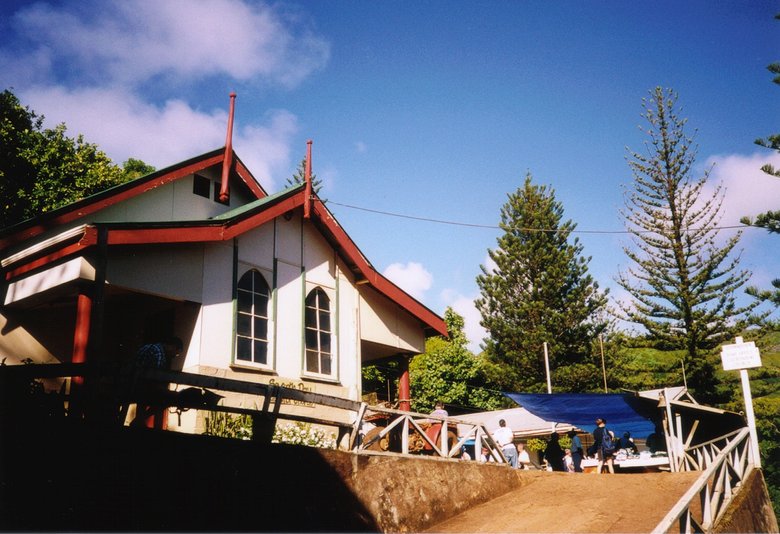
The island is steep, forested, and spectacularly isolated. The roads are dirt. The vehicles are quad bikes. There is one settlement, Adamstown, and a small museum where you can see the Bounty Bible and other relics of the ship. The community is Seventh-day Adventist, which means Saturday is the Sabbath and the island goes quiet. There is no alcohol sold on the island.

Visiting requires serious planning. You must book a spot on the MV Silver Supporter, the government's supply vessel, arrange accommodation in advance, and carry medical insurance that covers evacuation. Stays run 4, 11, or 18 days depending on the ship schedule. It is not cheap and it is not easy, but for those who make the effort, Pitcairn offers something genuinely unlike anywhere else: a tiny, functioning community living out one of history's strangest stories.

Guide

Getting Around

The island covers about 4.5 square kilometres. Three dirt roads connect Adamstown to the main landing point at Bounty Bay and to the agricultural areas inland. The total road network is roughly 6 kilometres.

On land

Quad bikes and three-wheeled ATVs are the standard way to get around. Islanders will often give visitors a lift or arrange guided tours by quad. The roads turn to sticky mud when it rains — which happens regularly — so sturdy footwear is useful.

Walking is entirely feasible for fit visitors. Trails lead to most of the key sites: Christian's Cave, St Paul's Pool, the lookout points above Bounty Bay. The terrain is hilly and the paths can be overgrown; a local guide is recommended for anything beyond the main tracks.

Between islands

The Pitcairn group includes three other islands — Henderson, Ducie, and Oeno — but none are permanently inhabited. Occasional community excursions to Oeno (a low coral atoll about 120 km to the northwest) and Henderson (a raised coral island with a remarkable endemic bird population) take place by longboat. These trips are weather-dependent and infrequent.

At Bounty Bay

The longboats Tin, Tub, and Moss transfer passengers and cargo between the island and ships anchored offshore. There is no jetty capable of taking deep-draft vessels. All arrivals and departures depend on sea conditions and the skill of the islanders who operate the boats.

Guide

Getting There

There is no airport on Pitcairn and no direct scheduled transport from anywhere. All visitors arrive by sea.

The route

Fly to Tahiti (PPT), then take an Air Tahiti flight to Mangareva (GMR) in the Gambier Islands. From Mangareva, board the MV Silver Supporter — the island's dedicated government supply and passenger vessel — for a 32-hour crossing to Pitcairn. The ship holds 12 passengers in 6 twin-share cabins, each with a private ensuite. Meals are included.

You land not at a dock but via longboat through the surf at Bounty Bay. Islanders bring you ashore. Departure works the same way in reverse.

Booking

The MV Silver Supporter operates on a schedule published by Pitcairn Islands Tourism. Voyages run most frequently between April and September. Stays are structured: 4-day, 11-day, or 18-day visits, depending on when the ship returns.

Contact [email protected] well in advance — spaces are limited to 12 passengers per voyage and trips do sell out. Schedules are subject to change; confirm before booking onward flights.

Cost

Accommodation is priced at roughly US$70 per person per day for homestays, more for self-contained rental properties. Add the cost of the ship passage plus flights to Mangareva. Budget for the full package including meals.

Visas

Visitors staying 14 days or fewer who arrive and depart on the same vessel do not need a visa. Stays longer than 14 days require an entry clearance application submitted at least three months in advance, with a non-refundable NZ$150 fee. Apply through the Pitcairn Island government: government.pn.

Medical insurance

Compulsory. Your policy must include medical evacuation — the nearest hospital is days away by sea. This is not a formality.

Guide

Highlights

Pitcairn's appeal is the place itself as much as any individual sight. There are no resorts, no tourist infrastructure in the conventional sense, and nowhere else on Earth quite like it. What you actually do here is explore a small island with the people who live on it.

Bounty Bay and the wreck

The bay where the Bounty mutineers burned their ship in 1790 is still where all activity centres. The rusted anchor and a few fittings salvaged from the wreck are in the museum. The wreck itself lies a few metres below the surface just offshore and is diveable — one of the more historically charged dives available anywhere.

Christian's Cave

A natural ledge high above Bounty Bay, reached by a steep climb from the Eco Trail. Fletcher Christian is said to have used it as a lookout to watch for approaching ships. The view down to the bay and out to sea is striking. Do not attempt it after rain — the path becomes dangerously slippery.

Pitcairn Island Museum

In Adamstown, the museum holds the Bounty Bible, a chronometer from the ship, and various artefacts from both the mutiny era and the earlier Polynesian settlement. Entry is around US$5. Small, but worth an hour of your time.

St Paul's Pool

A sea-carved tidal pool on the far side of the island with clear water and good snorkelling when conditions allow. The walk to get there is part of the appeal.

Henderson Island

About 200 kilometres northeast, Henderson is a UNESCO World Heritage Site — an almost untouched raised coral island with four bird species found nowhere else. Access is by occasional longboat expedition from Pitcairn, subject to weather and community schedules. If one is organised during your stay, go.

The community itself

Islanders offer craft-making sessions, guided quad tours, fishing trips, and whale watching (June to October, when humpbacks pass through). Much of what makes Pitcairn interesting happens through conversation with the people who live here. The population is tiny enough that you will meet most of them.

Guide

People

Pitcairn's population hovers around 35 to 50 people, making it the least populated British Overseas Territory and one of the smallest permanent communities on the planet. The exact number shifts as islanders move abroad — usually to New Zealand or Australia — and occasionally return.

Almost everyone on the island is a direct descendant of the nine Bounty mutineers and the Tahitian men and women who sailed with Fletcher Christian to Pitcairn in 1790. The surnames are immediately recognisable from the history books: Christian, Young, Warren, Brown. Eight generations in, the community is small enough that almost everyone is related to everyone else.

The island's first language is English, but many islanders also speak Pitkern — a creole derived from 18th-century English and Tahitian, developed in isolation over more than two centuries. Visitors will understand most of what is said to them; Pitkern between islanders is another matter.

The community converted to Seventh-day Adventism in the 1880s, brought by an American missionary ship. The faith remains central to island life today. Saturday is the Sabbath; Sunday is treated as the first day of the working week. The church is the social anchor of the community.

The population decline is a genuine concern. Young people leave for education and work, many do not return, and the island struggles to attract permanent settlers. The government has at various times actively sought migrants willing to take up residency, though the conditions of island life — extreme isolation, limited infrastructure, no secondary school — are not for everyone.

Guide

Practical Information

Currency

The official currency is the New Zealand Dollar (NZD), but accommodation and souvenirs are typically priced in US Dollars. The government Treasury Office can exchange money and process credit card transactions; there is a 5% surcharge on card payments. Bring adequate cash — do not rely on card facilities for everything.

Internet

Since March 2024, Pitcairn has been connected via Starlink. Most homes, government buildings, and public areas have wi-fi. Connection quality is vastly better than it used to be, though it remains a remote island and service can be affected by weather.

Phones

Your home SIM is unlikely to work. Check with your carrier before you go. The island has a local telephone network.

Health

There is a basic medical facility on the island but no hospital. The doctor or nurse practitioner can handle minor issues. Anything serious means medical evacuation — which is why insurance covering evacuation is compulsory for all visitors, not optional.

Bring all prescription medications in sufficient quantity for your trip plus some margin. Nothing is obtainable locally.

Sabbath

The community is Seventh-day Adventist. Saturday is the Sabbath. Most activity on the island stops. No alcohol is sold anywhere on Pitcairn.

Shopping

Islanders sell honey, carved wooden items (including models of the Bounty and traditional Polynesian designs), woven baskets, and postage stamps — Pitcairn stamps are prized by collectors worldwide. The community store stocks basic groceries.

Electricity

240V, 50Hz. New Zealand-style plugs (Type I). Bring a universal adapter.

Time zone

UTC-8 (no daylight saving).

Emergency contact

In an emergency, contact the island's government or the Pitcairn Island radio operator. The official government website is government.pn.

Guide

When to Go

Pitcairn's climate is subtropical oceanic. Temperatures stay moderate year-round: summer (December to March) reaches around 27–28°C, while winter (June to September) drops to around 22–23°C. Rain falls throughout the year but is heaviest between November and March.

Best time to visit: April to October

This is the dry season and the period when the MV Silver Supporter operates most frequently. Sea conditions for the Mangareva crossing and for landing at Bounty Bay are generally calmer. The weather is warm without being oppressive.

July to October is the best window for whale watching — humpbacks migrate through the waters around Pitcairn during these months. September is typically the calmest month of the year.

Avoid: December to March

The wet season brings heavier rain, higher humidity, and a small but real risk of tropical cyclones. Conditions at sea are less predictable, and the ship schedule is thinner. The January to March period does offer honey season — Pitcairn honey from the Miro tree has a strong local reputation — but this is rarely enough reason to choose the more difficult time of year.

Practical note

The ship schedule controls when you can visit more than weather does. Check the current MV Silver Supporter schedule at visitpitcairn.pn and book around it. Voyages fill up; plan at least three to six months ahead.