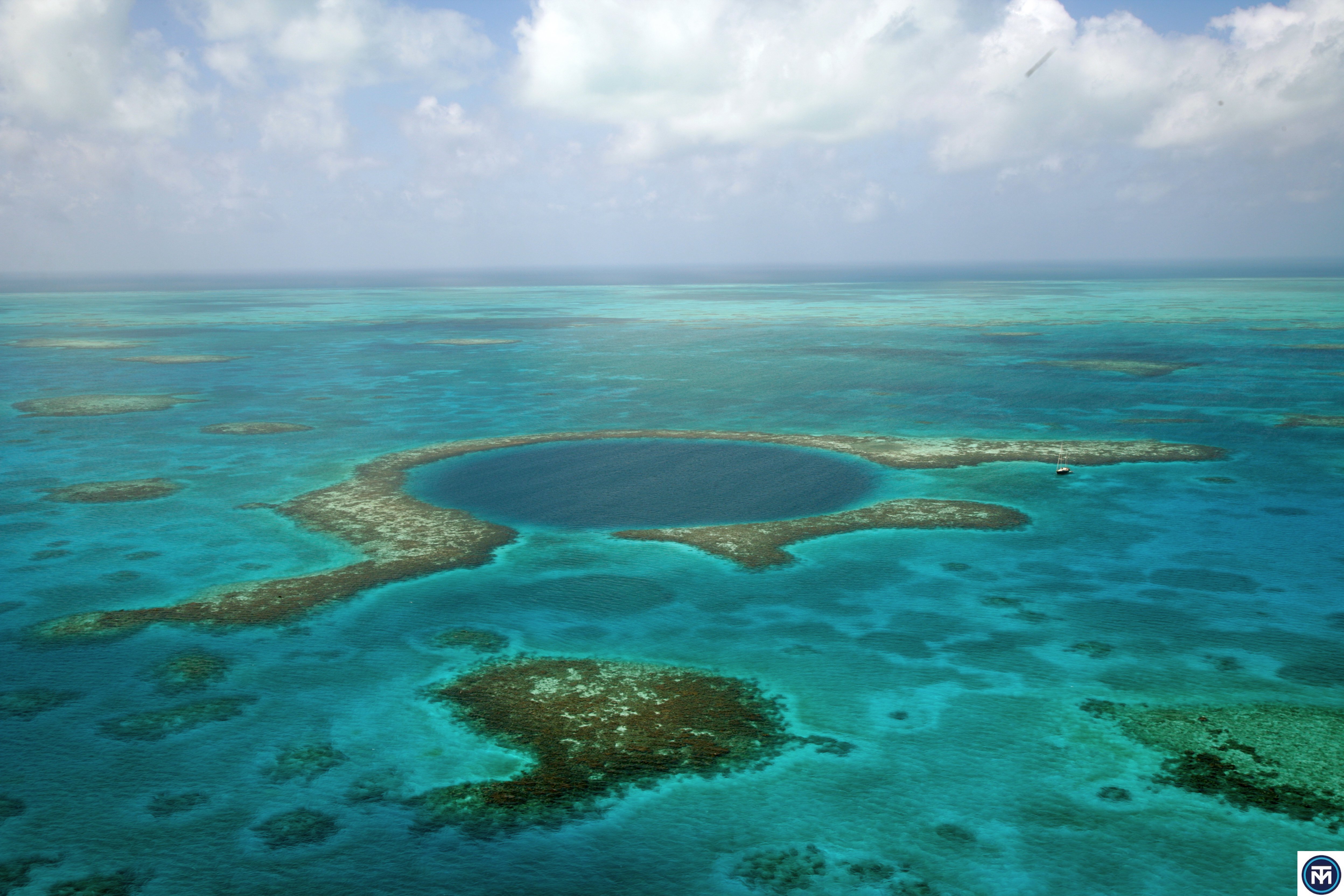
From the air it is a perfect dark blue circle set in pale turquoise reef, three hundred metres across and a hundred and twenty-five deep, and that image has done more for Belizean tourism than anything else in the country. It is a drowned cave: limestone that dissolved into a cavern during the ice ages, when the sea was lower, and then collapsed and flooded when the water came back. Jacques Cousteau brought the Calypso here in 1971 and put it on the map.
What the dive is actually like is worth knowing before you book. You drop to around forty metres along a wall, level off at a ledge of enormous stalactites hanging at an angle — tilted when the block shifted — spend a handful of minutes in the blue with whatever reef sharks are passing, and come back up. It is deep, dark, short, and almost devoid of coral or fish. Divers who have done it split cleanly between those who found it eerie and extraordinary and those who thought it an expensive eight minutes.
The day is the bigger commitment: two hours each way by boat from Ambergris Caye or Caye Caulker, leaving before dawn, with two further dives on Lighthouse Reef — Half Moon Caye Wall and the Aquarium — which is where the actual marine life is and which most people end up preferring. Operators usually require advanced certification, and rightly: it is a deep dive on air with a fast descent.
If you are not a diver, the flight over it is the alternative, and is not a consolation prize — from a small plane at a thousand metres the shape is far clearer than it ever is from the water.