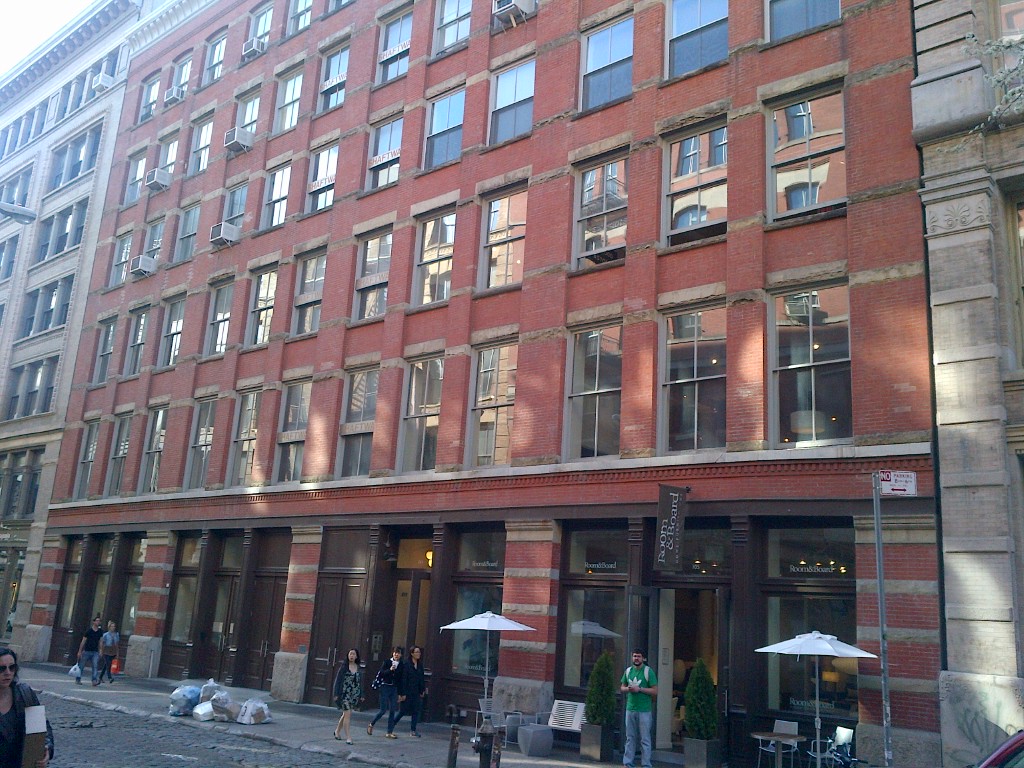
SoHo — South of Houston Street — is Manhattan's most concentrated showcase of cast-iron architecture, a building technology that flourished in New York between the 1850s and the 1880s. The neighbourhood's roughly 500 cast-iron facades were largely derelict by the 1960s, when artists began colonising the enormous loft floors for live-work studios. That bohemian era ended decades ago, replaced by one of the most densely branded retail corridors in the world, but the architecture remains extraordinary. On Broadway and Greene Street the five- and six-storey facades — painted in cream, white and stone — deploy elaborate Italianate columns, pilasters and arches that would cost a fortune to replicate in any other material. Wooster Street, one block west of Broadway, is quieter and gives the best sense of what the district looked like before the chains arrived.
The galleries that gave SoHo its reputation mostly decamped to Chelsea in the 1990s, but a few remain, and the neighbourhood still functions as New York's primary destination for international luxury and mid-range fashion. Prince Street and Spring Street are the retail arteries; on weekends the sidewalks can be genuinely difficult to navigate. West Broadway has a slightly more relaxed pace and better restaurants. The neighbourhood borders Nolita (North of Little Italy) to the east and the edge of Tribeca to the south — both worth an hour's digression.