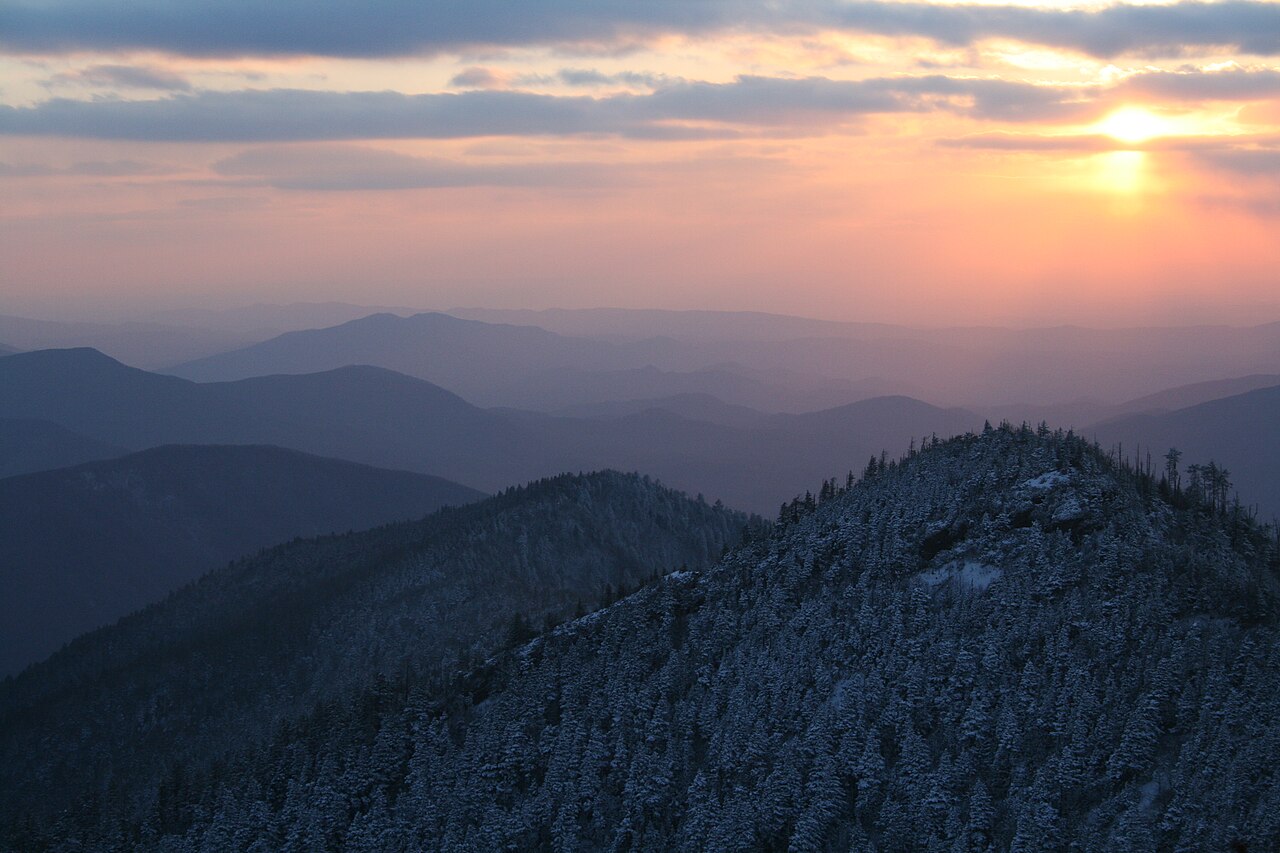
Great Smoky Mountains National Park straddles the border of Tennessee and North Carolina, covering 800 square miles of ancient, mist-shrouded Appalachian peaks — the most visited national park in the United States, and one that charges no admission fee. Ninety-five percent of the park is forested, with one of the most diverse temperate-zone ecosystems on the continent: over 1,500 species of flowering plants, black bears, elk, and more species of trees than in all of northern Europe.
The Tennessee side is the most popular entry point, with Gatlinburg and the quieter town of Townsend serving as gateway communities. Cades Cove, a broad valley ringed by mountains with preserved nineteenth-century homesteads and churches, is the single most visited spot in the park — arrive early or you will spend hours in the one-way loop traffic. For hikers, the trails range from easy riverside walks to strenuous ridge climbs along the Appalachian Trail, which follows the park's spine for seventy miles. The views from Clingmans Dome, the highest point in Tennessee at 2,025 metres, are worth the short but steep walk from the car park on a clear day.
The North Carolina side is quieter. Cherokee, the gateway town on the NC side, is the starting point for the road to Clingmans Dome through some of the most spectacular scenery in the eastern United States. In autumn the leaf colors here are extraordinary. The synchronous fireflies of Elkmont, which flash in unison during a few weeks each June, are one of the most magical natural phenomena in North America. To the south, Robbinsville offers access to remote forests and lakes, the Cherohala Skyway, and the Tail of the Dragon — roads that draw motorcyclists and drivers from across the country.