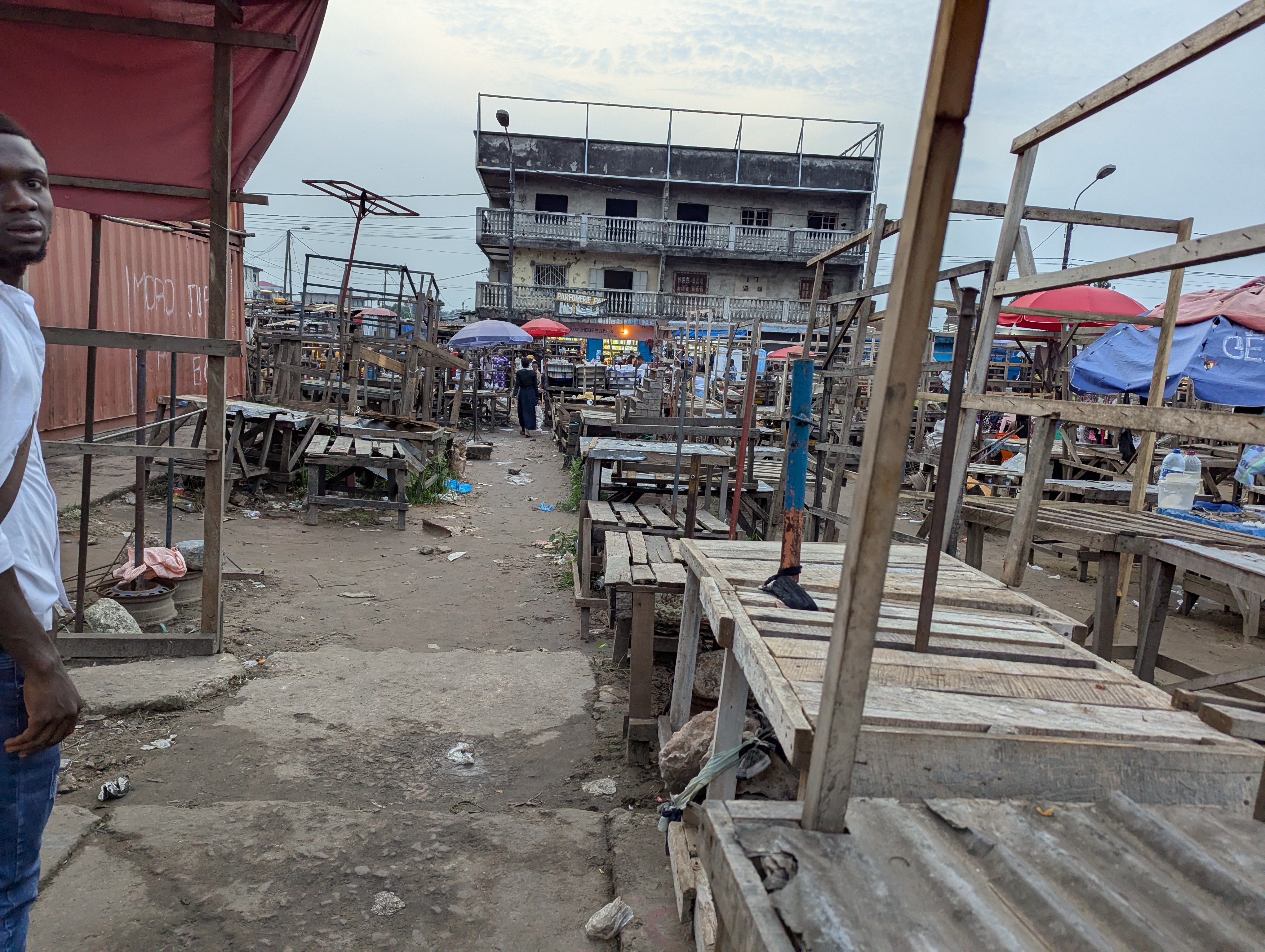
The Republic of the Congo — often called Congo-Brazzaville to distinguish it from its much larger neighbour across the river — is a forested equatorial country on the Atlantic coast of Central Africa. It is one of the most densely forested countries on the continent, with rainforest covering roughly two-thirds of its territory. The north is a vast wilderness of forest and swamp; the south is where most of the population lives, strung along the Congo-Ocean Railway between Brazzaville and Pointe-Noire.
Brazzaville, the capital, sits directly across the Congo River from Kinshasa, capital of the DRC — the two most closely paired capitals in the world. The city has a surprisingly vibrant cultural life for a country of its size: the Poto-Poto painting school and the soukous music scene that emerged here in the post-independence years both left marks that extend well beyond the country's borders. The Congo-Ocean Railway, one of Africa's great engineering stories (and human tragedies, built at enormous cost in lives), still runs between the two cities.
The country has substantial oil reserves and is wealthier than many of its neighbours, though the wealth is unevenly distributed. Travel outside the main cities is difficult — roads are poor, jungle crossings are complicated, and the infrastructure beyond the railway corridor is minimal. But for travellers willing to work for it, the northern forests around Impfondo offer exceptional wildlife, and the Congo River itself is one of the great natural spectacles of Africa.