Brazzaville sits on the western shore of Malebo Pool, the vast widening of the Congo River, directly across the water from Kinshasa. It is one of only two national capitals in the world that face each other across a river. Compared to its enormous neighbour, Brazzaville is smaller, quieter, and considerably more relaxed.
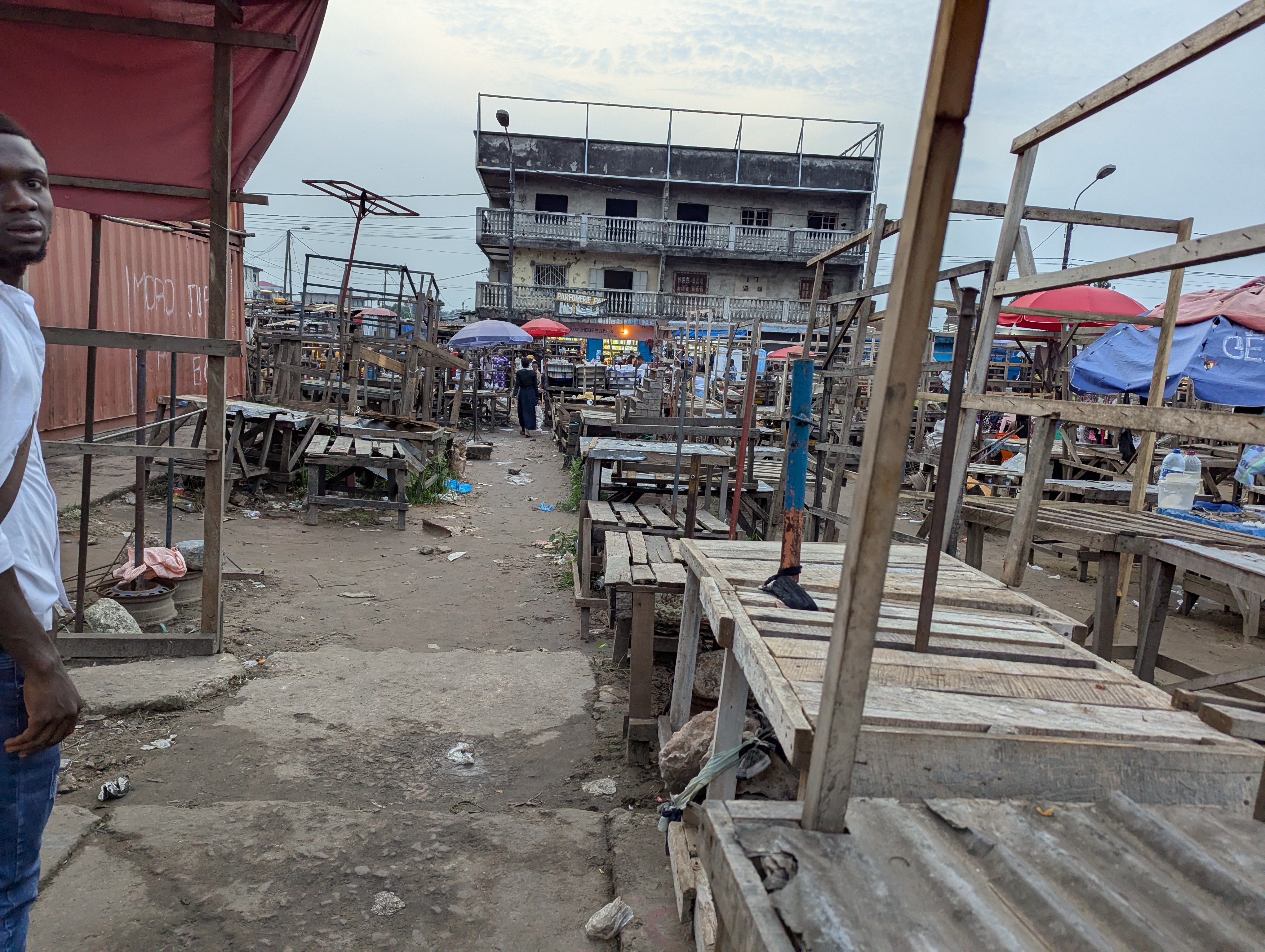
The city has real character. The Basilique Sainte-Anne, with its striking green-tiled roof and soaring interior, is one of Central Africa's finest churches. The colourful neighbourhood of Poto-Poto is worth wandering for its street life and its art school, which gave rise to a distinctive painting style now known internationally. The markets at Ouénzé and Moungali are lively and unhurried — a good place to buy fabric, street food, and watch the city go about its business.
Brazzaville played an unexpected role in world history: after the fall of France in 1940, it became the capital of Free France, and Charles de Gaulle governed the French African colonies from here. The house built for him still stands, and the story is told at the Musée National du Congo near the river. The Mausolée de Brazza commemorates the Italian-born explorer who founded the city in 1880. The Tour Nabemba — the tallest building in the country — dominates the skyline.
The city is also the starting point for the Congo-Ocean Railway south to Pointe-Noire, one of Africa's great train journeys when it is running.