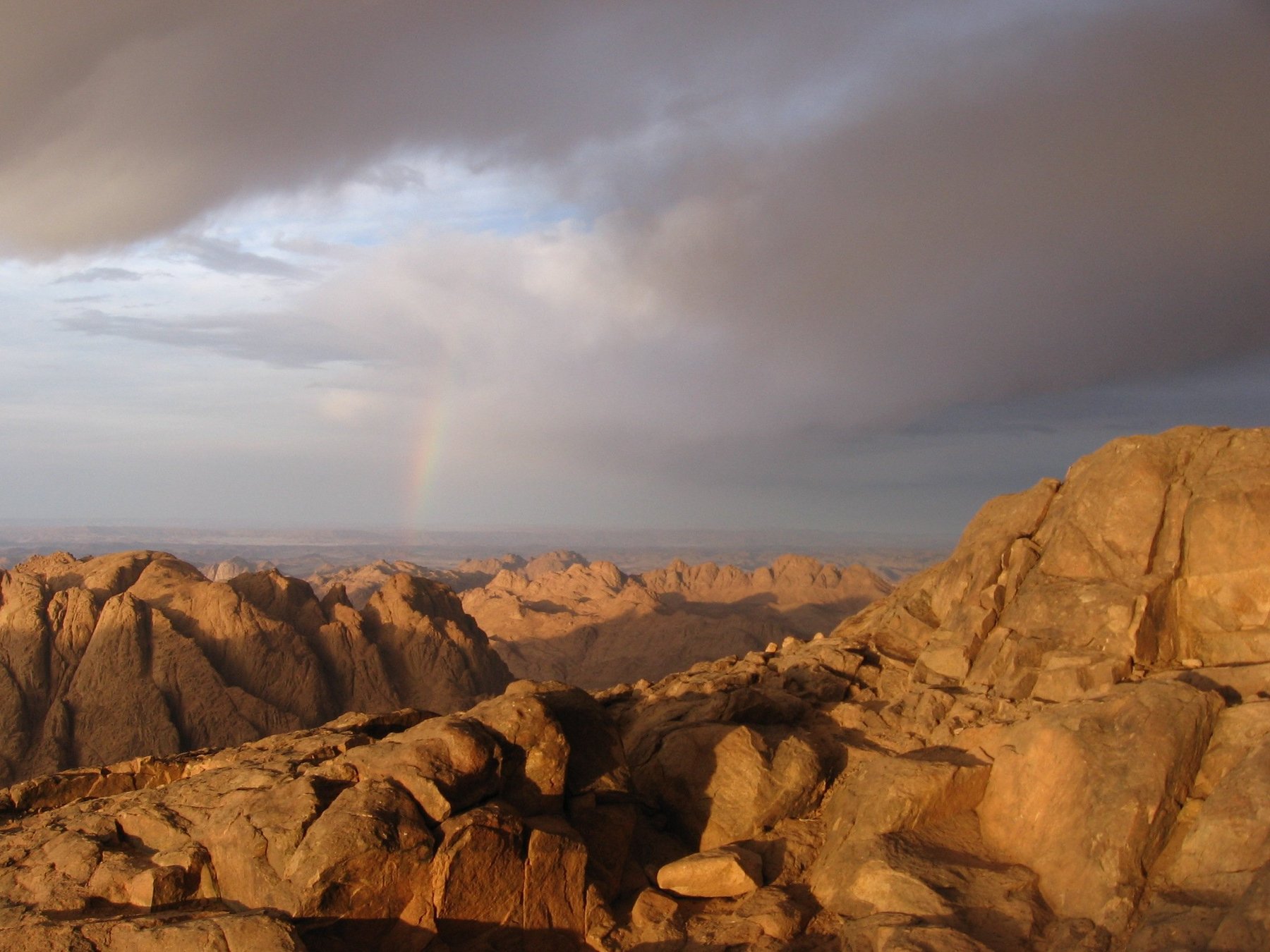
Desert peninsula between the Gulfs of Suez and Aqaba, with granite mountains, wadis, and coral reefs.
The Sinai Peninsula is a triangular wedge of desert and mountains wedged between Africa and Asia, connecting the two continents while belonging fully to neither. To the west lies the Gulf of Suez; to the east, the Gulf of Aqaba. The Mediterranean closes it off in the north. It is a place of granite mountains, deep sandy wadis, turquoise water, and some of the world's best coral reefs — all packed into a relatively small area that rewards travellers willing to look beyond the beach resorts.
Most visitors arrive via Sharm el-Sheikh in the south, where the diving and snorkelling at Ras Mohammed National Park are genuinely world-class. The northern beaches of the Mediterranean coast are quieter, more Egyptian, and largely overlooked by foreign tourists. In between, the interior is a landscape of harsh pink granite — ancient, dry, and dramatic.
The spiritual heart of Sinai is the southern mountain range around St Katherine's Monastery. At 2,285 metres, Mount Sinai is the peak where Moses is said to have received the Ten Commandments. Thousands of pilgrims and hikers climb it each year, most starting at 2am to catch the sunrise from the summit. At its foot, St Katherine's Monastery has been inhabited continuously since the 6th century and holds a library of ancient manuscripts surpassed only by the Vatican. The surrounding high desert — managed as a national park — is excellent trekking country, with Bedouin guides leading multi-day camel routes between remote mountain villages.
Dahab, on the Gulf of Aqaba coast, strikes a different tone: relaxed, bohemian, and built around diving and windsurfing rather than package tourism. The Blue Hole — a famous and technically demanding dive site — lies just north of town. Between Dahab and Sharm, the Coloured Canyon near Nuweiba offers one of the Sinai's most photogenic hikes, its narrow sandstone walls stained in bands of red, gold, and purple by iron oxide deposits.
The Bedouin people of the Sinai have lived in this landscape for centuries, and much of the trekking and desert tourism depends on their knowledge and hospitality. The region requires a separate permit from the rest of Egypt for some areas near the Israeli and Gazan borders, though the main tourist destinations — Sharm, Dahab, and the St Katherine area — are freely accessible.
Guide
Getting There
By air: Sharm el-Sheikh International Airport receives direct charter and scheduled flights from Europe and the Middle East, making it the easiest entry point for most international visitors. Taba International Airport (near the Israeli border in the north) handles some charter traffic. Cairo is the main hub for onward connections within Egypt.
By road from Cairo: Buses run from Cairo to Sharm el-Sheikh (roughly 6–7 hours), Dahab (7–8 hours), and Taba. East Delta Bus Company operates the main routes. The road crosses the Suez Canal via the Ahmed Hamdi Tunnel before entering the Sinai.
From Israel: The Taba border crossing (Menachem Begin Crossing) connects Eilat in Israel with Taba in Egypt. It is open 24 hours. Travellers entering from Israel can obtain a Sinai-only entry stamp (free) that allows access to the Sinai Peninsula as far as Sharm el-Sheikh but not the rest of Egypt. A full Egyptian visa is required to travel beyond the Sinai.
By ferry: High-speed ferries connect Aqaba in Jordan with Nuweiba on the Sinai coast, taking about 1–1.5 hours. Slow ferries make the same crossing in 3–4 hours. This is a useful route for travellers crossing between Jordan and Egypt overland.
Guide
When to Go
The Sinai has a desert climate — dry year-round, with extreme summer heat and surprisingly cold winter nights in the mountains. The best times to visit depend on what you plan to do.
October to April is the best season for trekking, climbing, and sightseeing. Daytime temperatures in the St Katherine highlands range from 15–25°C, and the mountain nights are cold but manageable with proper layers. The summit of Mount Sinai can dip below freezing between December and February — the blanket vendors at the top are there for good reason.
November to March offers the clearest water for diving and the best visibility at Ras Mohammed and in the Gulf of Aqaba. Sea temperatures drop to around 21°C, which is comfortable in a 3mm wetsuit.
June to August is peak beach season in Sharm and Dahab. It is also extremely hot — daytime air temperatures reach 40°C or more, and the interior desert is brutal. Most serious trekking in the St Katherine area shuts down. Diving remains good in the mornings before the heat sets in.
Ramadan shifts the rhythm of daily life significantly: restaurants close during daylight hours, and the atmosphere in Egyptian towns changes. It can be a fascinating time to visit or an inconvenient one, depending on your priorities.