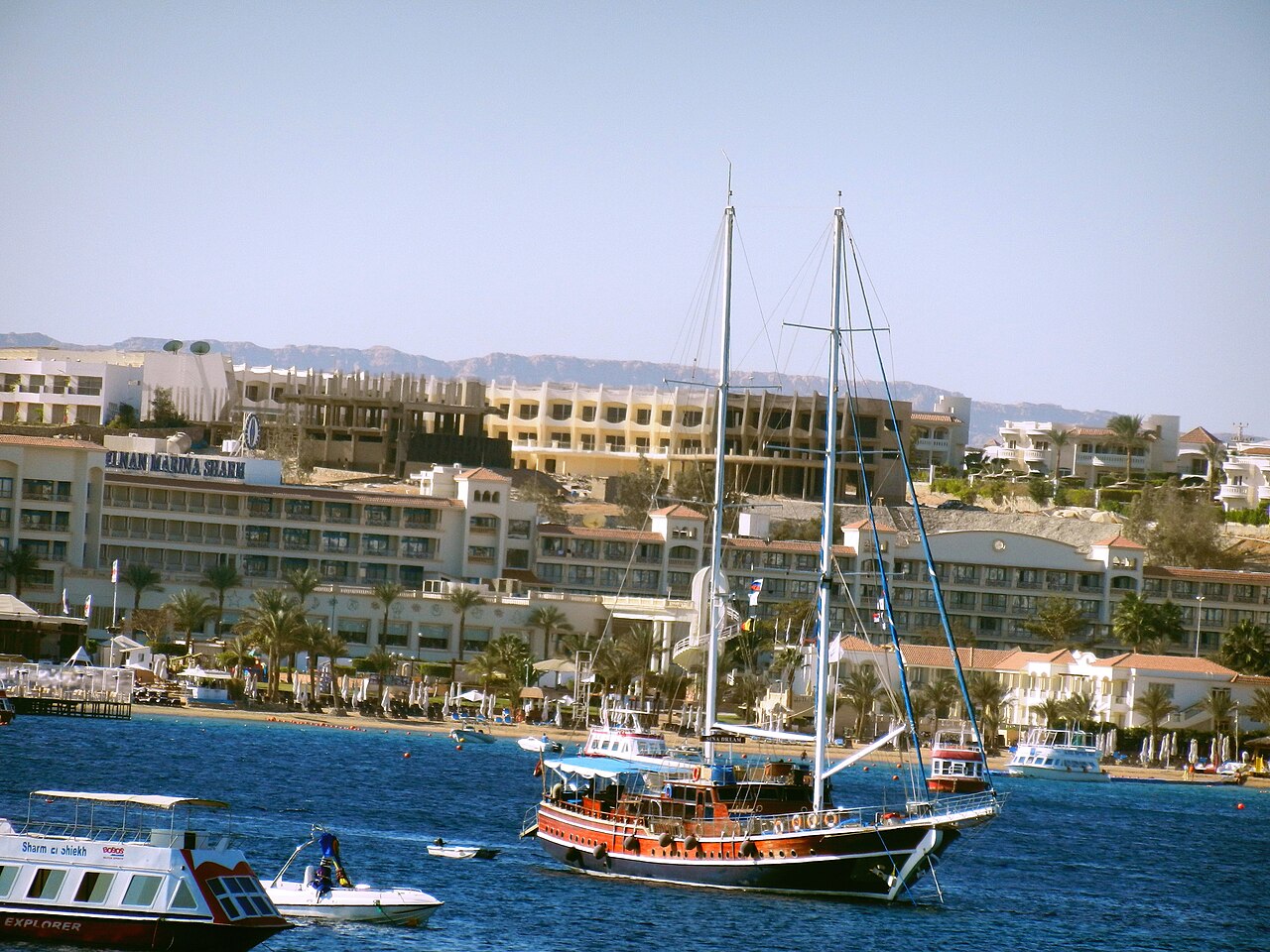
Sharm el-Sheikh sits at the southern tip of the Sinai Peninsula where the Red Sea splits into the Gulf of Aqaba and the Gulf of Suez. For divers it is one of the great destinations on earth — the coral reefs of Ras Mohammed National Park, the Strait of Tiran, and the Aqaba coast rank among the world's finest, with over 200 species of coral and more than a thousand species of fish in clear, warm water. But Sharm has long since outgrown its diving-only identity. Today it is a full-scale resort city, and most visitors come simply to lie on the beach, eat well, and enjoy the reliably sunny weather.
The city divides roughly into several distinct areas. Naama Bay is the tourist heart — a horseshoe of hotels, restaurants, dive centres, and bars facing a calm strip of beach. It is busy and commercial but genuinely convenient, with almost everything a visitor needs within walking distance. The Old Market (Sharm el-Maya) is the original town, scruffier and more local, with the best bargains and the most persistent shopkeepers. Hadaba occupies the clifftops above the sea, quieter and residential, with views over the lighthouse and Ras Mohammed. Further north, Sharks Bay and the Nabq Protected Area offer calmer alternatives for those who want a beach without the Naama crowd.
The surrounding desert is as much a draw as the sea. The southern Sinai is a landscape of extraordinary colour: pink and ochre granite mountains, deep sandy wadis, and the famous Coloured Canyon near Nuweiba where iron oxide has stained the sandstone walls in bands of red, purple, and gold. Bedouin guides lead camel treks and jeep safaris into the interior, and a night camped in the desert — frigid once the sun goes down, brilliant with stars — is one of the more unusual experiences available from a beach resort. Mount Sinai and the ancient Monastery of St. Catherine lie a two-hour drive away, and most visitors consider the pre-dawn climb to the summit obligatory.
Sharm has also served as a diplomatic venue — Egyptian and Israeli officials have met here repeatedly over the decades, and the city has a certain geopolitical familiarity among the world's leaders that is quietly incongruous with its resort character. The Egyptian government uses the conference facilities here regularly.
The Red Sea is warm enough to swim in all year. Summer (June to September) is very hot — highs around 40°C — but this is peak season, with the most flights and highest hotel prices. The winter months from November to March are more comfortable for sightseeing and trekking, and diving visibility is at its best in November and March. Whenever you go, bring strong sunscreen: the desert sun is unforgiving.