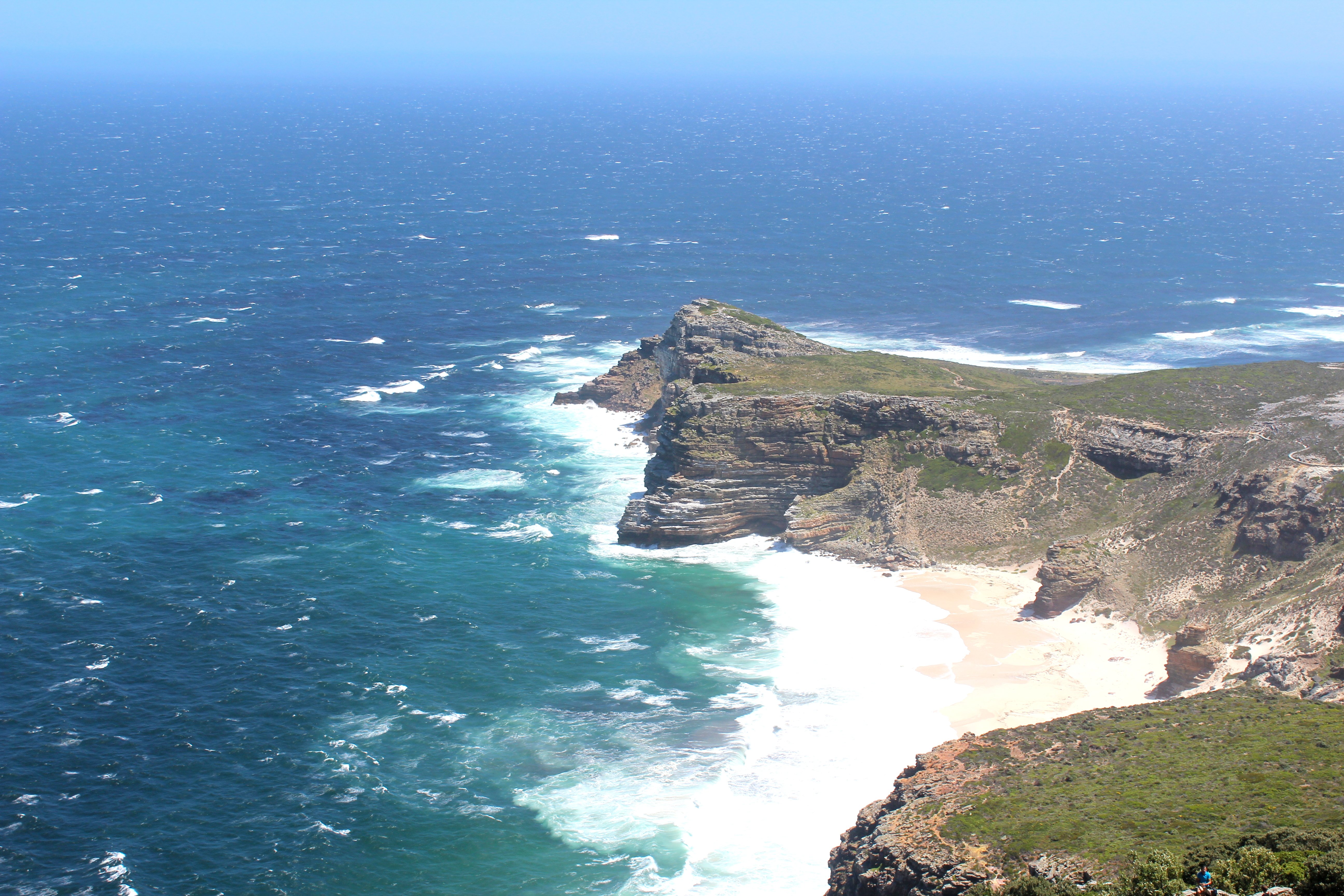
Cape Point and the adjoining Cape of Good Hope are the weather-beaten tip of the Cape Peninsula, an hour and a half south of central Cape Town. Despite the legend, this is not the southernmost point of Africa — that honour belongs to Cape Agulhas, 150 km further east — but it is the dramatic southwestern corner of the continent, and one of the most photographed clifftop lighthouses anywhere in the world.
The reserve protects roughly 7,750 hectares of fynbos, dunes, beaches and rocky coast, all part of the Cape Floral Kingdom. Baboons, eland, ostrich and the endemic bontebok roam the heathland, and the troops of chacma baboons near the car parks are notorious for raiding bags — keep food out of sight and windows up. Walking trails fan out across the reserve, from short clifftop strolls to longer routes down to deserted beaches.
The funicular known as the Flying Dutchman carries less energetic visitors up toward the original 1859 lighthouse; the half-hour climb up the same path is more rewarding and not especially steep. From the newer lower lighthouse you look out over the ocean where two great current systems meet — the cold Benguela sweeping up the west coast and the warmer Agulhas curling round from the east.
Cape Point pairs naturally with the rest of a southern-peninsula day: Boulders Beach and the penguins, the naval streets of Simon's Town, and the cliff-edge sweep of Chapman's Peak Drive on the Atlantic side. Come early to beat the tour buses, and bring a windproof layer — the wind here can be ferocious even on a clear day.