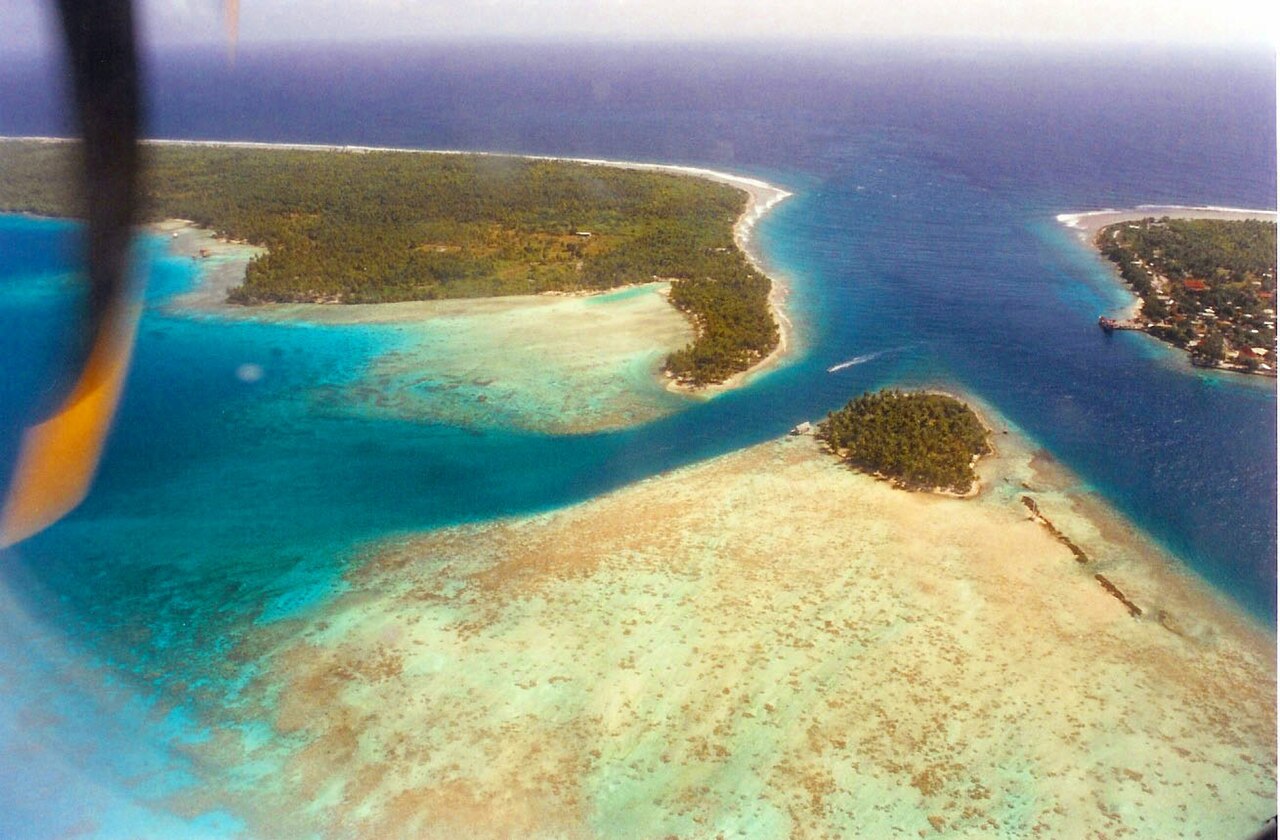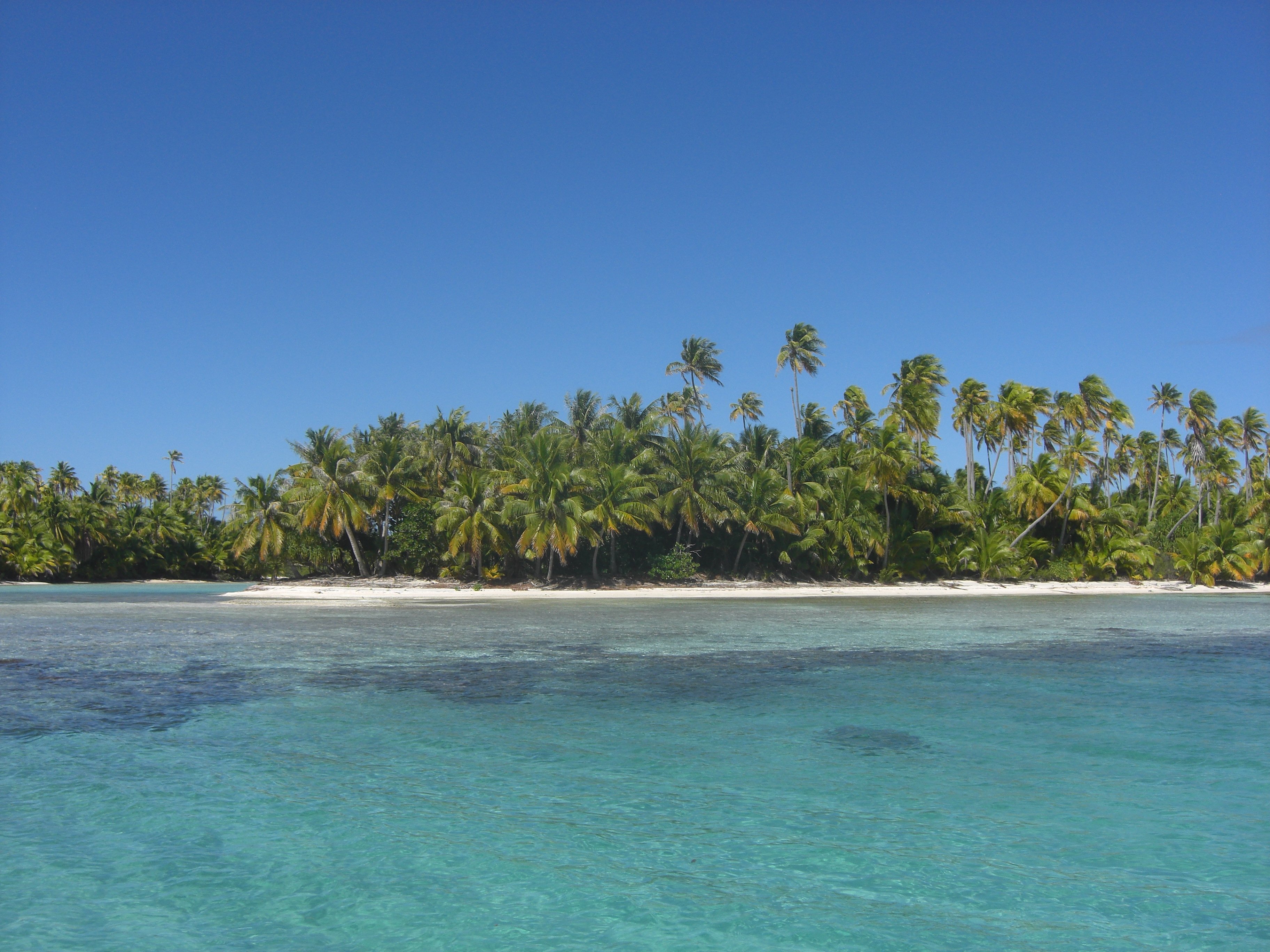
Rangiroa is one of the largest atolls in the world — a thin necklace of coral islets enclosing a turquoise lagoon so vast it has its own weather. The inhabited strip runs about 10 km along the northern rim; everywhere else is open water, reef, and sky. There are no mountains, no rivers, no traffic lights. Just coral, coconut trees, and the Pacific.
The reason most people come is diving. Tiputa Pass and Avatoru Pass are among the best drift dives on the planet: strong tidal currents pull you through channels crowded with grey reef sharks, manta rays, barracuda, and dolphins. Even snorkelers can drift the pass at slack tide and find themselves eye-to-eye with sharks in clear water. The lagoon is calm and warm — good for beginners, too.
Beyond the passes, boat excursions reach the Blue Lagoon (Lagon Bleu) and Pink Sands (Les Sables Roses) on the far side of the atoll. These are half-day trips worth taking: shallow water over pale sand in shades that don't photograph accurately. The fish park at Lagon Vert lets you swim with large tame sharks and rays.
Life on Rangiroa is genuinely simple. Most accommodation is small family-run pensions offering half-board. The single paved road runs the length of Avatoru islet; bikes are the right way to travel it. Come expecting to eat, sleep, dive, and watch the stars — they're extraordinary this far from city lights.