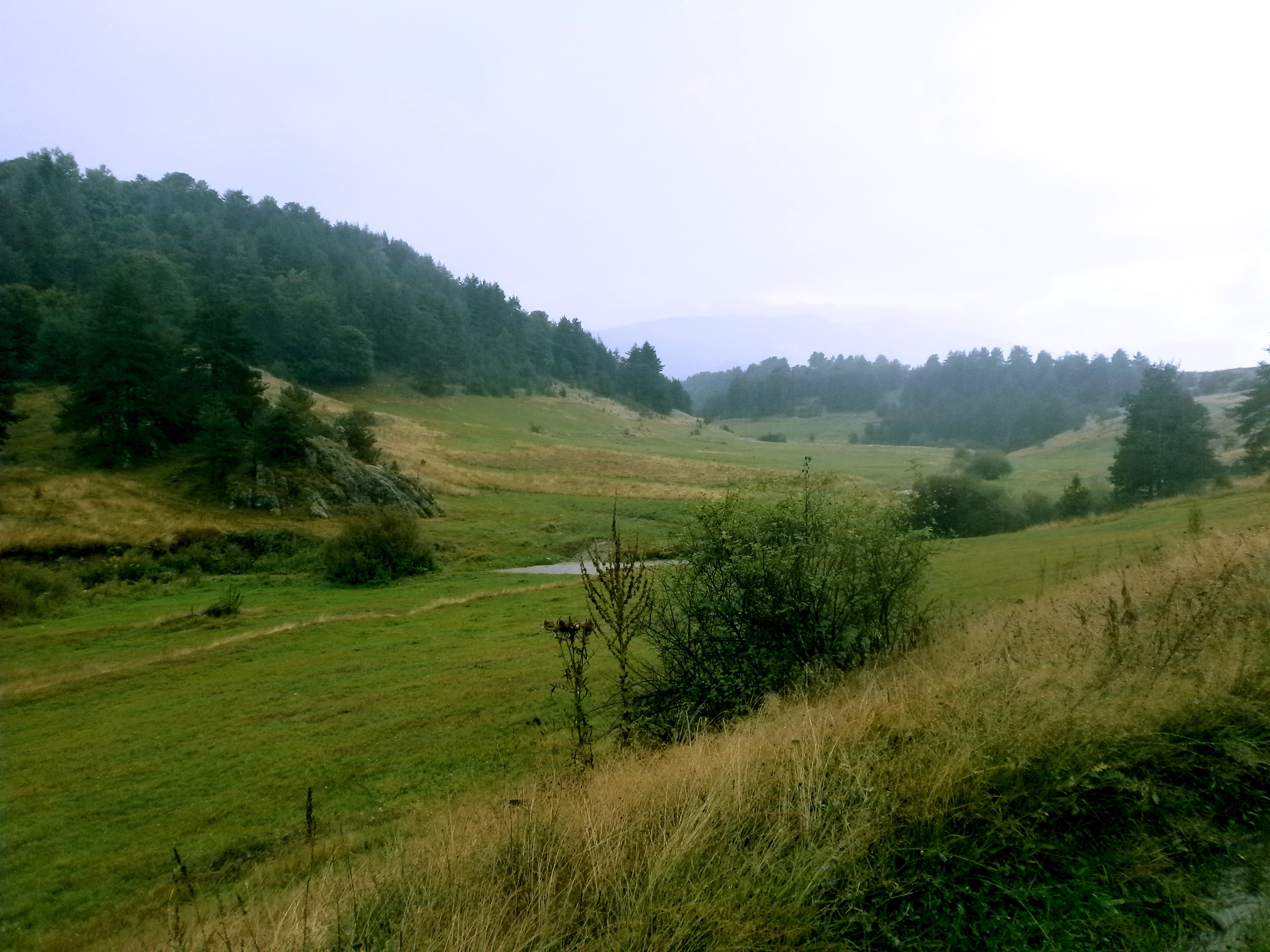
The Rhodope Mountains stretch across southern Bulgaria and into northeastern Greece, forming a massive plateau of forested ridges, deep river gorges, traditional villages, and ski resorts that few Western European visitors have yet discovered. The range runs roughly 230 kilometres east to west, and nowhere exceeds 2,200 metres, but the combination of dense spruce and beech forest, dramatic limestone gorges, and a slow, rural pace of life gives the Rhodopes a character quite distinct from the more visited Rila and Pirin ranges to the west.
The mountains are home to the Pomaks — Bulgarian-speaking Muslims — whose presence gives the region a cultural layering that sets it apart from much of Bulgaria. Villages like Shiroka Laka and Kovachevitsa have been preserved as architectural reserves, their stone-paved streets and solid National Revival houses photographically perfect in a way that doesn't feel forced. The Rhodopes Musical Festival in Shiroka Laka celebrates the distinctive two-voice singing tradition of the area — a UNESCO intangible heritage element — with throat-singing competitions and folk music that has little in common with the Western European folk tradition.
The landscape is most dramatic in the gorges. The Trigrad Gorge in the west, where the Trigrad River cuts a narrow slot canyon through pale limestone cliffs, contains the Devil's Throat Cave — a system in which a river disappears underground and re-emerges with a roar two kilometres away. To the east, the Arda River has been dammed into a series of reservoirs that provide strikingly blue water against the forested slopes. The high plateau between contains Pamporovo, Bulgaria's southernmost ski resort, operating on modest slopes above Smolyan from December to March.
Smolyan is the largest town in the region and a reasonable base, though the Rhodopes reward driving between villages more than staying in any single hub. For walkers, marked trails connect most of the major sights; the E8 long-distance route passes through the area. Spring and early autumn are the best seasons — the forests are spectacular in October, and the gorges are accessible without summer crowds.