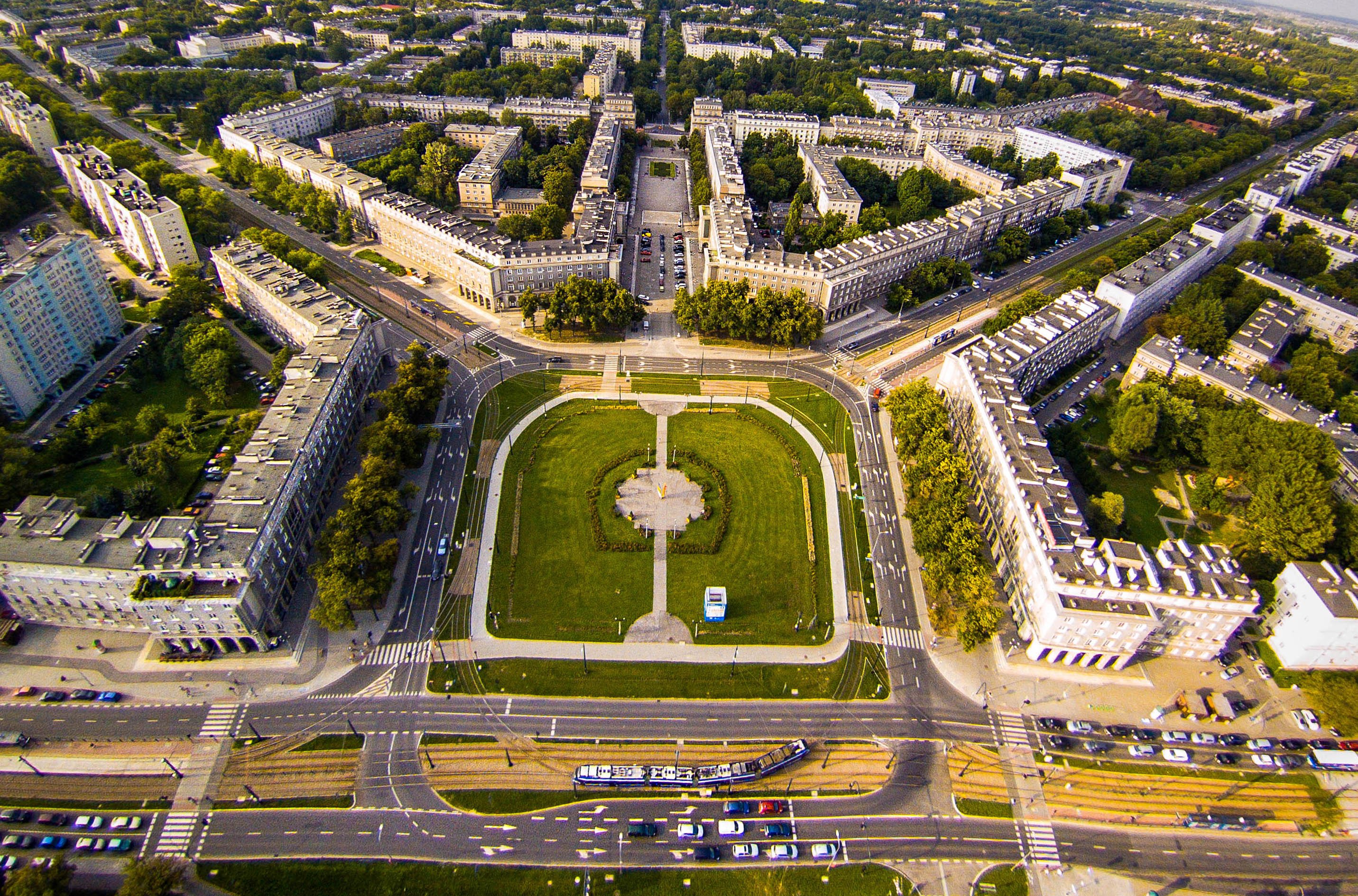
Nowa Huta — "New Steelworks" — is the planned socialist district built east of Krakow's historic centre from 1949 onwards as a deliberate counterweight to what the communist authorities saw as a bourgeois, Catholic, intellectual city. The Soviet-backed planners designed it as a model proletarian city, complete with a vast steelworks employing 40,000 workers, broad boulevards radiating from a central square, and elaborate neoclassical apartment blocks that borrow from both Soviet monumentalism and Italian Renaissance forms.
The result is one of the most coherent and visually striking examples of Socialist Realist urban planning in Europe. Central Nowa Huta — around Plac Centralny and the main boulevard Aleja Róż — has an austere grandeur that is genuinely impressive, and the scale and ambition of the project are clearer in person than in photographs. The neighbourhood is also the site of the Lord's Ark (Arka Pana), a church built by hand by local residents between 1967 and 1977 in direct defiance of communist anti-religious policy — Pope John Paul II consecrated it in 1977. Nowa Huta is 20-30 minutes by tram from the Old Town; several operators offer guided tours.