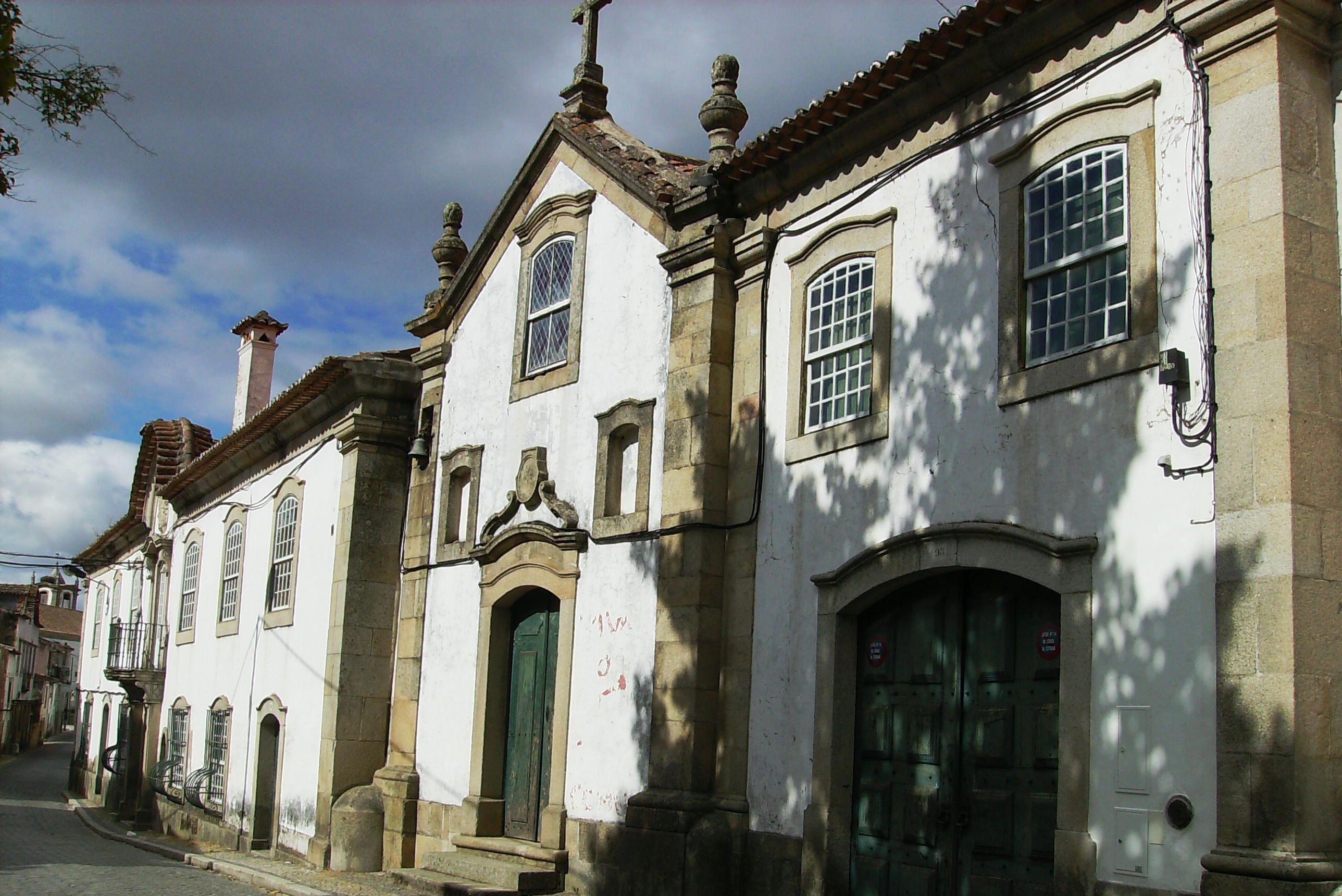
Castelo Branco is the capital of a large, thinly-populated district in eastern Portugal, pressed up against the Spanish border. The district stretches from the northern slopes of the Serra da Estrela down to the Tagus valley, and includes some of the most picturesque and least-visited mountain villages in the country — Belmonte, Sortelha, Monsanto, and Idanha-a-Velha among them.
The city of Castelo Branco itself sits on a hill in the middle of this territory, built around the ruins of a Templar castle that gave the town its name. The Jardim do Paço Episcopal is its finest sight — an astonishing baroque garden filled with stone statues and topiary, laid out in the 18th century on the grounds of the old bishop's palace. Next door, the Francisco Tavares Proença Júnior museum contains the embroidered silk coverlets (colchas) that are the city's most distinctive traditional craft.
Beyond the cathedral city, the district rewards slow travel. The villages clinging to the granite outcrops of the Serra da Estrela are good bases for hiking; Monsanto, carved into vast boulders on top of a hill, is one of the most dramatically situated villages in Europe. The walled town of Idanha-a-Velha, once a Roman and Visigothic episcopal seat, is now nearly empty but full of layered history.
Castelo Branco is about 250 kilometres northeast of Lisbon and is easily reached by train or the A23 motorway.