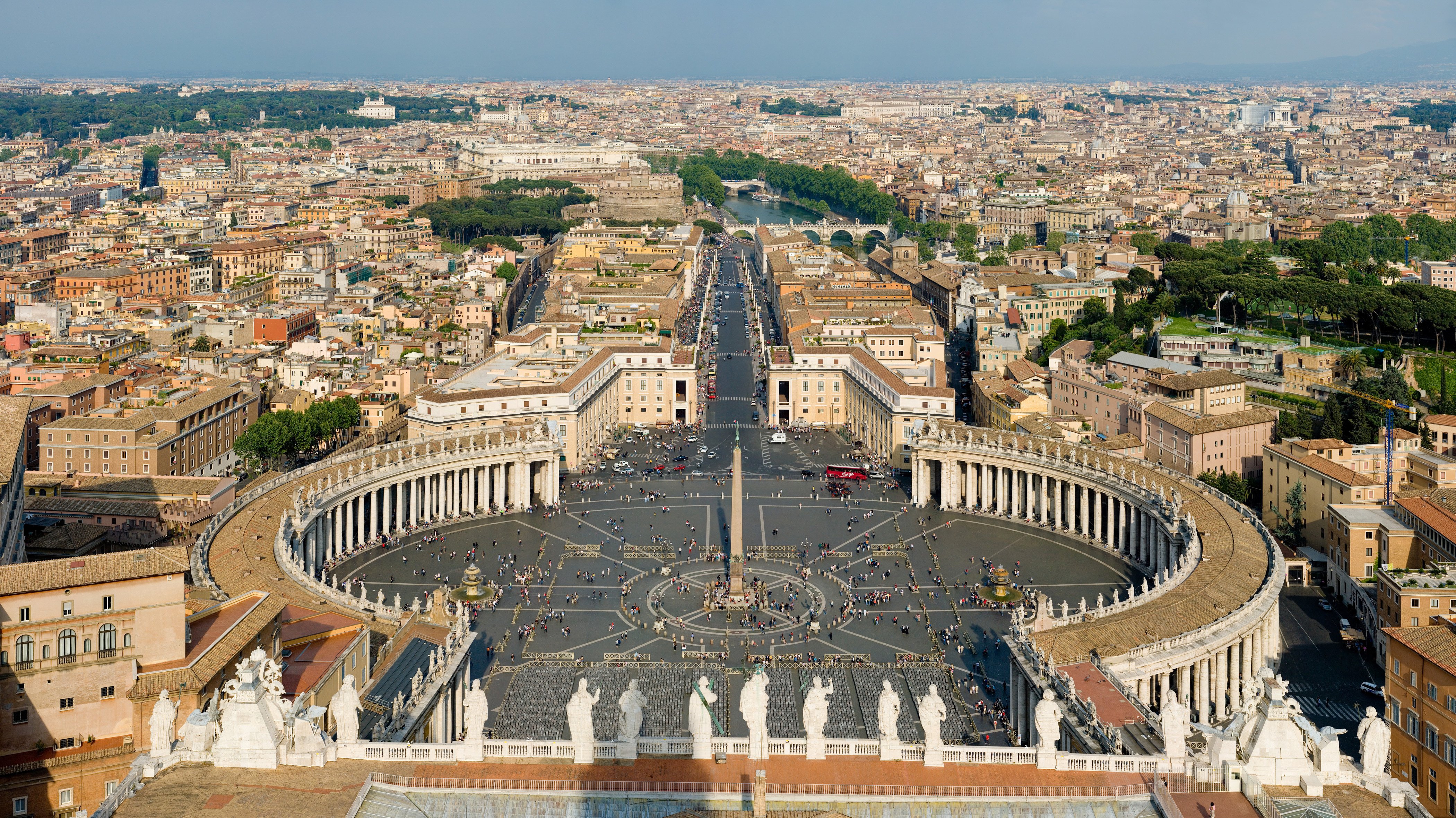
Vatican City is the world's smallest sovereign state — 44 hectares enclosed by medieval walls on the west bank of the Tiber in Rome. It is the spiritual and administrative centre of the Roman Catholic Church, the residence of the Pope, and home to some of the most important art and architecture on earth.
The two main draws are St. Peter's Basilica and the Vatican Museums. Between them, they can easily fill an entire day. The basilica is free to enter; the museums require timed tickets booked in advance, or you face a queue that can stretch two hours. The Sistine Chapel is at the end of a long march through the museum galleries — plan for several hours on your feet. Along the way are the Raphael Rooms, the Gallery of Maps, the ancient sculptures of the Pio-Clementine Museum, and the painting collection of the Pinacoteca.
Despite its size, Vatican City is a sovereign state with its own postal service, radio station, and railway station (rarely used for passengers). The Swiss Guard, in their Renaissance-era uniforms, stand at the entrances. About 800 people live within the walls, most of them clergy or employees of the Holy See.
Visiting is straightforward from central Rome. Metro Line A to Ottaviano station puts you a 10-minute walk from St. Peter's Square. Come early, book museum tickets online, and wear comfortable shoes — the marble floors are unforgiving.