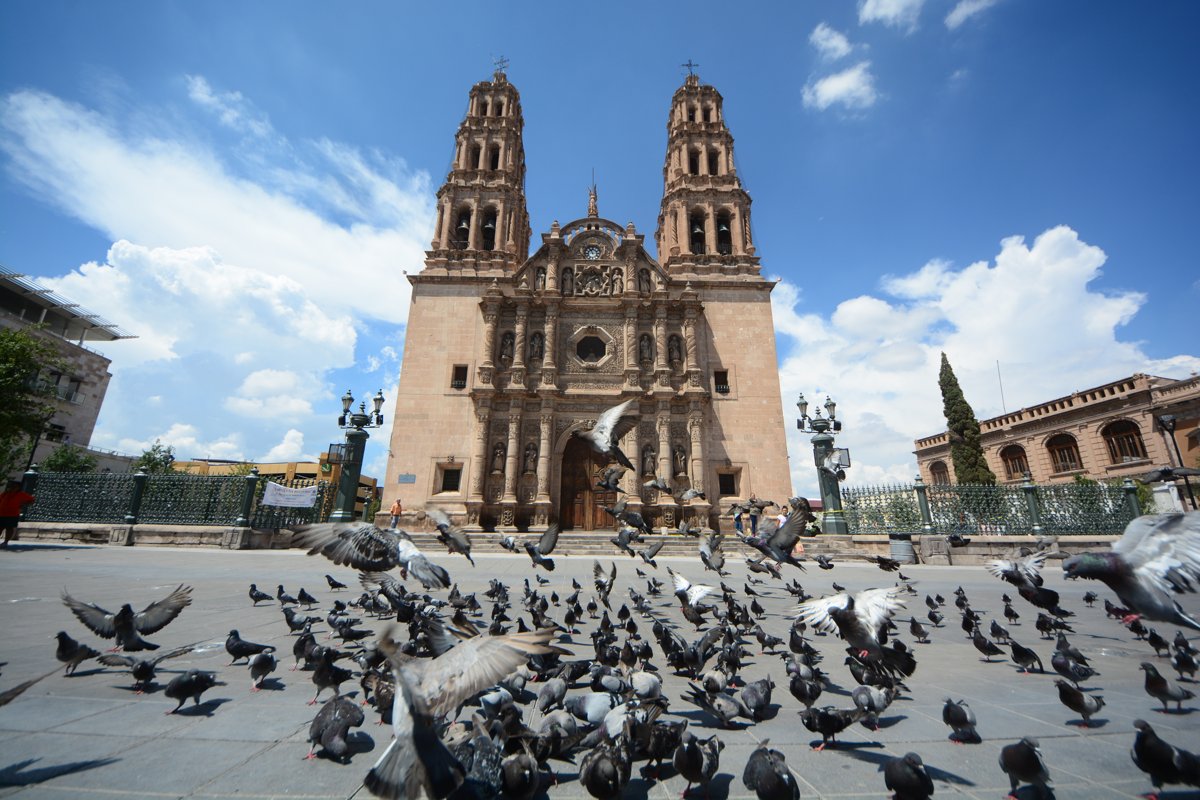
The dog is probably more famous than the city, but Chihuahua rewards the traveler who makes the effort to get here. As the capital of Mexico's largest state — a vast territory of desert, sierra, and canyon — it is the natural gateway to the Copper Canyon, one of the great natural spectacles of North America. The canyon system is deeper and longer than the Grand Canyon, and the train ride down into it from Chihuahua is one of the finest rail journeys on the continent.
Founded in 1709 during the colonial silver rush, Chihuahua grew wealthy on mining and cattle ranching. Tree-lined boulevards, colonial mansions, and a handsome cathedral on the central plaza still carry that prosperity. The city has a strong revolutionary heritage: the Francisco Villa Museum occupies the authentic fifty-room quinta where Pancho Villa lived, including the bullet-riddled Dodge in which he was assassinated. The Quinta Gameros, a French Art Nouveau mansion that somehow ended up in the Chihuahuan desert, is equally worth your time.
On market days an unexpected element arrives in town: tall, blond, blue-eyed Mennonite farmers from the surrounding agricultural colonies, selling their famous Chihuahua cheese from the street corners in their traditional denim cover-alls. Their presence is a reminder that northern Mexico has always been a more complicated place than the clichés allow.
Chihuahua sits on the main highway connecting Mexico City with the border city of Ciudad Juárez, making it a natural stopping point for travelers crossing the north.