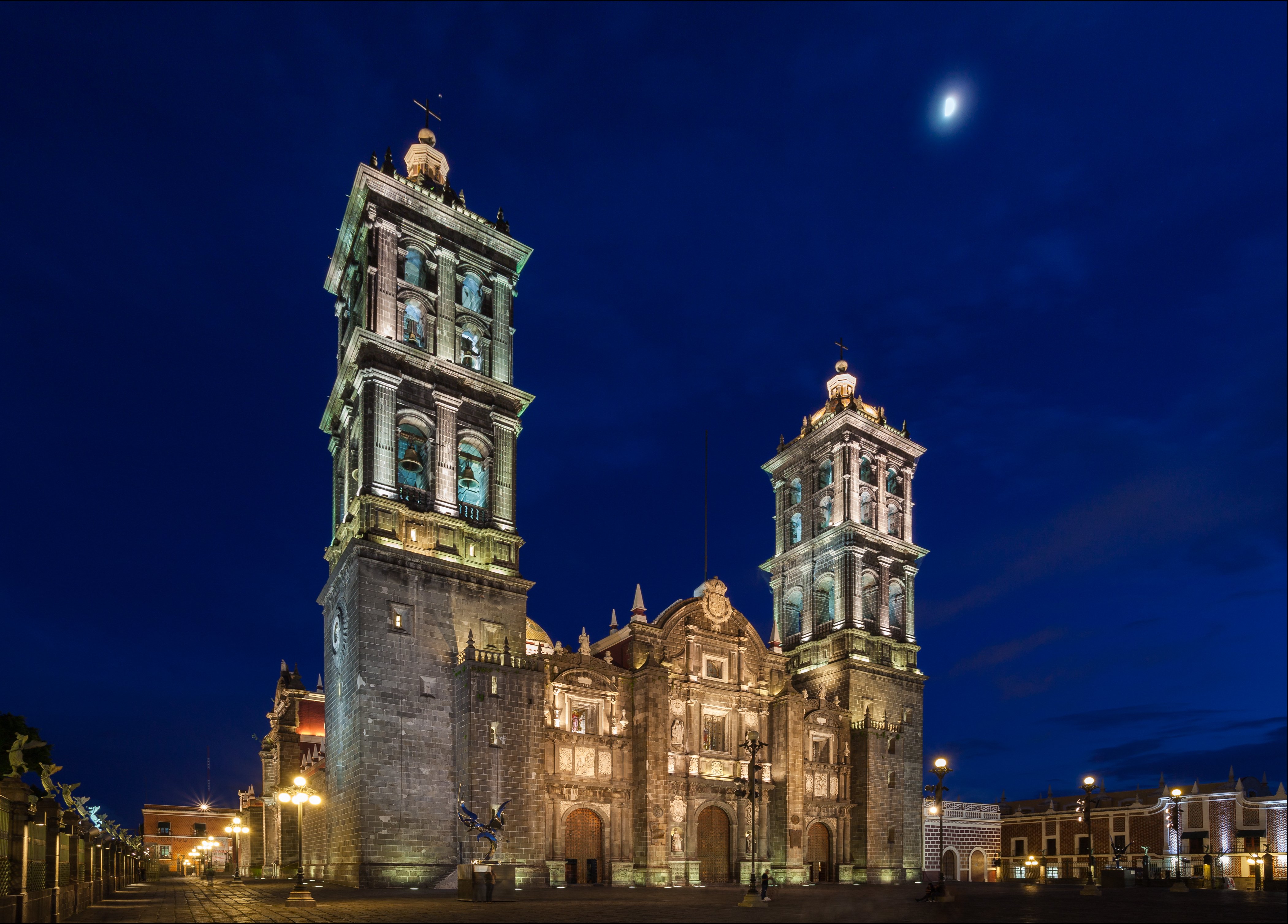
Puebla de los Ángeles is one of Mexico's great colonial cities — a UNESCO World Heritage Site with over 5,000 buildings from the 16th to 19th centuries, all set against the backdrop of the snowcapped volcanoes Popocatépetl and Iztaccíhuatl. The historic centre is a grid of churches, convents and brightly tiled houses that feels more lived-in and less touristic than many of its peers.
The city is famous above all for its food. Mole poblano, the complex chocolate-and-chilli sauce that defines Mexican cuisine, was born here — legend says it was invented by nuns at the Convent of Santa Rosa. Chiles en nogada, the walnut-cream-and-pomegranate dish that mirrors the Mexican flag, is another Puebla creation. The city's Talavera pottery, hand-painted in blue, white and yellow, decorates facades all over the centro histórico and fills the workshops along Calle 18 Poniente.
The Zócalo is one of Mexico's finest central squares, anchored by the cathedral with its twin bell towers — the tallest in the country. The Biblioteca Palafoxiana, founded in 1646, is one of the oldest public libraries in the Americas and worth a visit for its vaulted cedar-wood shelves alone. The Amparo Museum houses an outstanding collection of pre-Columbian and colonial art.
Puebla sits about two hours southeast of Mexico City by bus, making it an easy side trip or a rewarding base in its own right.