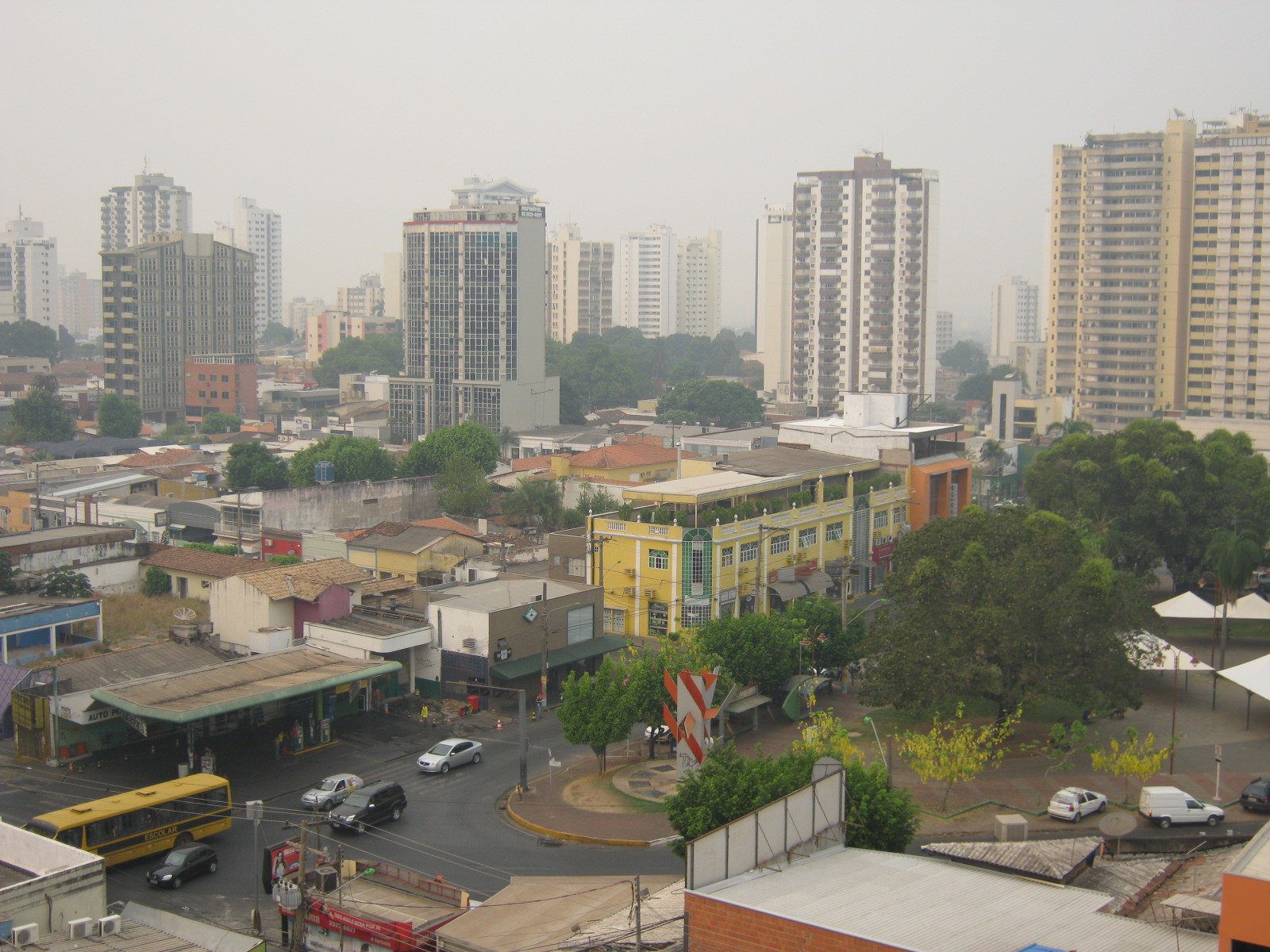
Mato Grosso capital and gateway to the northern Pantanal, with Brazil's geodetic centre on its edge.
Cuiabá is the capital of Mato Grosso and the main gateway to the northern Pantanal, the vast wetland that is one of the best places in South America to see wildlife. The city itself is hot — among the hottest in Brazil — and sprawling, but it has a certain rough-edged energy. The riverside area and the old centre around the Praça da República have been partly revitalised, and the Museu Rondon at the university campus has a good collection of indigenous artefacts.
Most visitors pass through Cuiabá on the way to the Pantanal lodges along the Transpantaneira highway, which begins at Poconé about an hour south. The wildlife viewing along this raised dirt road — capybaras, caimans, jabiru storks, howler monkeys, and with luck a jaguar — is extraordinary. Cuiabá is also the starting point for trips to Chapada dos Guimarães, a sandstone plateau with dramatic cliffs, red rock formations, and waterfalls about 65 km to the northeast.
The city holds an unexpected distinction: a pyramid monument in the Coxipó da Ponte district marks what is officially designated as the Geodetic Centre of South America — the mathematical heart of the continent. The Cathedral Basilica of Bom Jesus and the 18th-century Igreja de Nossa Senhora do Rosário give the old centre an architectural character that makes the inevitable transit stop more interesting than you might expect. The Mãe Bonifácia State Park provides an accessible slice of cerrado forest within the city limits.
Guide
Day Trips
Cuiabá's main function for most travellers is as a base for excursions into the surrounding wilderness. The Pantanal and Chapada dos Guimarães are the two big destinations, both within striking distance.
Chapada dos Guimarães lies about 65 km northeast of Cuiabá. This sandstone plateau is dramatic: red cliffs, deep canyon valleys, waterfalls, and the Véu de Noiva (Bridal Veil) cascade that drops 86 metres into the forest. The town of Chapada dos Guimarães itself is a pleasant base with some good restaurants and guesthouses. Day trips are easy by car or organised tour.
The Pantanal stretches south of Cuiabá along the Transpantaneira highway, which begins at the town of Poconé (about 100 km south). This raised dirt road crosses 122 wooden bridges and runs through some of the most wildlife-rich terrain in South America — caimans sunbathe on the banks of every pool, capybaras graze along the verges, and jabiru storks nest in the treetops. Guided lodge stays are the recommended way to experience it; most lodges arrange transfers from Cuiabá.
Guide
Getting There
Cuiabá is served by Marechal Rondon International Airport (CGB), about 7 km from the city centre. There are frequent domestic flights to São Paulo, Brasília, Rio de Janeiro, and other major cities. The airport is named for the city's most famous native son.
The city is connected by road to São Paulo (1,730 km via the BR-364) and to Porto Velho in Rondônia, which makes it an important waypoint on overland routes through the Brazilian interior. Long-distance buses serve the Rodoviária (bus terminal) in the city centre. The BR-364 is fully paved, and the drive from São Paulo takes about 20 hours — most people fly.