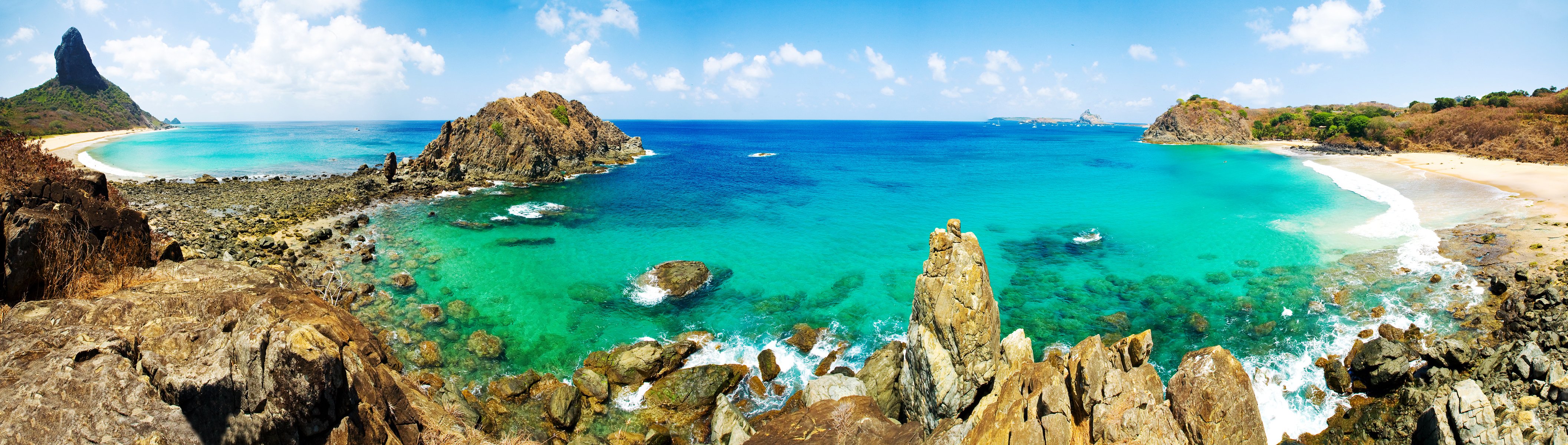
Fernando de Noronha is an archipelago of 21 islands and islets sitting 354 kilometres off the northeastern tip of Brazil, and it is one of the finest marine destinations in the Atlantic Ocean. The water here is exceptionally clear, warm, and alive — dolphins, sea turtles, sharks, and rays are part of the daily landscape, not occasional encounters. The main island holds the only settlement, and both land and sea are protected as a UNESCO World Heritage Site and national marine park.
Access is controlled. Only about 500 visitors are permitted on the island at any time, and everyone pays a daily environmental preservation fee (Taxa de Preservação Ambiental) that increases the longer you stay. This is deliberate: the islands have been managed as a premium, low-impact destination since the 1980s, and the results are visible. The beaches are some of the cleanest and most pristine in South America, the reef is healthy, and the water clarity is extraordinary.
The island itself is striking. Volcanic rock formations rise from the sea in jagged columns and arches; the famous Dois Irmãos (Two Brothers) peaks dominate the skyline from most of the main beaches. The interior is dry forest and farmland, with a small town, a historic fort, and a scattering of pousadas (guesthouses). Everything is on a small scale — the island is about 18 kilometres long and 3.5 kilometres at its widest — and easily navigated by buggy or bicycle.
Dolphins are the signature wildlife. A pod of several hundred spinner dolphins uses the Bay of Dolphins (Baía dos Golfinhos) as a resting area every morning, arriving predictably enough that the spot is named after them. Sea turtles nest on several beaches between December and May, and the government runs a monitoring programme that visitors can observe. The diving and snorkelling are world-class, with visibility regularly exceeding 40 metres.