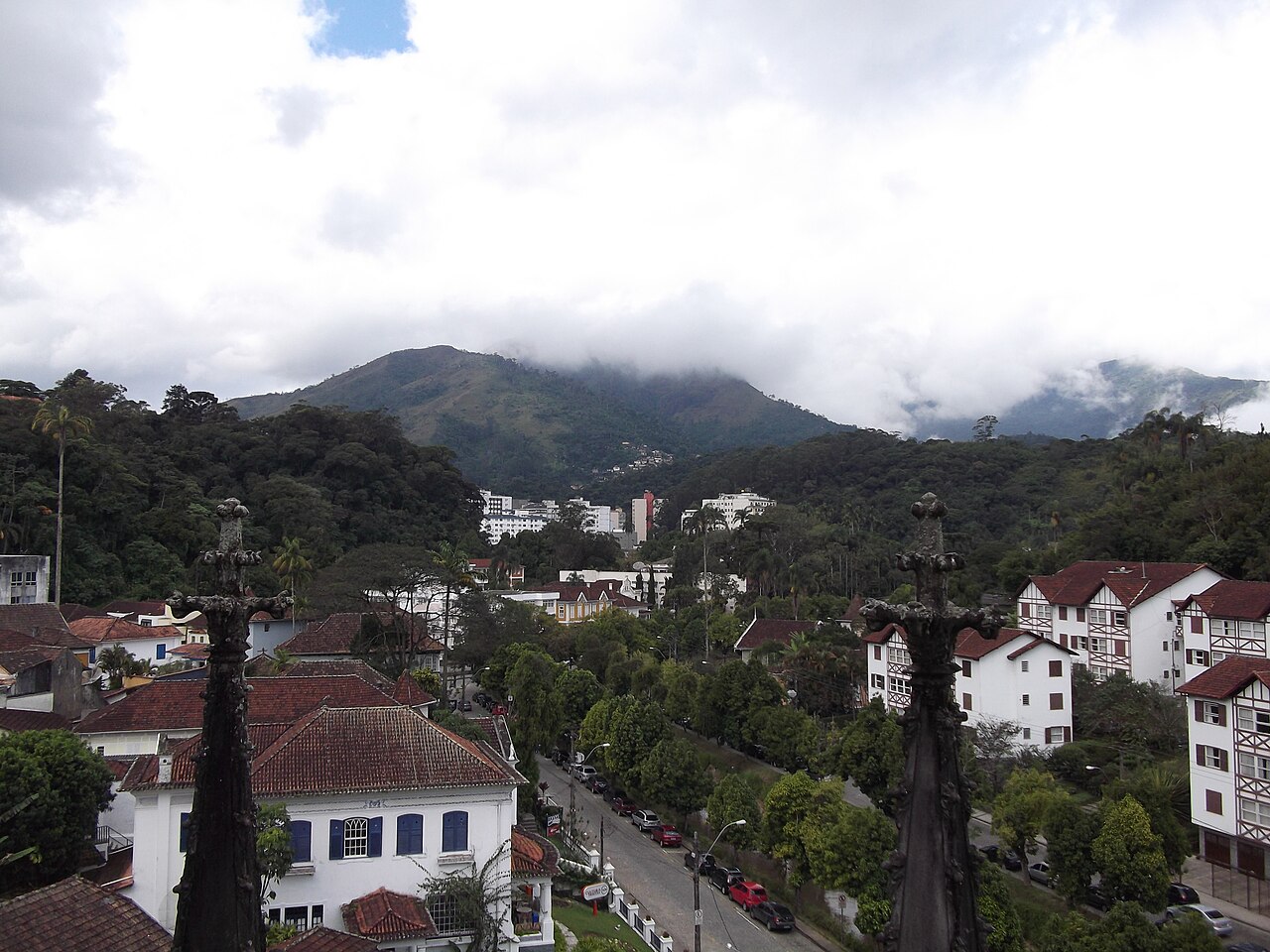
Petrópolis sits in the Serra da Estrela mountains about 65 kilometres north of Rio de Janeiro, at around 800 metres above sea level. The cooler altitude made it the summer capital of Brazil from the days of Emperor Pedro II until 1962 — when the heat in Rio became unbearable, the government simply moved uphill. Today it is a city of over 300,000 people, but the imperial-era centre retains a distinct character: tree-lined avenues, canals running alongside the main streets, and a scattering of 19th-century buildings.
The Museu Imperial, housed in Pedro II's summer palace on the Rua da Imperatriz, is the main attraction. The neoclassical building is beautifully maintained and furnished as it was during the emperor's time — you enter in felt slippers to protect the floors. The collection includes the imperial crown and sceptre. A short walk away, the Palácio de Cristal — a prefabricated cast-iron and glass pavilion shipped from France in 1884 — is the most elegant building in the city.
The Catedral de São Pedro de Alcântara, built in French Gothic style and completed in 1925, is the final resting place of Pedro II and Empress Teresa Cristina. Despite its Gothic appearance, the building is entirely 20th century. The Rua do Imperador, the main commercial street through the historic centre, was stripped of its imperial name after the Republic was proclaimed in 1889 and only regained it 90 years later.
Less expected is the Casa Stefan Zweig, the last home of the Austrian novelist who fled Nazi Europe and chose Petrópolis as his exile before his death here in 1942. The house is now a small and affecting museum.
Petrópolis makes an easy day trip from Rio, though the winding mountain road can be slow. On 16 March the city celebrates its founding with a festival.