Patagonian national park of granite towers, turquoise lakes, wind-bent steppe, and multi-day treks.
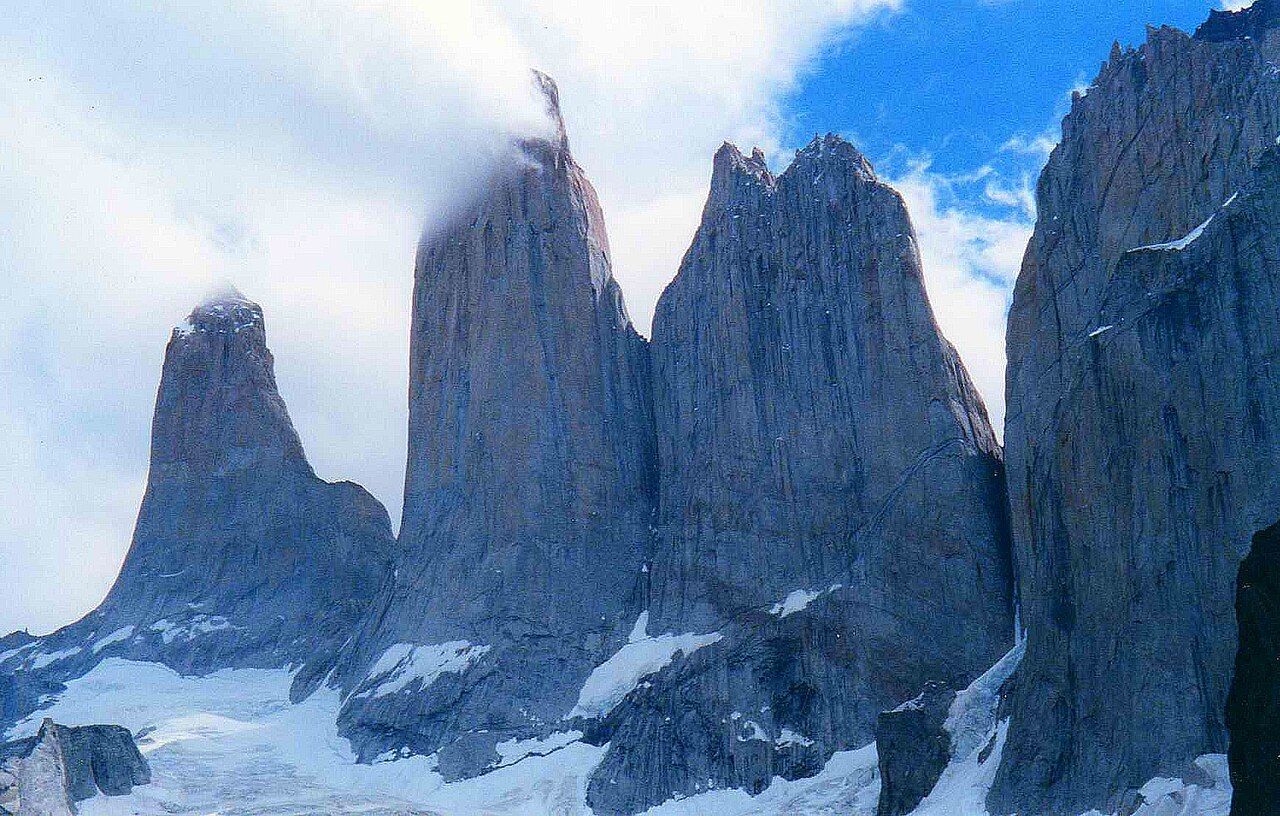
Torres del Paine National Park, across the border in Chile, is one of the most spectacular wilderness areas in South America. The park covers 935 square miles of staggering variety: wind-bent grasslands give way to turquoise lakes, ancient forests, and the sheer granite towers that give the park its name. The three Torres — soaring rock pillars that glow pink at dawn — are the iconic image of Patagonia.
The wildlife is remarkable. Guanacos graze the open steppe in large herds, pumas stalk the valleys, and Andean condors ride the thermals above the peaks. More than 100 bird species have been recorded in the park, including the crested caracara and the black-necked swan.
Most visitors come for the trekking. The W Trek (4–5 days) hits the highlights: the Torres viewpoint, the French Valley, and the Grey Glacier. The full Circuit (8–9 days) loops behind the massif for a wilder, quieter experience. Refugios and campsites along both routes must be booked well in advance in peak season (December to February). The Cuernos del Paine — the dramatic horned peaks rising above Lake Nordenskjöld — are visible from the central section of the W and are, for many visitors, the most photographed sight in the park. The gateway town on the Chilean side is Puerto Natales, reachable by bus from El Calafate in about five hours.
Local tip
Torres del Paine is Patagonian wilderness — the weather flips from sun to gale in minutes, so layer up and pack for all four seasons in a day. The 'W' trek takes four or five days; book refugios or campsites months ahead. Even day-trippers should start early for the towers at dawn. The wind can literally knock you over, so hold on.
Guide
Getting There
The gateway town on the Chilean side is Puerto Natales, 112 km south of the park entrance. Buses run from Puerto Natales to the park's main entrance at Laguna Amarga several times daily in season, taking about two hours. From El Calafate in Argentina, buses cross the border to Puerto Natales in about five hours; most travellers coming from the Argentine side do the crossing this way and spend a night in Puerto Natales before continuing into the park.
Punta Arenas has the nearest international airport with connections to Santiago. Transfer buses connect Punta Arenas to Puerto Natales in about three hours. Renting a car in Punta Arenas or Puerto Natales gives more flexibility for reaching the park's more remote trailheads but adds considerably to the cost.
Guide
When to Go
The park is open year-round but the trekking season runs from October to April. December to February is the peak with the most stable weather, the longest days, and the fullest refugios — book accommodation months in advance. November and March are good shoulder-season options with fewer people and usually decent weather. The Patagonian wind blows hardest from November through January; some days it is genuinely difficult to walk against it.
Winter (June to August) brings snow, closures of some trails, and near-empty refugios — an entirely different and rewarding experience for those prepared for cold and short days. The park never fully closes. The Torres viewpoint hike is best done in midsummer when the light lasts until 10pm; a pre-dawn start for the sunrise is equally worthwhile at any point in the season.