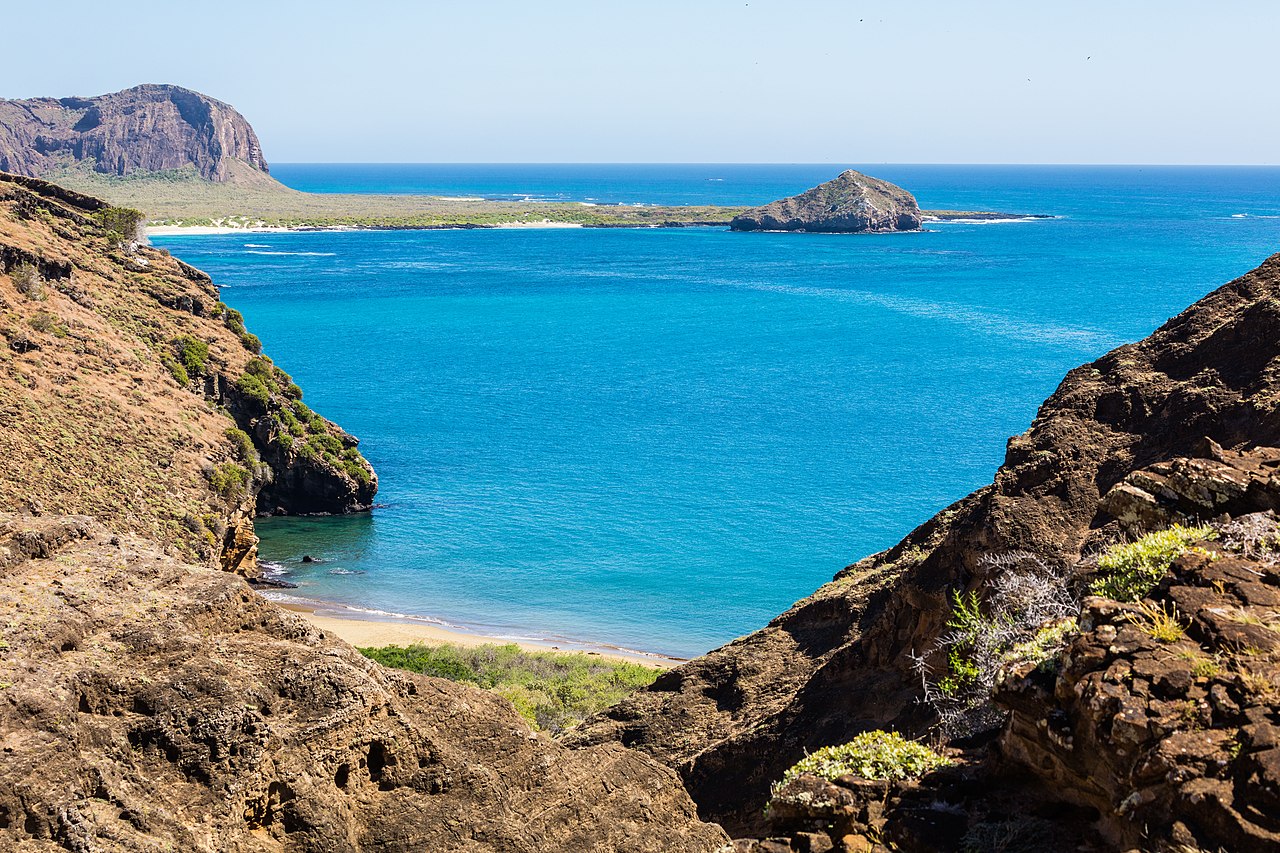
Galápagos island and provincial capital base where Darwin landed, with sea lions across Puerto Baquerizo Moreno.
San Cristóbal is the oldest island in the Galápagos archipelago and the one with the most history. Darwin made landfall here in 1835 — his first stop in the islands — and found what he later described as the most extraordinary assemblage of creatures on earth. Two centuries later the island still delivers on that promise.
Puerto Baquerizo Moreno, the island's small capital, serves as the administrative centre of the Galápagos province. It is calmer and less developed than Puerto Ayora on Santa Cruz, which makes it a good base for travellers who prefer a quieter pace. Sea lions sprawl across the benches in the main plaza as if they own the place — because, functionally, they do.
The island has excellent snorkelling and diving, particularly around Kicker Rock (León Dormido), a dramatic pair of volcanic columns rising 150 metres from the sea. The marine life here — Galápagos sharks, hammerheads, rays, sea turtles, and penguins — is as good as anything in the archipelago. On land, the Interpretation Center above town gives the clearest account of Galápagos natural history of any site in the islands, and the Galapaguera tortoise reserve lets you see giant tortoises without trekking into remote highlands.
San Cristóbal receives fewer visitors than Santa Cruz, which means less crowding at most visitor sites. The tradeoff is fewer departures for inter-island boats and fewer tour operators. For independent travellers willing to be flexible, this island is often the most rewarding entry point to the Galápagos.
Guide
Getting Around
Puerto Baquerizo Moreno is small enough to walk. The main pier, Interpretation Center, waterfront plaza, and most restaurants and dive operators are all within 15 minutes on foot.
For sites outside town — the Galapaguera tortoise reserve, Puerto Chino beach, El Junco lagoon — you will need a taxi or a guided day tour. Taxis are cheap and plentiful; agree on a price before you get in. Rentable bicycles are available for the road to the highlands if you prefer to go independently, but the terrain is hilly.
Most visitor sites around the island (Kicker Rock, Punta Pitt, Isla Lobos) are only accessible by boat. Local tour operators on the waterfront run daily trips; prices are similar across operators and negotiating is accepted, especially for small groups.
Guide
Getting There
San Cristóbal's airport (SCY) receives daily flights from Quito and Guayaquil operated by LATAM and Avianca. Flight time from Guayaquil is around 1 hour 45 minutes; from Quito, about 2 hours 30 minutes with a stop. The airport is a 10-minute taxi ride from Puerto Baquerizo Moreno.
All visitors to the Galápagos must pay a National Park entrance fee on arrival ($200 for foreign adults as of 2024). You will also need to show proof of onward travel and complete a biosecurity inspection — all food and plant material may be confiscated. Flights into San Cristóbal are often cheaper than flights to Baltra (the main Santa Cruz gateway), making it an economical entry point.
Inter-island ferries connect Puerto Baquerizo Moreno with Puerto Ayora (Santa Cruz) and Puerto Villamil (Isabela). The crossing to Santa Cruz takes about 2.5 hours and can be rough; motion sickness tablets are worth having. Depart from the main pier in Puerto Baquerizo Moreno.
Guide
When to Go
San Cristóbal shares the Galápagos climate: two seasons, both of them acceptable. The warm, wet season runs from January to May — air temperatures in the mid-to-upper 20s, calm seas, excellent snorkelling, and the best underwater visibility of the year. The cool, dry season runs from June to December — overcast skies, cooler water (dropping to around 21°C in August), and a fresher, windier feel.
The peak visitor season is July–August (northern summer holidays) and December–January (Christmas and New Year). If you can travel in May–June or October–November, you will find fewer tourists and more availability.
For diving, December–January and May–June are the sweet spots — warm enough for comfort, clear enough for visibility, and whale sharks are reliably seen in May and June. For bird nesting and giant tortoise activity, the warm season (January–April) is most eventful.