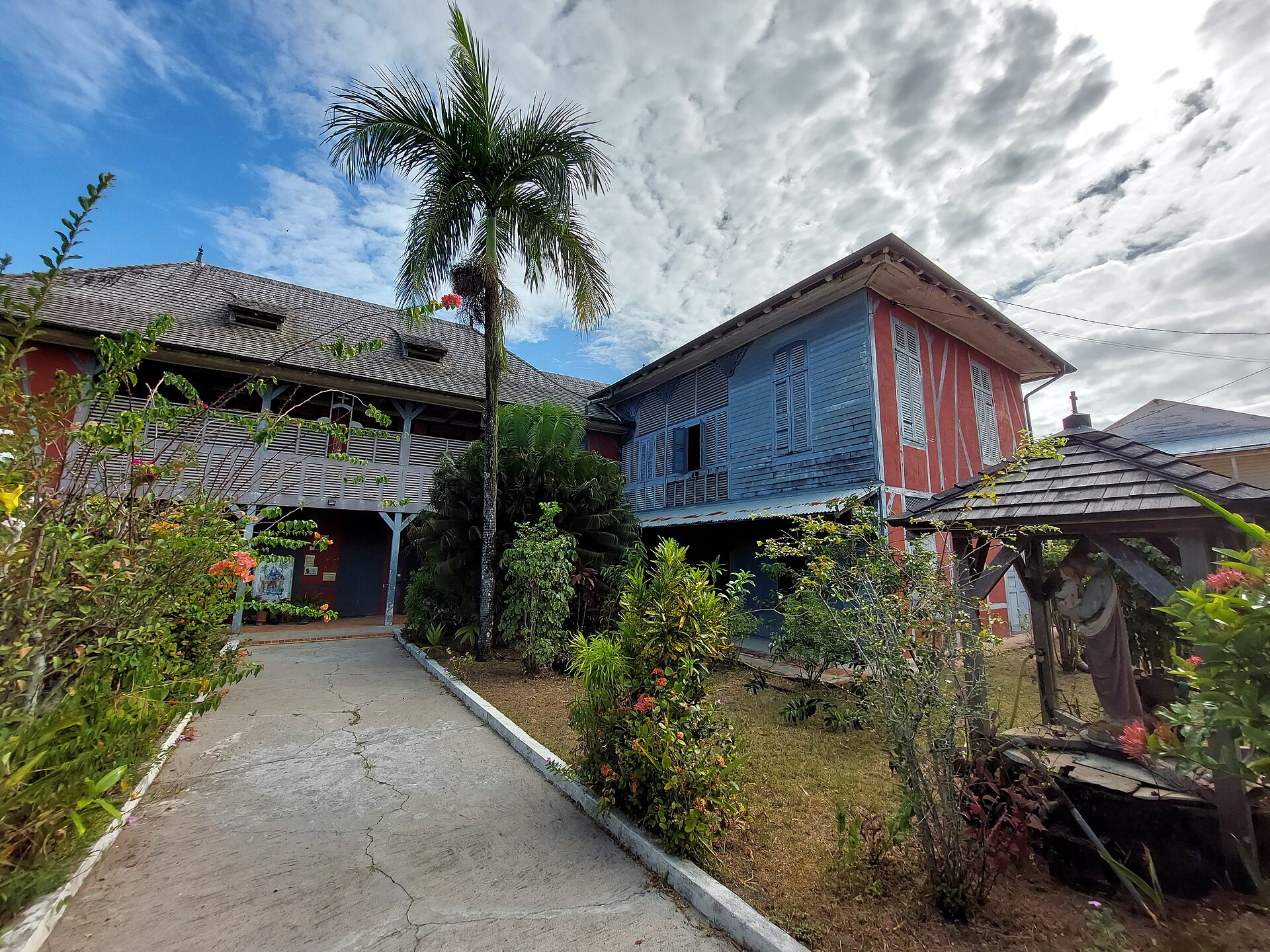
Mana is the prettiest town on the western coast, and the only one in French Guiana that was drawn on paper before it was built. Anne-Marie Javouhey, a French nun of the order of Saint-Joseph-de-Cluny, founded it in 1828 as a settlement for freed slaves and laid it out on a grid of wide streets running down to the river. The grid is still there, and so are the low wooden houses, the church of Saint-Joseph and the convent buildings, which together make a quiet colonial centre that takes twenty minutes to walk and is worth the detour off the Saint-Laurent road.
The town is the administrative centre for a commune that runs from the Maroni estuary deep into the forest, and most of the reasons to be here are outside it. The Réserve Naturelle de l'Amana covers the coast west to Awala-Yalimapo, where leatherback and green turtles nest between March and July; the reserve's information house is in Awala and its staff run the beach patrols. Inland at Javouhey there is a Hmong farming village founded in 1977, like Cacao but less visited, with a Sunday market of its own. South of the town the Mana river runs up to Saut Sabbat, a set of rapids reached by road and then pirogue.
Mana is about an hour from Saint-Laurent-du-Maroni by road, and a natural place to sleep if you are going to the turtle beaches, which are at their best after dark.