Lambarene
©
Lambarene

Lambarene

Ogooué River town known for Albert Schweitzer's hospital and inland Gabon's river life.

Lambarene was put on the map by Albert Schweitzer, and his hospital remains the main reason travellers come to this small riverside town. Located about 240 km southeast of Libreville on the Ogooue River, Lambarene has a population of around 30,000, making it one of Gabon's larger inland towns.

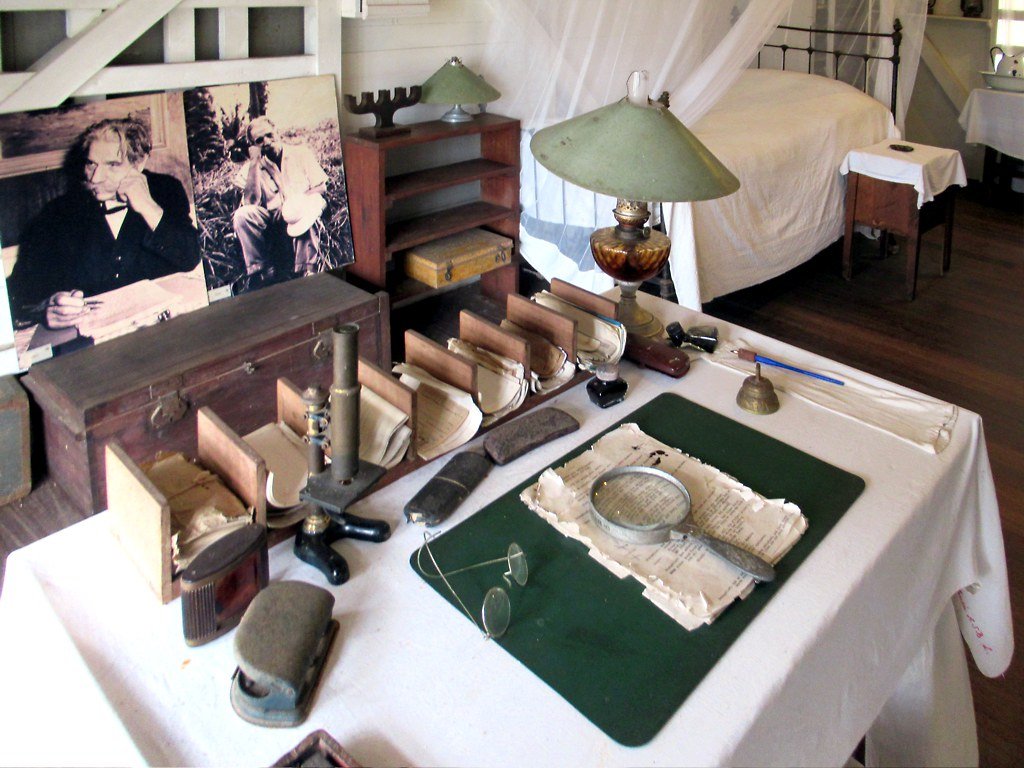
Schweitzer arrived here in 1913 and built his hospital on the riverbank, attracting patients from the surrounding villages by providing food and shelter along with medical care. The original hospital still stands alongside a modern facility that is one of the best-equipped in Central Africa. The old hospital is now the Schweitzer Museum, with the doctor's living quarters preserved much as he left them. You can visit in a couple of hours, and there is a small gift shop with postcards, books, and local handicrafts.

The real draw of Lambarene beyond the hospital is the lake system. The Ogooue River spreads into a network of lakes surrounded by forest, and exploring them by pirogue (dugout canoe) is the best thing you can do here. A full-day motorised pirogue trip to lakes Ezanga, Evaro, and Onangue takes you through beautiful scenery with good birdwatching and the chance to spot hippos. Shorter half-day trips to the nearer lakes are easy to arrange.

In town, take an hour or two for the riverside market in the morning, when the night's catch comes in by pirogue, and pass by the old Sainte-Marie Cathedral on the western bank. Lambarene is reachable by road from Libreville, a drive of three to four hours on one of the better-maintained routes in the country. The town itself is modest and quiet, with a handful of basic hotels and restaurants.

Guide

Books

On the Edge of the Primeval Forest by Albert Schweitzer is the obvious starting point — Schweitzer's own account of his first years at Lambarene, written in plain prose by a man who saw himself as a doctor rather than a writer. It is short, vivid, and remarkably free of self-importance, considering its author later won the Nobel Peace Prize.

Reverence for Life: The Words of Albert Schweitzer collects the philosophical writing that made him famous in Europe before he came to Africa. Read it after the memoir and the place starts to make a different kind of sense.

The Africa House by Christina Lamb, while set in Northern Rhodesia, captures the same eccentric impulse — a European building an outpost of European life in the equatorial forest — and helps explain why Lambarene still feels the way it does.

Guide

Getting Around

The town is divided by the Ogooue into three parts — the southern bank, an island in the river, and the northern bank — joined by two long causeways. It is too spread out to walk comfortably end to end, particularly in the heat. Shared taxis circulate constantly and are cheap; agree the price before you get in.

For the lakes and any travel away from the town centre, the only sensible option is a motorised pirogue with a local boatman. Guesthouses can arrange this, and rates are negotiable depending on how much fuel the trip needs.

Guide

Getting There

Most travellers reach Lambarene from Libreville by road. The drive is around 240 kilometres on the N1, one of the better-maintained roads in Gabon, and takes three to four hours in a private vehicle. Shared taxis and minibuses run from Libreville's PK8 and PK12 motor parks and are cheaper but slower and far less comfortable. Departures are mostly in the morning; aim to leave Libreville by eight or you will travel in the dark on the return.

Afrijet has operated scheduled flights to Lambarene Airport (LBQ) at various times, but the service is intermittent — check before you plan around it. The river itself is no longer a practical option for visitors as the commercial barge services have largely stopped.