Running down the centre of Kenya is the Great Rift Valley, the enormous geological trench that splits East Africa from the Red Sea to Mozambique. Along its length are strung a series of lakes — some alkaline and shallow, some freshwater and deep — that together make up one of the most extraordinary concentrations of birdlife and wildlife on earth. Several of the lakes, and the valleys between them, are protected as national parks or reserves, and they are the reason many safari itineraries north-west of Nairobi exist at all.
The most-visited is Lake Naivasha, a freshwater lake about 90 minutes from Nairobi with hippos in the shallows, fish eagles overhead, and the nearby Hell's Gate National Park where you can cycle or walk among giraffes and zebras (rare in Kenya, where walking safaris are otherwise off-limits). It is the most accessible of the Rift Valley lakes and the easiest to combine with a weekend escape from the capital.
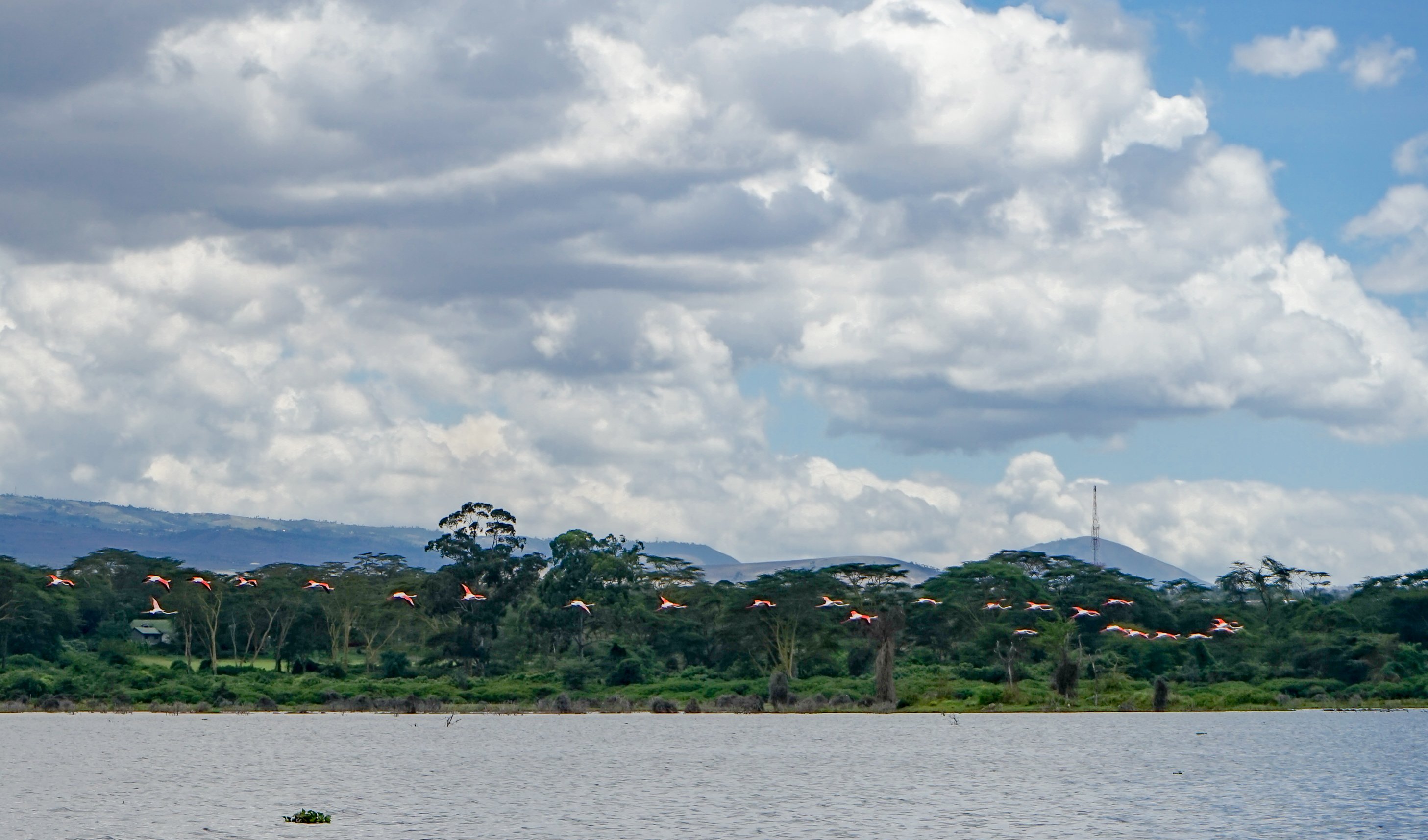
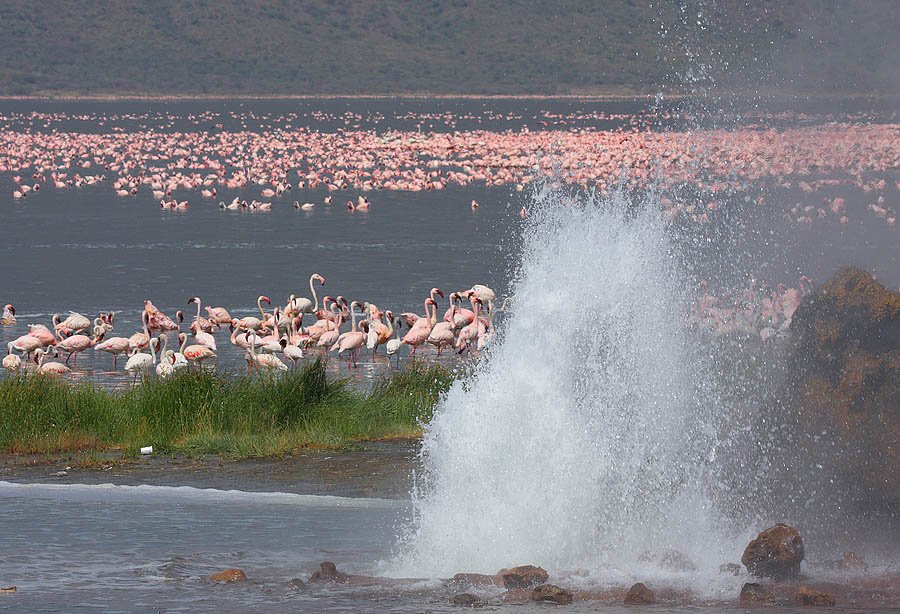
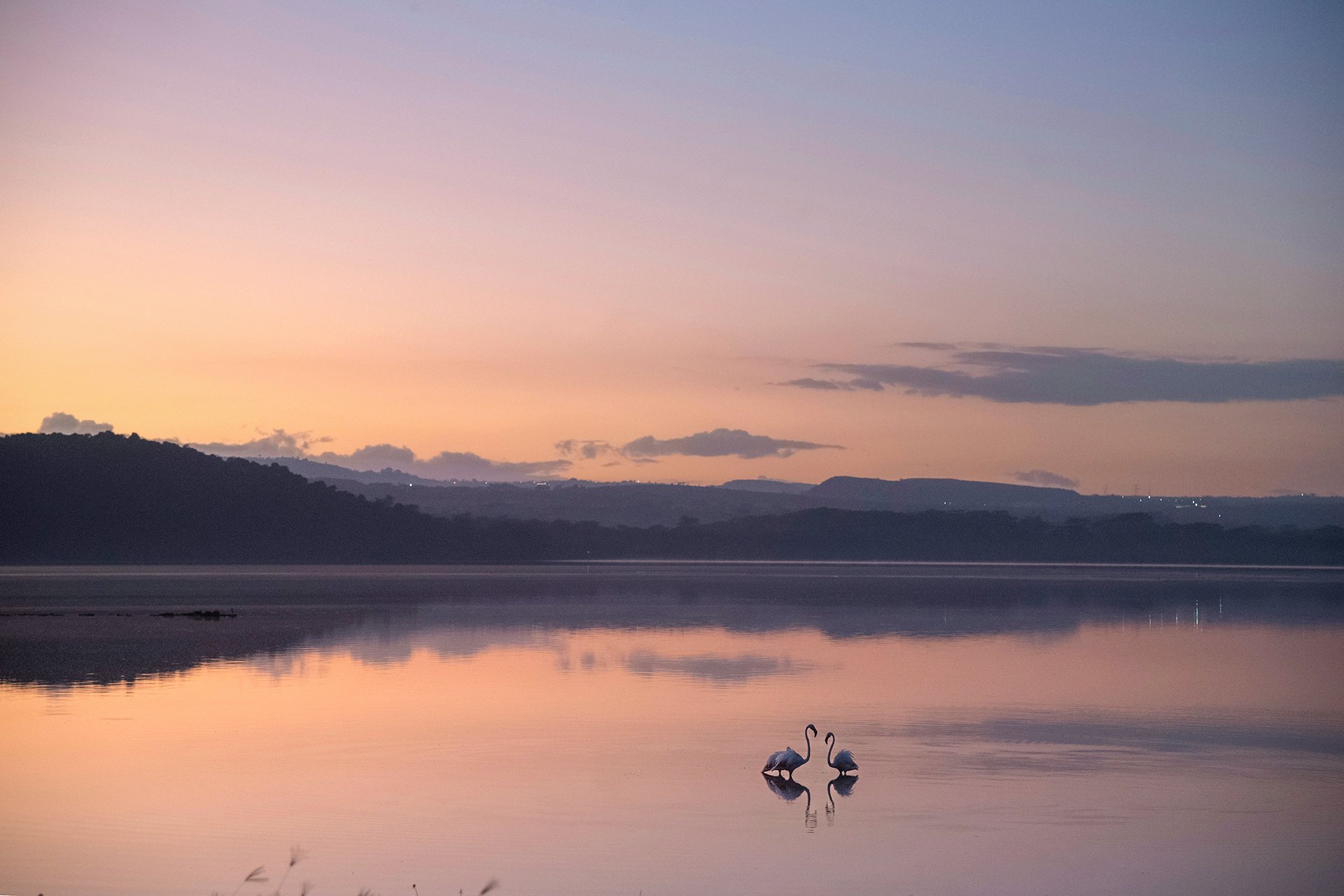
Further north, the Lake Nakuru National Park (not included below but part of the same chain) is famous for flamingoes — though numbers have shifted in recent years to Lake Bogoria, an alkaline lake where hot springs and geysers fringe the shore and flocks of lesser flamingoes gather in their millions. Lake Baringo, just beyond, is one of Kenya's few freshwater rift lakes and has over 470 recorded bird species, the best bird-watching in the country. Lake Elmenteita is a quieter, smaller soda lake between Naivasha and Nakuru, also good for flamingoes.
Out on the far north-western frontier, Lake Turkana — the "Jade Sea" — is one of the most remote and otherworldly lakes in Africa, 250 km long, surrounded by volcanic desert, and historically important as the site of some of the oldest hominid fossils ever found (the cradle of mankind). And on the south-western border with Uganda and Tanzania, Lake Victoria — the largest lake in Africa and the source of the White Nile — laps at the city of Kisumu.