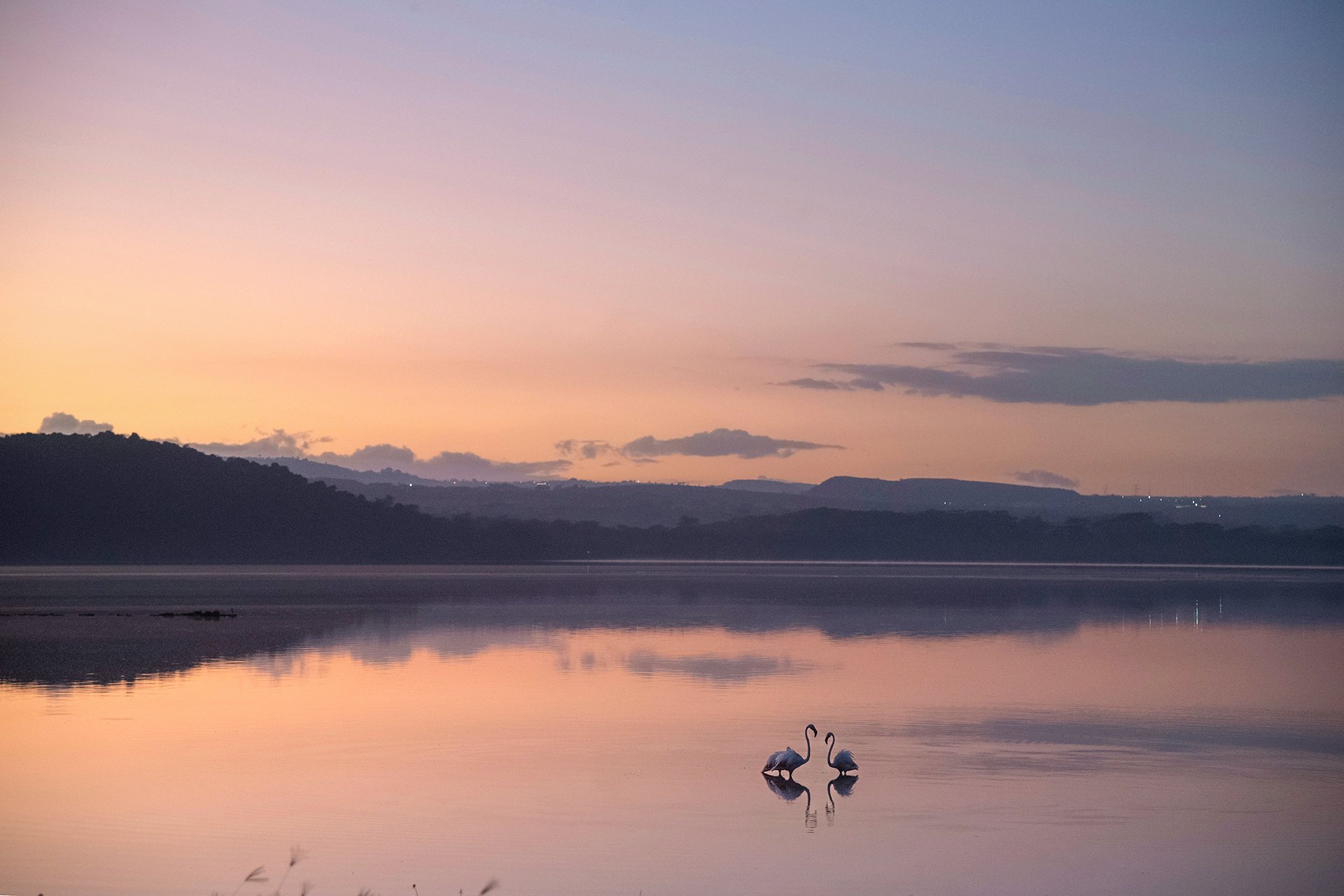
Rift Valley soda lake where flamingos gather and walkers reach open shoreline without park gates.
Lake Elmenteita is a shallow soda lake in the Rift Valley, sitting between Lake Nakuru and Lake Naivasha along the floor of the Great Rift. It is part of the Kenya Lake System UNESCO World Heritage Site and one of the less-visited lakes in the valley, which is precisely its appeal. Flamingos frequent the alkaline waters, though not in the vast numbers you will see at Lake Nakuru or Lake Bogoria.
The real advantage of Elmenteita is that it is not a national park, so you can walk freely around the shoreline without paying park fees or being confined to a vehicle. The surrounding grasslands support gazelle, zebra, and pelicans, and the Kariandusi prehistoric site — an important Stone Age excavation — lies just nearby. The lake is also a significant breeding ground for great white pelicans, which nest on the small islands and rocky outcrops.
Elmenteita sits just off the Nairobi-Nakuru highway, making it an easy stop on the way to or from Lake Nakuru. The Soysambu Conservancy wraps most of the lake and offers walking safaris and horseback rides through the Rift Valley landscape, while the Sleeping Warrior volcano and the young Elmenteita Badlands lava fields dominate the southern skyline. If you are after a quieter alternative to the busier Rift Valley lakes, Elmenteita delivers.
Guide
Getting There
Lake Elmenteita lies just off the A104 highway between Nairobi and Nakuru, about 120 kilometres northwest of Nairobi and 30 kilometres southeast of Nakuru town. The drive from Nairobi takes around two hours in good conditions, though traffic on the escarpment descent can slow things considerably.
There is no public transport to the lake itself, but matatus running the Nairobi–Nakuru route will drop you at the junction near the village of Kikopey, from which you can usually arrange a lift with a local driver. Most visitors come with a hired car or as part of a longer Rift Valley itinerary that also takes in Lake Nakuru and Lake Naivasha.
Guide
When to Go
The lake is dry-tropical, sitting at about 1,800 metres altitude. Days are warm and sunny most of the year, with cool evenings and a noticeable chill at dawn. The best time to visit is during the dry seasons of January–March and July–October, when roads are easy and birdlife concentrates around the receding water.
Flamingo numbers fluctuate with the lake's salinity, so they are not guaranteed at any particular time of year — but the pelican colony is resident, and the breeding season runs roughly from June to September. The long rains in April and May can make the dirt tracks around the lake rough going, though the surrounding plains turn lush and green.