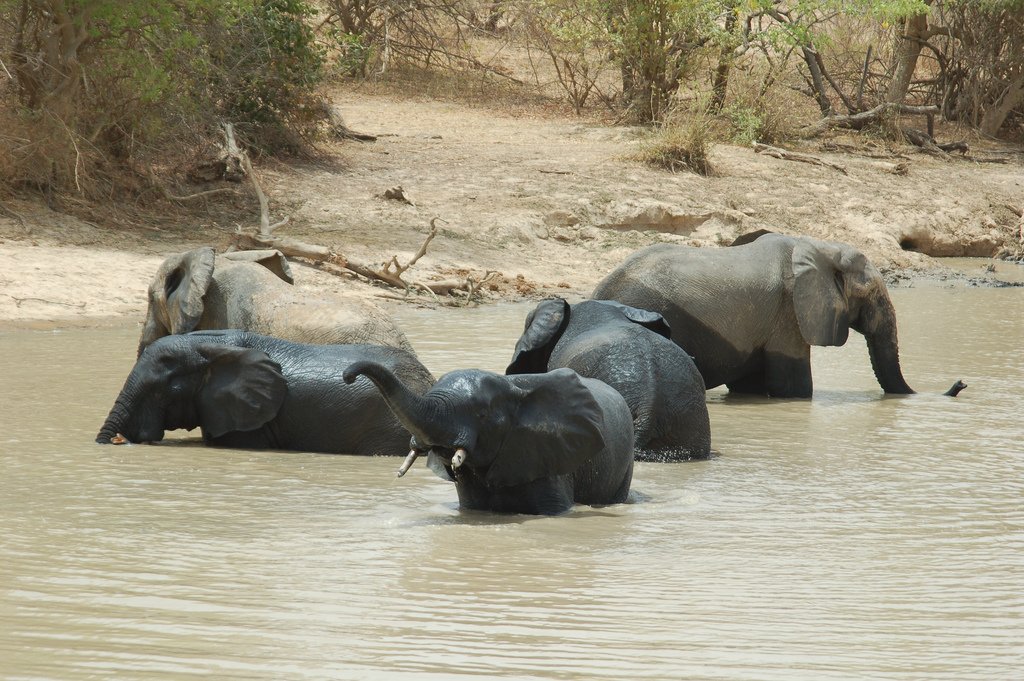
Transboundary West African national park where Niger River bends frame savanna, forest, and big wildlife.
W National Park — named for the double bend the Niger River makes through it — is one of West Africa's finest wildlife reserves and a UNESCO World Heritage Site. It straddles three countries: Niger, Burkina Faso, and Benin, with the Niger side offering the most accessible entry point and some of the wildest terrain.
The park is home to lions, leopards, cheetahs, elephants, hippos, giraffes, and buffalo, along with an exceptional array of antelope species and over 350 recorded bird species. The landscape shifts between dense gallery forest along the river, open savanna, and laterite plateaus — a variety that makes it compelling even outside the main game-viewing hours.
The best time to visit is March to May, at the end of the dry season, when animals concentrate around shrinking waterholes and are easy to spot in the thinning vegetation. Avoid the rainy season (June to September), when many tracks become impassable and the park is effectively closed to visitors.
Tours and vehicle hire can be arranged from Niamey, around 150 km to the northwest. The park headquarters are at Tapoa, where there is a small guesthouse. Bring everything you need — supplies are minimal inside the park.
Guide
Getting There
The main access point on the Niger side of the park is Tapoa, about 150 km southeast of Niamey. The route south from the capital crosses flat, semi-arid scrub and takes around three to four hours by 4WD. The road is sealed as far as Say, after which conditions deteriorate.
Most visitors arrange transport and a guide from Niamey. Hiring a private vehicle is strongly recommended — there is no public transport to or inside the park. Tours can be booked through operators in Niamey, some of whom have contacts with park rangers who serve as guides.
The park straddles three countries: Niger, Burkina Faso, and Benin. If crossing borders within the park, verify visa requirements in advance. The Benin entry at Karimama and the Burkina Faso side at Diapaga each have their own access roads, but Niger remains the most straightforward entry point.
Guide
When to Go
The dry season from November to May is the best time to visit, with March to May being the peak wildlife-watching window. As the harmattan winds ease and the Saharan heat builds, water sources shrink and animals concentrate around the remaining pools and riverbends, making sightings far more reliable. Vegetation thins out dramatically in these months, which helps.
The rainy season runs from June to September. Most tracks become impassable and the park effectively closes to visitors. The Niger River floods its banks, the gallery forest turns impenetrable, and wildlife disperses across the landscape.
October and November are transitional — the rains are over, the tracks are drying out, and the vegetation has not yet thinned. You will find the park accessible but game sightings remain patchy.