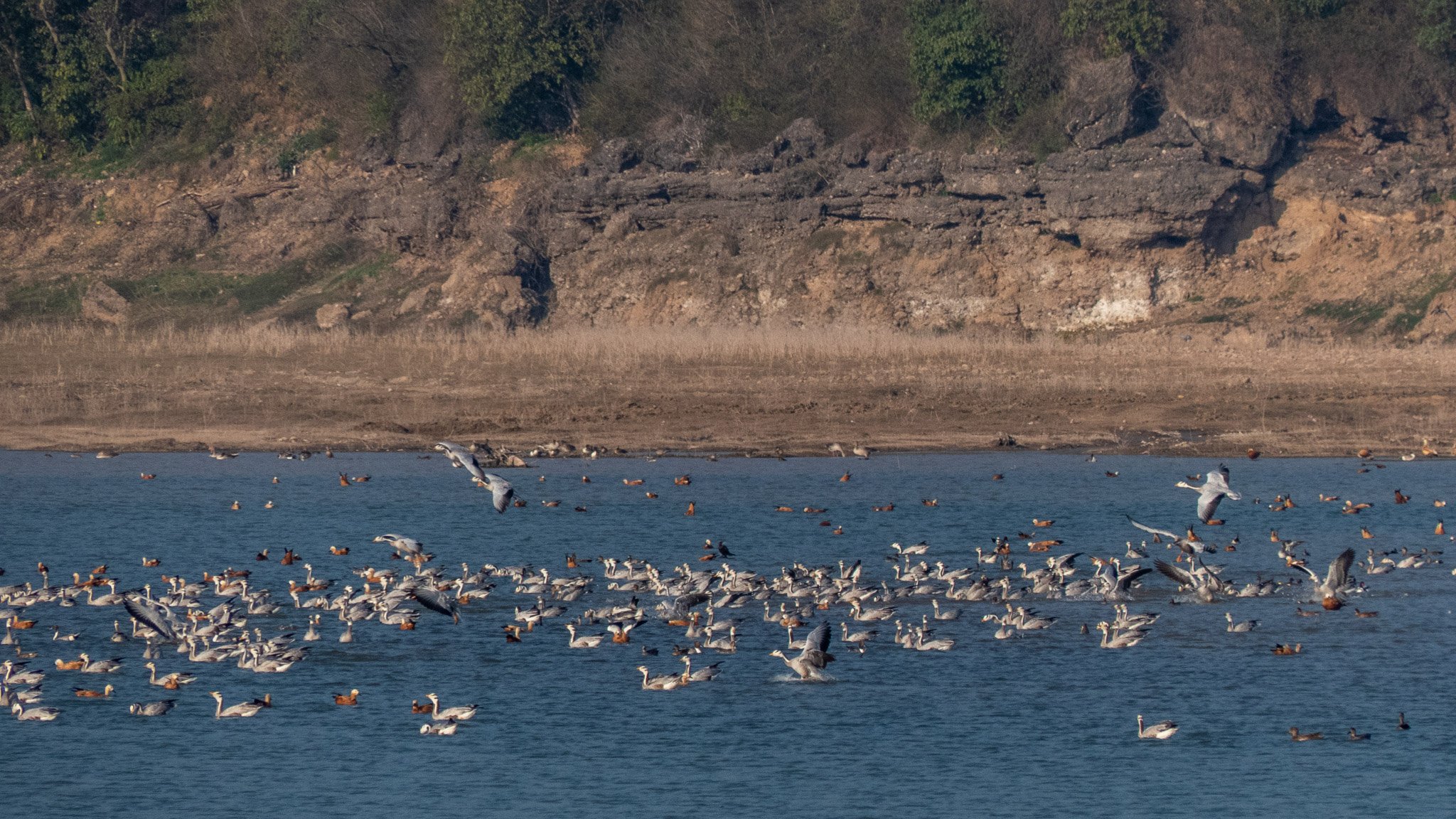
The Pong Dam Lake Wildlife Sanctuary — officially Maharana Pratap Sagar — covers the vast reservoir created when the Pong Dam was completed across the Beas River in 1974. What began as a flood-control and irrigation project became, almost by accident, one of the most important wetland habitats in the western Himalayas. The drowned valley floor created a mosaic of shallow water, mudflats, and emergent vegetation that proved ideal for birds migrating through the Central Asian Flyway. The sanctuary was designated a Ramsar Wetland of International Importance in 2002.
Between November and March the lake attracts extraordinary numbers of wildfowl — peak counts have recorded over 100,000 bar-headed geese at a single site, along with large numbers of ruddy shelducks, pochards, and waders. Beyond the birds, the sanctuary is equally known for its mahseer, the powerful sport fish of Himalayan rivers, and serious anglers come from across India to fish its waters.
The landscape is varied and worth exploring beyond the birdwatching sites. The Masrur Temples, a group of 8th-century rock-cut Hindu shrines carved from a sandstone escarpment about 35km east of the lake, are a remarkable sight with the Dhauladhar range as a backdrop. The area is best reached via the Kangra Valley Railway from Pathankot, or by road from Dharamsala.