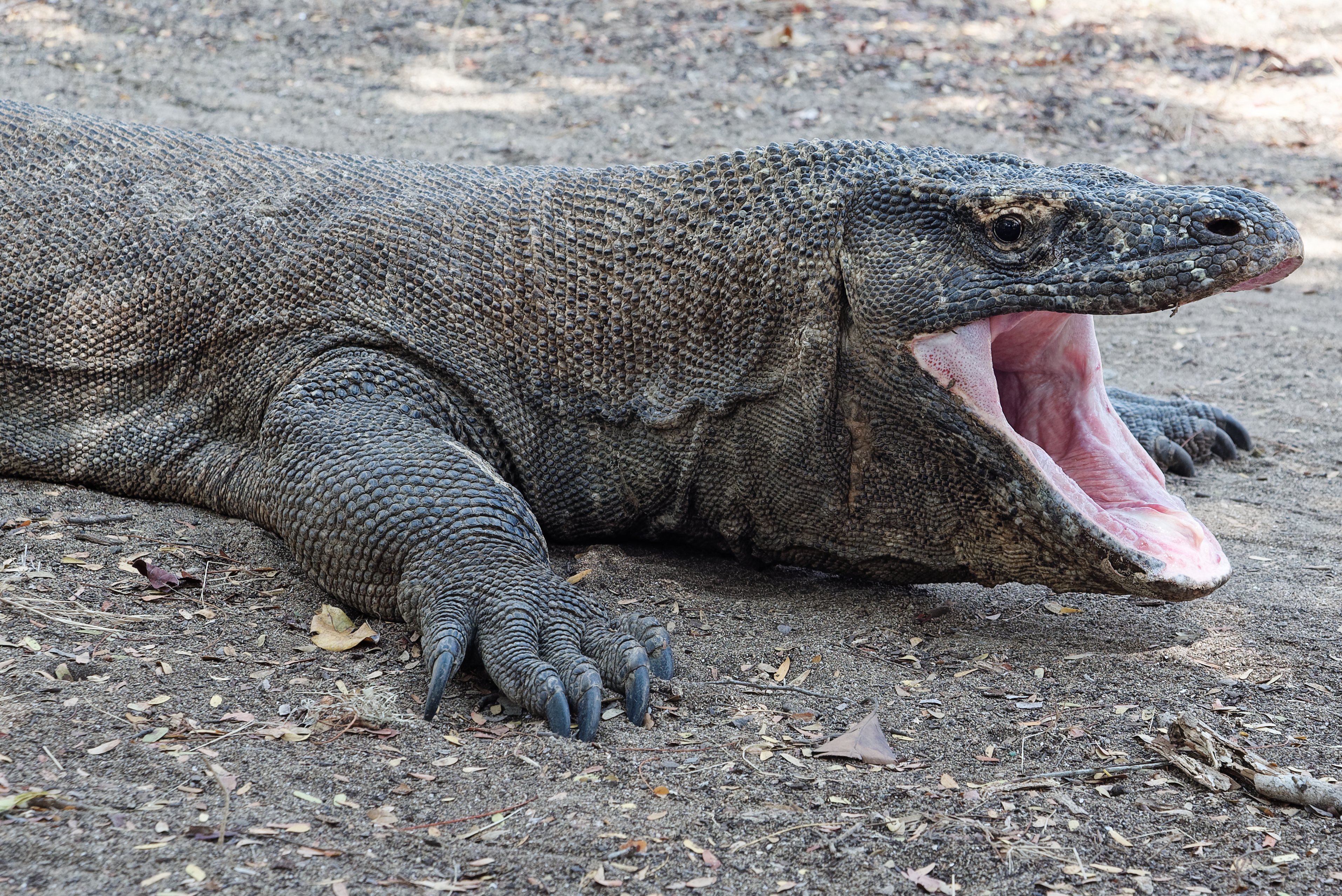
Island in Komodo National Park, home to Komodo dragons and rich marine life in surrounding currents.
Komodo Island is the heart of Komodo National Park, a UNESCO World Heritage site in the eastern Lesser Sundas between Sumbawa and Flores. It gives its name to the Komodo dragon — Varanus komodoensis — the world's largest living lizard, which can reach three metres in length and take down a deer or a goat without difficulty. The park protects around 5,700 of them across Komodo, Rinca Island, and a few smaller islands.
The dragons are the headliner, but Komodo National Park is also one of the most extraordinary marine environments in the world. The currents funnelling between the islands carry cold, nutrient-rich water that supports exceptional marine life — manta rays, sharks, turtles, dugongs, and some of the most diverse coral reefs in the Indo-Pacific. The park's position at the convergence of Indian Ocean and Pacific Ocean currents creates conditions that divers rate among the best anywhere.
The main approach is from Flores: Labuan Bajo in the west is the jumping-off point for day trips and liveaboard boats. The journey takes 1.5–2 hours by speedboat. Day trips from Labuan Bajo are common but rushed — a liveaboard of two to four nights is the best way to see the full park. The main dragon-watching site on Komodo is Banu Nggulung, a dried-up riverbed where rangers guide small groups. Rinca Island is closer to Labuan Bajo and equally reliable for dragon sightings. Pink Beach and the dive site at Batu Bolong are among the park's marine highlights.
Guide
Getting There
The gateway to Komodo National Park is Labuan Bajo, a small port town on the western tip of Flores. Labuan Bajo has an airport (LBJ) with direct flights from Bali (Ngurah Rai, about 55 minutes) and Jakarta, plus connections via Bali from international destinations. The number of flights has increased significantly in recent years as the government has promoted Komodo as a priority tourism destination.
From Labuan Bajo, boats to the park are available from the harbour. Day trips typically run to one or two sites; a two- to four-night liveaboard is the best way to visit the full park. Rinca Island is about 45 minutes by speedboat; Komodo Island is 1.5–2 hours. Budget-friendly shared day trips are available, as are private charters at higher cost.
Entry to the national park requires a permit, which is included in the price of most organised tours. The park fee for foreign visitors is set by the government and has changed several times in recent years — check the current price before visiting as it may have increased.
Guide
When to Go
The dry season (April to October) is the best time to visit Komodo National Park. During these months the Komodo dragons are most active and most easily spotted — they congregate near water sources in the heat, making encounters at Banu Nggulung and Rinca predictable. The sea is calmer, diving conditions are generally better, and the savanna landscape takes on the golden-brown colour that appears in most photographs of the island.
The wet season (November to March) brings heavier seas, more rain, and dragons that move to higher ground and are harder to find. Diving can still be good, particularly at protected sites, and manta ray aggregations peak at Manta Point from November to April. The park is less crowded in the wet season and prices drop.
Year-round note: the currents in Komodo are strong and unpredictable. Even in the dry season, specific dive sites may be undiveable on any given day due to current conditions. Experienced operators know the sites well and will advise; flexible itineraries that allow day-of adjustments give the best chance of reaching the top spots.