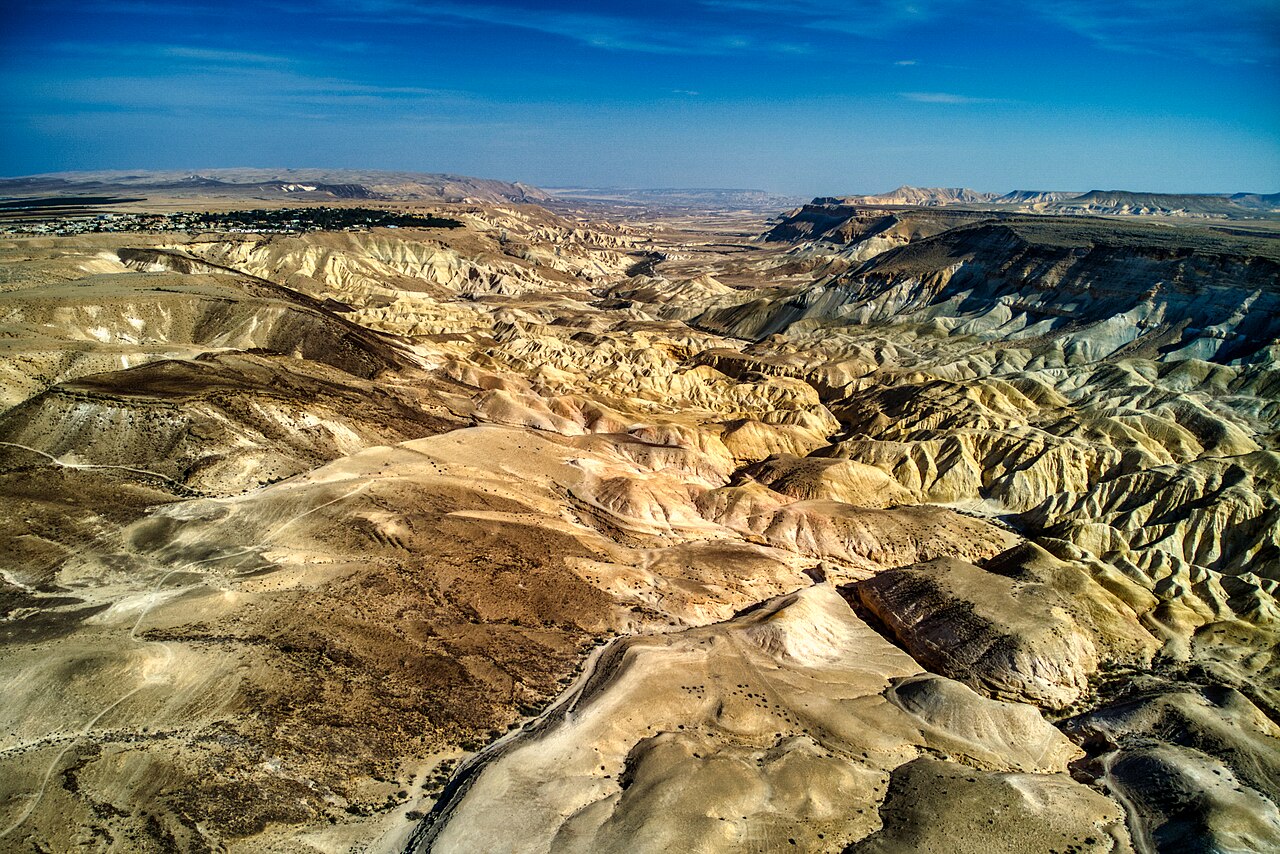
The Negev is the vast desert that covers more than half of Israel's land area, stretching from Be'er Sheva south to Eilat on the Red Sea. Most visitors pass through quickly on the way to Eilat, but the Negev rewards those who slow down.
The centerpiece is Makhtesh Ramon — not a meteor crater but a unique geological formation called an erosion crater, 40 km long, 10 km wide, and up to 500 meters deep. The town of Mitzpe Ramon sits on the crater's rim and serves as the main base for hiking and jeep tours into the crater. The silence and scale are extraordinary. Spring, when wildflowers dot the crater floor, is the best time to visit.
The Negev Highlands south of Mitzpe Ramon contain remains of the ancient Nabataean incense trade route — the ruined cities of Halutza, Mamshit, Shivta, and Avdat, all now UNESCO World Heritage Sites. The Nabataeans engineered intricate water harvesting systems to farm this arid land 2,000 years ago; Avdat is the most accessible of the sites.
Be'er Sheva (Beersheba) is the regional capital and a practical base — it has a university, a busy market, and decent transport connections. The Thursday Bedouin market, though much diminished from its heyday, still draws traders from surrounding communities.
Hiking in the Negev in March and April, before the heat arrives, is excellent. The Israel National Trail runs through the length of the desert. Water sources are scarce; always carry more than you think you'll need.