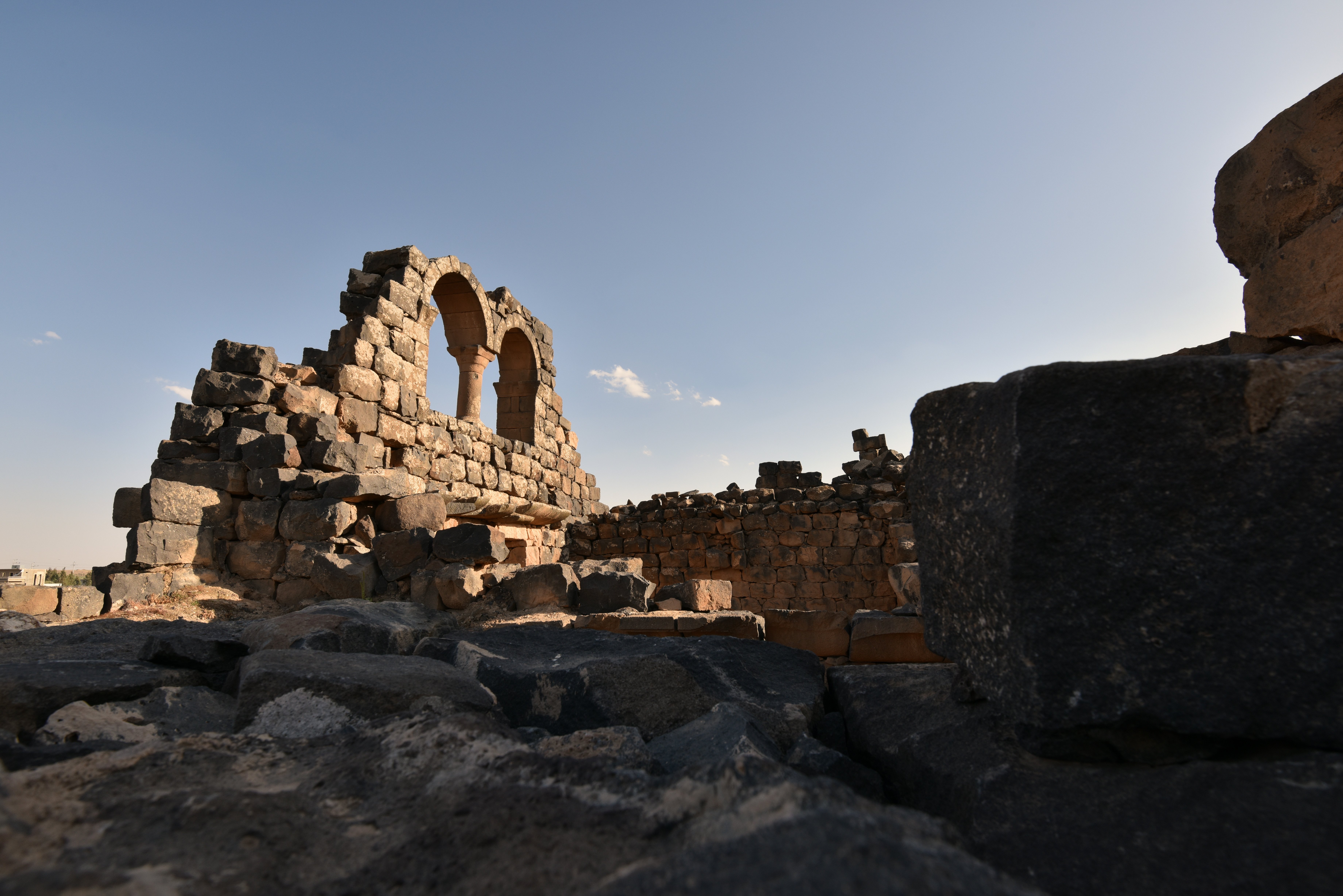
Umm el Jimal — "mother of the camel" in Arabic — is a remarkably preserved ruined city in northeastern Jordan, about 85 km north of Amman near the Syrian border. It is known as the "black oasis" for its construction almost entirely from the dark volcanic basalt that covers this part of the Hauran plateau.
The city was built on a Nabataean foundation and grew into a prosperous Byzantine and early Islamic town, serving as a staging post for camel caravans on routes between the Mediterranean world and Arabia. Its remoteness and the durability of basalt construction mean that much of the city survives to roof height — an atmospheric ruin that sees relatively few visitors despite being one of the best-preserved late antique towns anywhere in the Middle East.
The water engineering here is extraordinary given the location. Umm el Jimal sits in an arid landscape with no natural water source, yet the city supported thousands of inhabitants through an elaborate system of cisterns, dams, and channels that collected seasonal rainwater. The ruins of around 150 structures survive, including churches, barracks, and domestic buildings that give a vivid picture of provincial life in late antiquity.