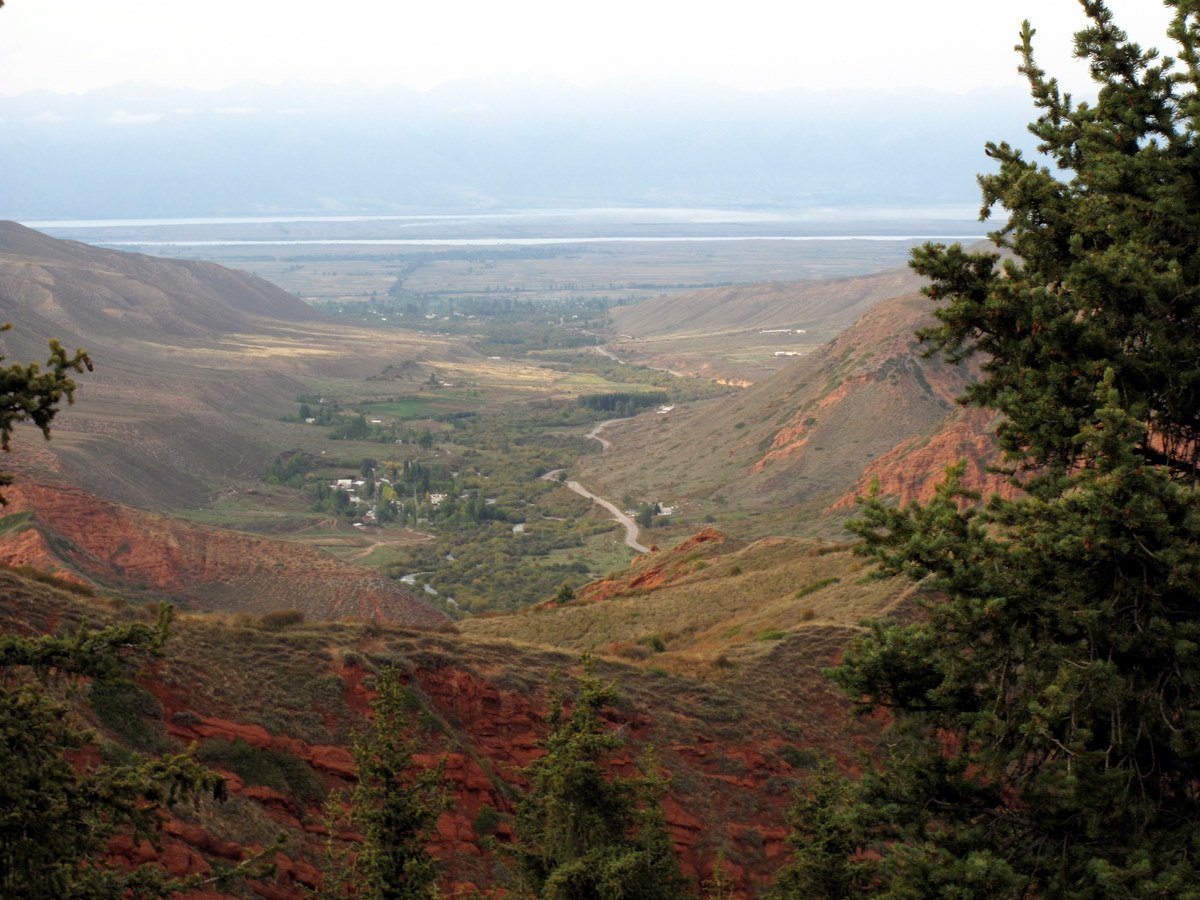
The Jeti-Oguz Valley, about 30 kilometres west of Karakol on the southern shore of Lake Issyk-Kul, is one of the most photographed landscapes in Kyrgyzstan. At its entrance, a wall of seven rounded red sandstone pinnacles rises abruptly above the green plain — hence the name, which means "Seven Bulls." A little further along the road, a solitary red formation called the Broken Heart stands cleft in two against the sky, the subject of its own bitter love legend.
Beyond the rock formations the valley broadens into subalpine meadows backed by the snow line of the Terskey Ala-Too range. This has been a health-resort area since Soviet times: a sanatorium near the entrance, fed by hot mineral springs, still operates, and the meadows above it are a favourite spot for Kyrgyz families to picnic, set up yurts, and ride horses through the summer. The grassland is at its greenest in June, when wildflowers carpet the slopes.
Jeti-Oguz is also a serious trekking gateway. Trails climb from the upper valley over passes into the high Terskey Ala-Too, including multi-day routes that link to the Karakol and Ala-Kul valleys for experienced, well-equipped hikers. For most visitors, though, a day is enough to take in the formations, walk in the meadows, and arrange a horse ride from one of the local families.
Getting here is straightforward: marshrutkas leave Karakol's bazaar in the morning and return in the afternoon, or any guesthouse can arrange a shared taxi. Bring food and water if you plan to walk beyond the resort, as facilities thin out quickly past the entrance.