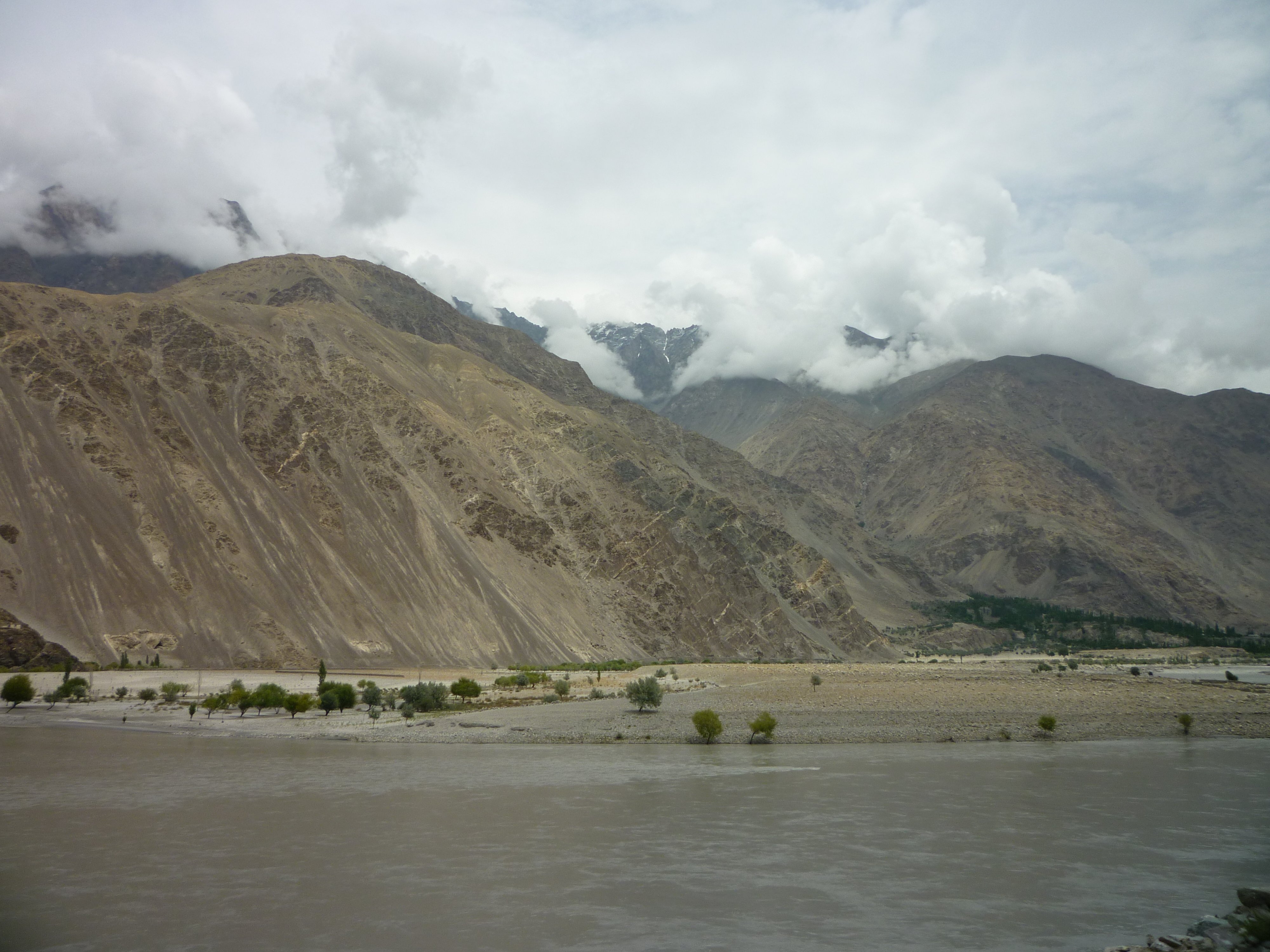
Baltistan sits in the far north of Pakistan, wedged between the Karakoram and Himalayan ranges in what is now Gilgit-Baltistan territory. This is one of the most dramatic mountain regions on earth. Four of the world's fourteen 8,000-metre peaks are here: K2 (8,611 m), the second highest mountain on earth, along with Broad Peak, Gasherbrum I (Hidden Peak), and Gasherbrum II. If you come to climb or trek seriously, this is the destination.
The people of Baltistan are largely of Tibetan descent — the region was once known as "Little Tibet" — and the Balti language is related to archaic Tibetan. The culture is distinct from lowland Pakistan: the architecture, the food, the music, and the faces all carry that Central Asian flavour. Most people are Shia Muslim, unlike the Sunni majority elsewhere in Pakistan.
Skardu is the main town and your base for most expeditions into the high mountains. It has a small airport with connections to Islamabad, though flights are frequently cancelled due to weather — build slack into your schedule if you're catching an onward flight. The overland route via the Karakoram Highway is spectacular and reliable when open. See Getting There for details.
Within reach of Skardu, Skardu Fort (Kharpocho) commands panoramic views of the Indus valley from its granite outcrop above town. Satpara Lake south of Skardu is a beautiful high-altitude lake with road access. The Katpana Desert — sand dunes at 2,200 metres with glaciated peaks behind them — is one of the more surreal landscapes in the Karakoram. The Manthal Buddha Rock, carved in the 8th century, is evidence of the region's Buddhist past before the arrival of Islam.
Getting around takes time and effort. Roads are rough, distances are deceptive in the mountains, and many trekking routes require porters, permits, and serious preparation. The rewards are proportionate: the K2 and Baltoro Glacier trek, the Concordia amphitheatre of peaks, the villages along the Shyok and Indus rivers — all genuinely extraordinary.
The season runs roughly June to September. Outside of that window, high passes close and conditions at altitude become extreme.