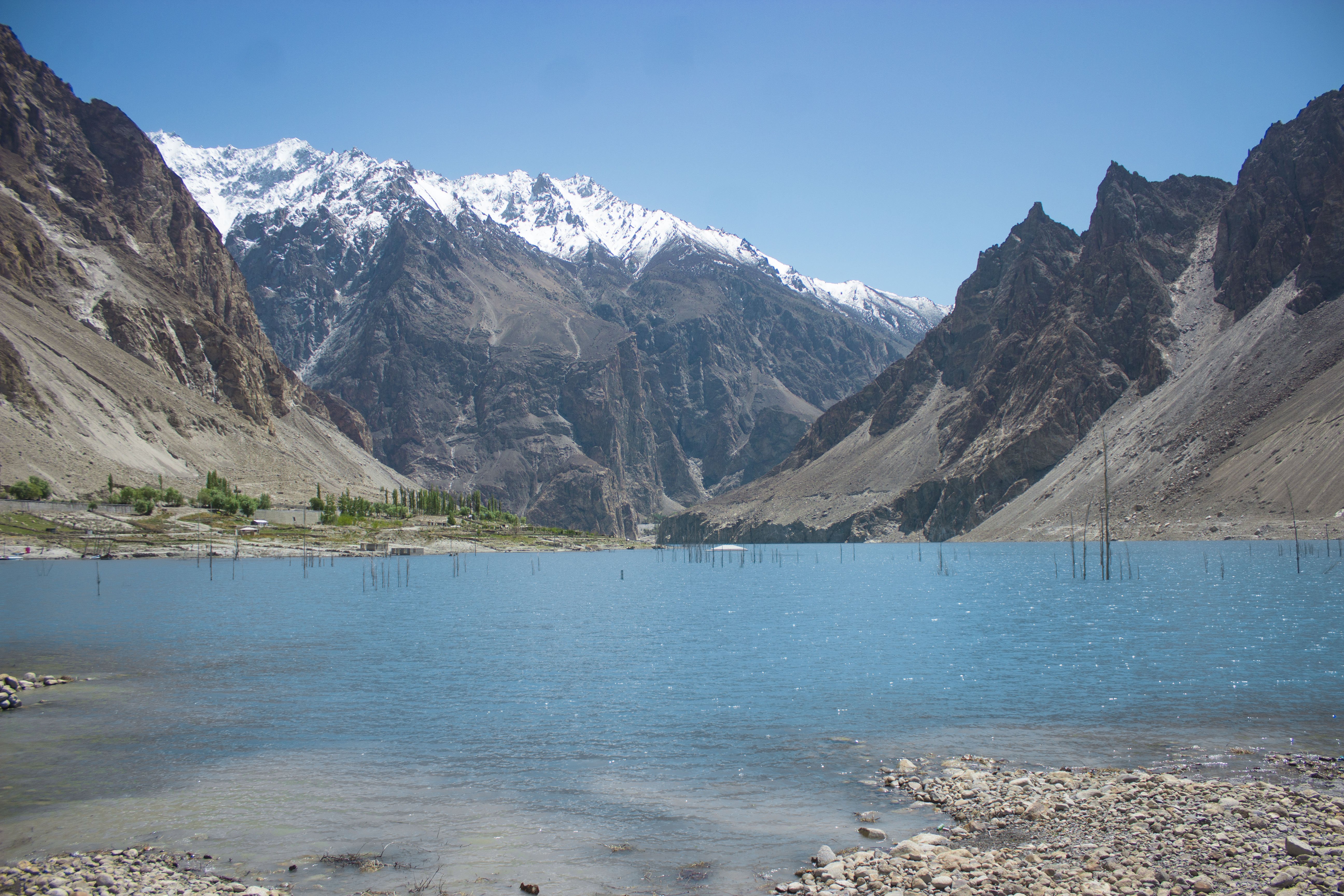
Shishkat — also known as Nazimabad Shishkat — is the first village of the Gojal Valley that travellers encounter when coming north from Central Hunza along the Karakoram Highway. It is a compact community of around 2,160 people in some 220 households, sitting at the threshold between the more densely settled middle Hunza and the wilder upper reaches of Gojal.
The village is predominantly Burushaski-speaking, though Wakhi and Domaaki-speaking families also live here — a reflection of the mixed origins that shaped it. Shishkat was formally settled in 1903 during the reign of Mir Nazim Khan. Before then, the land was used as seasonal grazing ground by the people of nearby Gulmit. When settlement began, Wakhi families from Gulmit stayed on permanently, while Burushaski and Domaaki speakers migrated from Central Hunza to join them.
The site also carries historical weight: the flat ground around Shishkat was once the battlefield between the Wakhi communities of upper Gojal and the combined forces of the Nagar and Hunza states — a chapter of the old rivalries that shaped this mountain frontier before the British arrived.
For travellers passing through on the KKH, Shishkat is easy to miss, but it rewards a short stop. The village has a distinctly different character from the better-known stops further north like Passu — quieter, less visited, and genuinely off the tourist circuit. Attabad Lake lies just south, and Gulmit is a short distance north.