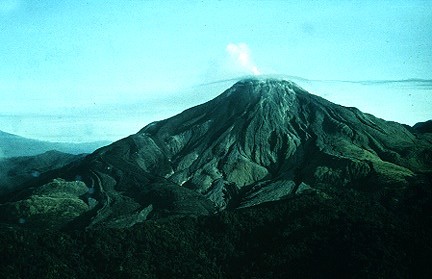
Mountainous Pacific island region with rainforest, volcanoes, and a difficult history around the Panguna mine.
Bougainville is the largest island in the Solomon Islands chain, though politically it belongs to Papua New Guinea as an autonomous region. It is a lush, mountainous island with dense tropical rainforest, active volcanoes, and a history as complex and painful as anywhere in the Pacific.
The island was devastated by a civil war from 1988 to 1998, triggered by disputes over the Panguna copper mine — one of the largest open-pit mines in the world, which poisoned the island's river systems and paid almost nothing to local landowners. The mine remains closed; the island is still recovering. Bougainville voted 98% in favour of independence in a 2019 referendum, and the political future continues to unfold.
Visiting Bougainville requires planning. Infrastructure is basic, accommodation limited, and travel is mostly by small boat or on rough roads. But for those who make the effort, the island offers pristine reefs, WWII wreck sites including the Yamamoto crash site near Buin, and a glimpse of a society rebuilding itself on its own terms. Buka, the main town on the smaller northern island, is the usual arrival point by air from Port Moresby.
Guide
Getting There
Bougainville is reached by air via Buka Airport, which has flights to and from Port Moresby operated by Air Niugini. The flight takes about two hours. There are no direct international flights; you will transit through Port Moresby regardless of where you are coming from.
There is no regular passenger boat service from the Solomon Islands, though occasional cargo vessels make the crossing. The Solomon Islands chain is geographically close — the border runs through the ocean just southeast of Bougainville — but the political and logistical gap between PNG and the Solomons makes overland-style travel between them impractical.
Once in Buka, road transport across the narrow channel to main island Bougainville is via short ferry. Roads south from Buka to Arawa and beyond are rough and may be impassable in the wet season (roughly December to April). Local boats along the coast are often the more reliable option.
Guide
Things to Do
Bougainville is not an easy destination, and most of what there is to see requires real commitment to reach. That said, the island offers things found nowhere else: pristine coral reefs that see almost no diving traffic, WWII wreck and crash sites, and a society that has come through a brutal civil war and is now navigating its path toward independence.
Buka Town on the northern island is the usual arrival point and the most functional base. From there, boat transport south opens up access to the reefs and inland areas. The Panguna Mine — the open-pit copper mine whose environmental destruction triggered the 1988–1998 civil war — remains closed and is a sobering sight, one of the largest man-made holes in the Southern Hemisphere. The Yamamoto crash site in the jungle near Buin marks where the United States shot down Japan's most famous admiral in 1943.
For divers, the reefs off Bougainville are in excellent condition after decades of minimal traffic. Visibility is high, coral cover is dense, and the diversity of marine life reflects an intact ecosystem. There are also several WWII wrecks in accessible depths.