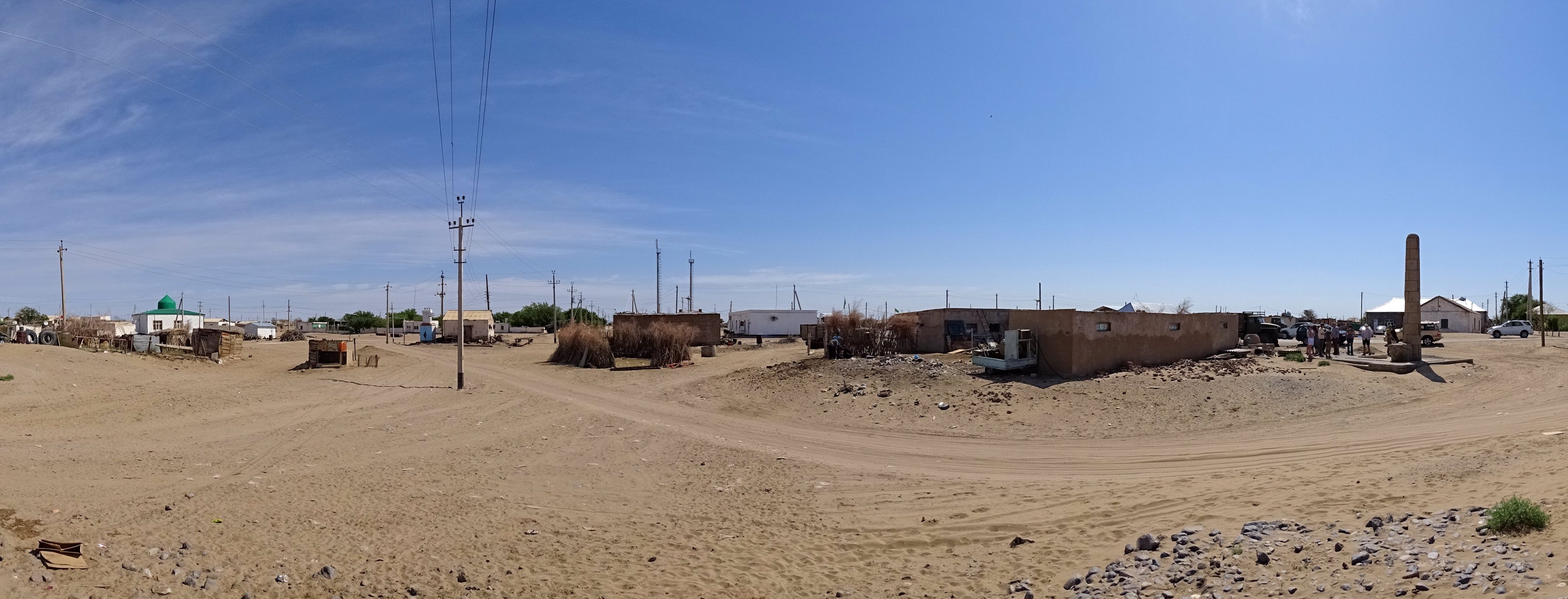
Erbent oasis lies roughly 156 km north of Ashgabat in the heart of the Central Karakum desert, one of the few inhabited pockets in an otherwise empty expanse of sand. Getting there requires a hired car across a deteriorating desert road, which keeps visitor numbers low and the atmosphere genuinely remote. Most travelers who make the trip do so because they have heard about the dogs.
This is the traditional home territory of the Tazy — a lean, long-legged sighthound that Turkmen nomads have bred for coursing game across open steppe for at least a thousand years. The breed nearly vanished under Soviet rule, when nomadic traditions were systematically suppressed; Erbent families are credited with keeping the bloodlines alive. Today the Tazy is a protected national symbol, and the village takes quiet pride in that fact.
Beyond the dogs, Erbent preserves carpet weaving and felt-making traditions that have faded in larger towns, and the oasis itself — ringed by gardens of melon and apricot, pressed hard against the dunes — is one of the more striking landscapes in Turkmenistan. The Karakum desert around the village is not featureless; dunes, saxaul scrub, and a surprising variety of wildlife reward an early morning walk or a short drive with a local driver.
Erbent is a small place and a half-day visit covers it thoroughly, but the journey itself — four to six hours of driving through one of Central Asia's emptiest landscapes — is part of the experience.