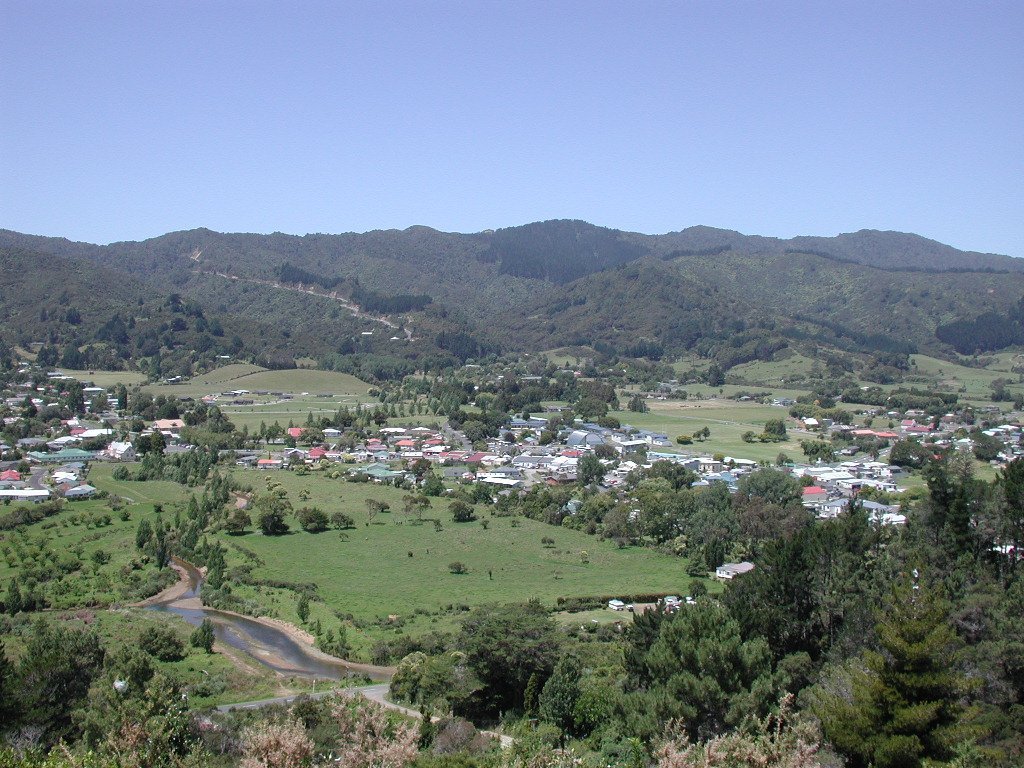
Bush-covered New Zealand peninsula where volcanic hills drop to beaches, coves, and kauri forest.
The Coromandel Peninsula juts out into the Hauraki Gulf east of Auckland, close enough to see from the city on a clear day yet unmistakably its own place. Jagged volcanic hills covered in native bush run down the spine of the peninsula, dropping to a coastline of sandy beaches, sheltered coves, and rocky headlands. It's 90 minutes from New Zealand's largest city, but it feels considerably further away.
The peninsula made its money from kauri timber and gold in the 19th century. Small towns like Coromandel Town still have the colonial timber architecture to show for it. The forests that weren't logged still hold stands of giant kauri — some over a thousand years old — and the Coromandel Forest Park protects much of the interior.
The two coasts have different characters. The western shore faces the Hauraki Gulf with sheltered harbours and gentle beaches. The eastern coast catches the Pacific swell, offering long white-sand surf beaches and quieter bays. Whitianga is the main town on the east coast; Hahei and its dramatic Cathedral Cove are a short drive further south.
Hot Water Beach is the Coromandel's most famous quirk: at low tide, visitors dig into the sand with rented spades and warm thermal water rises to fill the hole. It works best within two hours either side of low tide, and it's genuinely good fun despite the crowds.
Guide
Beaches
The Coromandel has more coastline than most visitors manage to cover, split between the sheltered western shore and the Pacific-facing east. The eastern beaches are generally the better ones for swimming and surfing.
Hahei is a small settlement with a good beach and easy access to Cathedral Cove. Hot Water Beach, a short drive south, is famous for its thermal springs accessible at low tide. New Chums Beach, north of Whangapoua, regularly appears on New Zealand's best-beach lists — it's a 30-minute walk each way along a coastal track with no road access, which keeps it quiet. Whangamatā on the east coast has a long beach popular with surfers. On the west coast, the beaches around Coromandel Town and further north are sheltered and calm, better for swimming with children than for surf.
Guide
Getting Around
A car is effectively essential for exploring the Coromandel. The peninsula is long and narrow, the main towns are spread along both coasts, and the road over the range is the only connection between east and west. Many of the best beaches require driving down side roads, and the northern tip (the Coromandel Walkway, Colville) is a considerable drive from anywhere.
The main road up the western coast (SH25) is well sealed. The eastern coastal route between Thames and Whitianga via the Kopu–Hikuai Road is narrower and slower — allow more time than the map suggests. Some back roads to remote beaches are unsealed and may not be suitable for rental cars; check your rental agreement and conditions.
Guide
Getting There
Most visitors arrive by car from Auckland, which takes around 90 minutes to Thames at the base of the peninsula via State Highway 2 through the Bombay Hills. The road up the western coast (SH25) continues to Coromandel Town in another hour; reaching the eastern coast at Whitianga takes roughly two hours from Auckland via SH2 and the Kopu–Hikuai saddle road. The road over the Coromandel Range connecting the two coasts (SH25A via Tairua) is winding and scenic.
A passenger ferry runs between Auckland and Coromandel Town seasonally, a useful option if you want to avoid driving — the crossing takes around two hours. Check current operators as services change year to year.
Thames is the main gateway town at the base of the peninsula and has bus connections from Auckland. Getting further around the peninsula without a car is difficult; the towns are spread out and local bus services are limited.