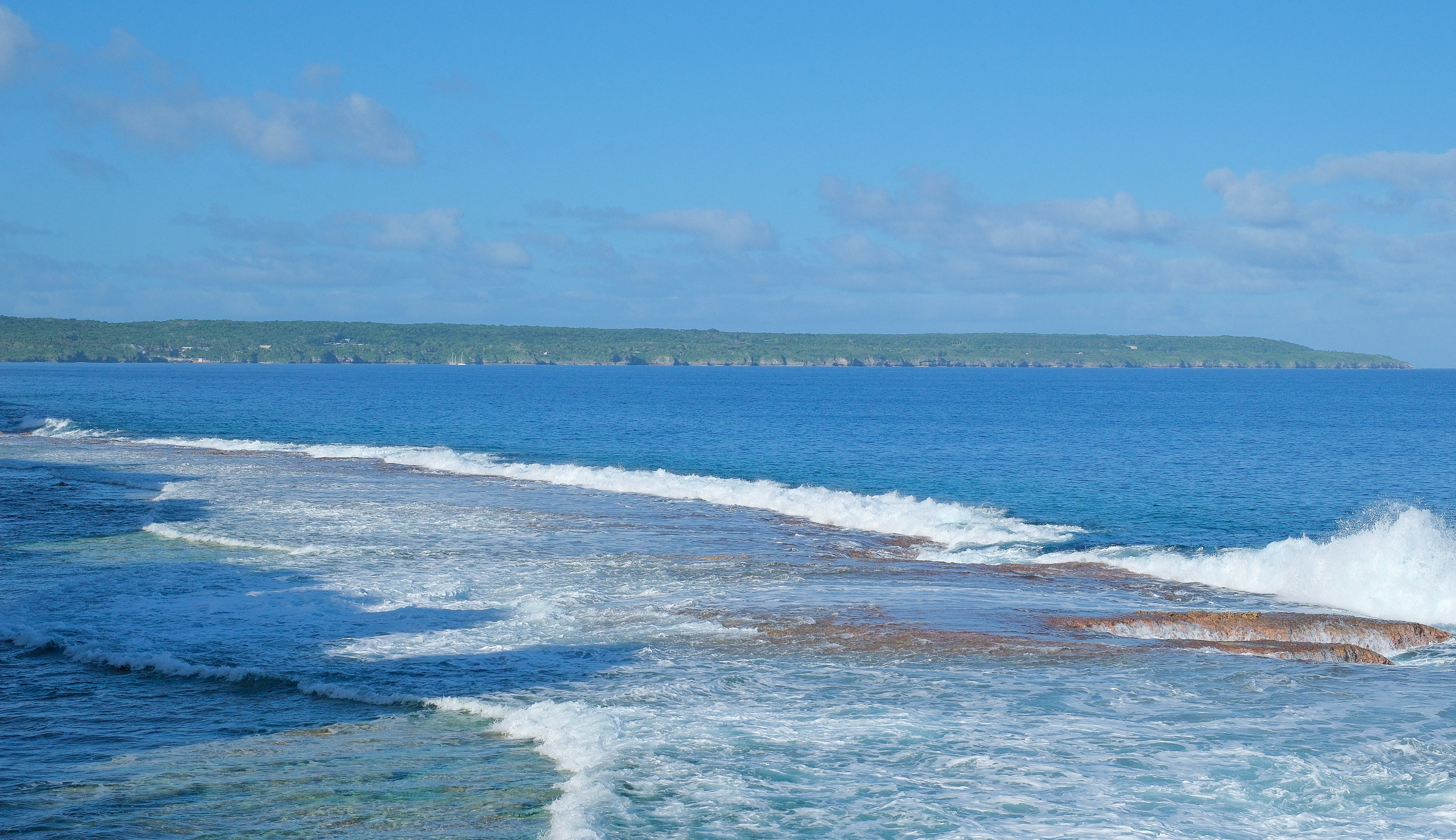
Tiny Niuean capital on a west-coast bay, with government buildings, cafes, and rocky sea access.
Alofi is Niue's capital and only real town, with a population of under 1,000. It sits on the west coast and looks out over a wide bay. The cliffs here are lower than on much of the island, making access to the water easier, though there is no beach — just a rocky shoreline and a concrete pier.
The town is small enough to walk around in half an hour. There are a few shops, a bank, the government buildings, the tourism office, and most of the island's restaurants and cafes. The Fale Fono (parliament) has a display of traditional tapa cloth worth a quick look, and the Tāoga Niue Museum in the centre has one of the Pacific's best collections of Niuean cultural artefacts.
The Niue Tourism Visitor Information Centre is useful for maps, activity booking, and advice. The market next door runs Tuesday, Wednesday, and Friday mornings — the place to buy local produce and, if you're lucky, coconut crab.
Outside Alofi, Niue's north coast is home to some of the Pacific's most striking natural sites. The Matapa Chasm and Talava Arches are carved into the island's coral limestone cliffs; the Limu Pools offer world-class snorkelling with resident sea snakes, and the sacred Avaiki Cave connects the island to the deepest stratum of Polynesian mythology. Alofi is where most practical life on Niue happens — you will pass through repeatedly even if you are staying elsewhere.
Guide
Getting There
Getting to Niue requires planning. Air New Zealand operates the only commercial flights, running twice weekly from Auckland. The flight takes about three hours. There are no direct connections from anywhere except New Zealand; if you are coming from Australia, the US, or elsewhere, you will connect through Auckland. Check Air New Zealand's seasonal schedule well in advance, as seats are limited and the flights book out during the June–August whale-watching season.
The island has no regular ferry or cruise connections. Occasional cruise ships stop at Alofi Bay, but the rocky shoreline and lack of a proper harbour means passengers are tendered ashore, which depends on sea conditions. Private yachts pass through on Pacific crossings and can anchor in the bay.
Niue International Airport (Hanan Airport) is a few kilometres south of Alofi, a short taxi ride from town. Car hire is available from several operators on the island; a car or scooter is essentially required for visiting sites outside Alofi, as there is no public transport. Driving is on the left; roads are paved and in reasonable condition.
Guide
When to Go
The best time to visit Niue is during the dry season, from May to October. Days are warm (around 25°C), humidity is lower, and the ocean conditions are calmer — important if you plan to snorkel or dive. The island receives only a handful of flights a week, so the tourist infrastructure never gets congested regardless of season.
The wet season from November to April brings higher humidity, heavier rainfall, and the risk of tropical cyclones. Niue has been devastated by cyclones in the past — Cyclone Heta in 2004 destroyed much of Alofi — and the cyclone season should inform your timing. That said, between storms the wet season is lush and green, and flights and accommodation are cheaper.
June to August is the best season for swimming with humpback whales, which pass through Niuean waters on their annual migration. August is when the island hosts its annual cultural festival. October is ideal for diving: dry season conditions, warm water, and peak visibility. Spinner dolphins are resident year-round and can often be spotted from shore.
Stargazing is outstanding from April to October, when the sky is clearest. Niue became a UNESCO Dark Sky Territory in 2020 — one of very few whole-island designations in the world. The absence of light pollution anywhere on the island means that on a clear night, the Milky Way is visible with the naked eye from the middle of Alofi.