Svaneti
©
Svaneti

Svaneti

High Caucasus region of northwest Georgia, known for Svan villages and medieval defensive towers.

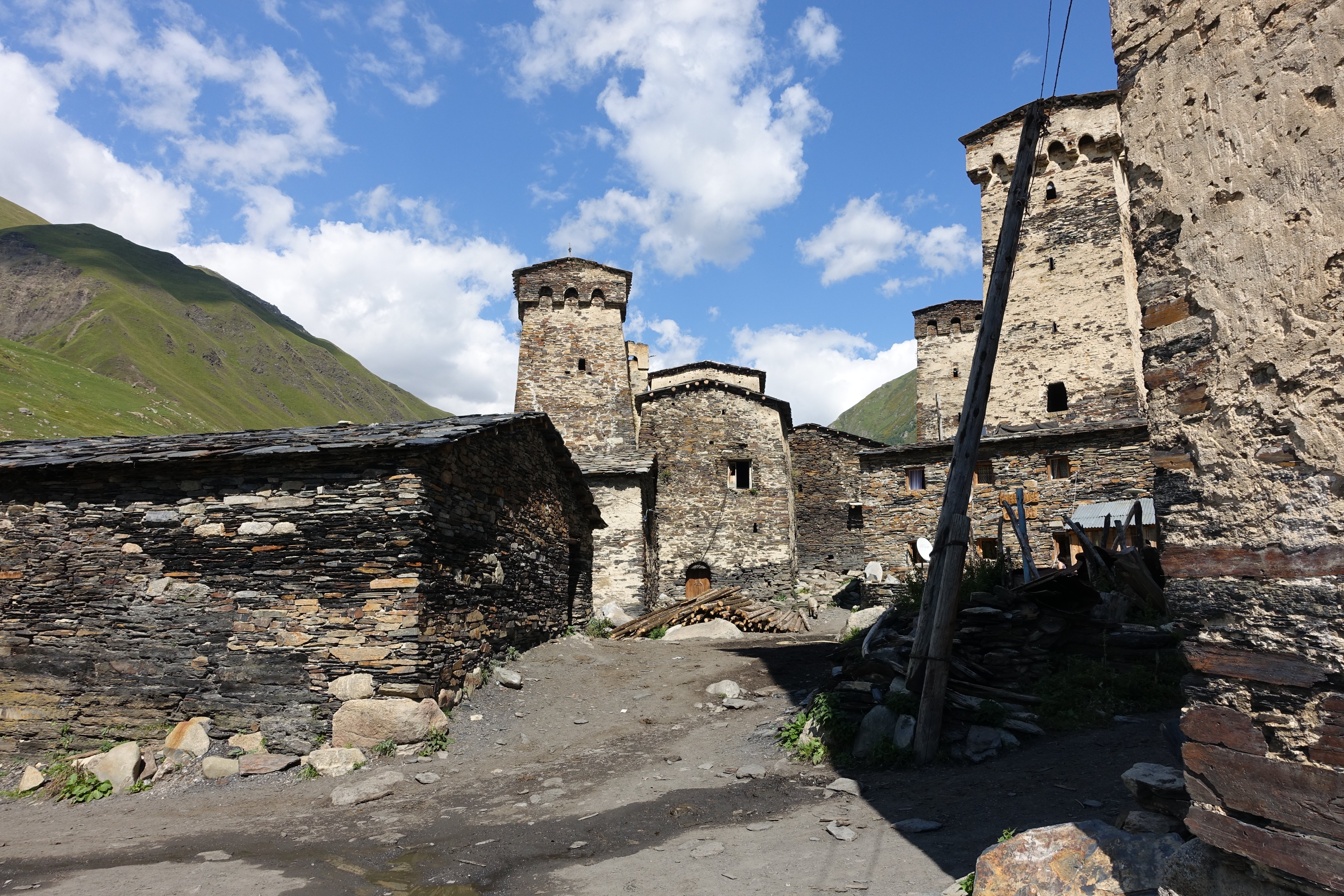
Svaneti is a high mountain region in northwest Georgia, enclosed by the Greater Caucasus Range on the north and the Enguri and Rioni river valleys to the south and west. It is the homeland of the Svans — a people who speak a distinct Kartvelian language and maintained a degree of independence from every empire that nominally controlled Georgia, simply because the mountains made the region nearly impossible to conquer or fully administer. The result is a landscape that looks almost medieval: stone defensive towers still bristle from every village, churches hold frescoes and icons that have not moved since the 12th century, and the hamlets perch on hillsides above alpine meadows as if the 20th century arrived late and left early.

The two main areas for visitors are the Mestia valley — centred on the regional capital of Mestia — and the upper Enguri valley, which leads to Ushguli, a group of four villages at 2,100 metres that claim to be the highest continuously inhabited settlement in Europe. The road between Mestia and Ushguli takes about three hours by 4WD in summer; the Enguri valley can also be walked in two to three days along the classic Mestia-to-Ushguli hiking route. The route passes through the villages of Zhabeshi, Adishi, and Iprari, each with its own cluster of towers, and crosses two high passes.

Mestia has developed rapidly since the late 2000s: a new airport opened in 2010, the roads were improved, and the town now has guesthouses, restaurants, and a reasonable ski area at Hatsvali. The atmosphere remains fairly rough-and-ready, with cattle sharing the unpaved streets and the towers still occupied. Svaneti museums hold some of the finest medieval goldsmithing and icon painting in Georgia — much of it evacuated here from lowland churches during the Mongol invasions of the 13th century and never returned.

This is serious mountain country. The Caucasus peaks above Mestia — Tetnuldi (4,858 m), Ushba (4,710 m), and the Bezengi Wall of 5,000-metre peaks on the Georgian-Russian border — are among the most demanding climbs in the range. The weather is unpredictable, the roads are difficult, and the infrastructure outside Mestia is basic. Go for that reason.

Guide

Books

In the Kingdom of Ice: The Grand and Terrible Polar Voyage of the USS Jeannette by Hampton Sides — not about Svaneti, but if you are going to spend time in the mountains, packing a book about extremity is appropriate. For Svaneti specifically, the literature is thin in English.

The Knight in the Panther's Skin by Shota Rustaveli — The 12th-century Georgian epic poem, written during the reign of Queen Tamar, is the foundational text of Georgian literature. The poet is named in Svaneti at the Shota Rustaveli Peak in the Bezengi Wall. Reading even a portion gives context for why medieval Georgian culture produced the level of artistry visible in the Svaneti museum collections.

A Journey to the Western Caucasus by Douglas Freshfield (1869) — Freshfield was a British mountaineer who made some of the first ascents in the Caucasus, including in the Svaneti area. His account is out of print but available digitally; it describes the region almost exactly as it appears now, in terms of landscape and village structure.

Guide

Getting There

From Tbilisi, the fastest option is the Vanilla Sky flight to Queen Tamar Airport in Mestia (35 minutes, twice daily in season). Book well in advance; the planes are small and flights cancel frequently due to mountain weather. The bus alternative from Tbilisi takes 8-10 hours total: train or marshrutka to Zugdidi, then marshrutka up the Enguri Gorge to Mestia (2.5-3 hours).

From Kutaisi (closest major city, about 3 hours by marshrutka via Zugdidi), the same connection applies. Driving from Tbilisi directly is possible but takes 8-9 hours on mixed road quality. The road from Zugdidi to Mestia was significantly improved after 2010 and is now largely paved; a standard car can manage it in summer, though 4WD is recommended for the Mestia-Ushguli road beyond.

Guide

Things to Do

Svaneti is primarily a hiking and mountaineering destination, with exceptional medieval heritage as a bonus. The Mestia-to-Ushguli trek is the main attraction. The village Svan towers, the museums with medieval icons and goldwork, the high mountain peaks, and the ski area at Hatsvali above Mestia complete the picture.

Guide

When to Go

July and August are the main hiking months — the high passes are snow-free, the weather is warm, and all facilities are operating. The Mestia-Ushguli trail is walkable from late June, though the Adishi river crossing may be difficult until mid-July. August is the busiest month: book guesthouses on the trail in advance.

June and September offer the same hiking but with fewer people. June can have lingering snow on passes; September is often clearer and the highland meadows are still green. October brings cold nights and the risk of early snow closing the higher routes.

Winter (December-March) is for skiing: the Hatsvali resort is operating, the snow is usually excellent, and Mestia itself takes on a different character. The Queen Tamar Airport flights are weather-dependent all year and particularly unreliable in winter; have a backup plan involving the road.