Tilos
©
Tilos

Tilos

Small Dodecanese island of mountain villages, medieval castles, birdlife, and quiet beaches around Livadia

Tilos is an Aegean island with nineteen beaches, twelve mountains, seven medieval castles, a Byzantine monastery and two hundred churches, a cave full of natural discoveries, a village that is a declared cultural monument, a hundred bird species, hundreds of wild flowers and herbs, and five hundred residents. I visited this unspoiled Greek island recently to rediscover the Greece of times past.

As the dawn gently appeared over the horizon during my first morning on Tilos after an absence of nearly a quarter century, I wondered to myself what had changed or remained the same during this time. I decided that the best way to find out was to fold my memories into my overnight bag and venture out with an open mind to explore the body and soul of this island in the Dodecanese.

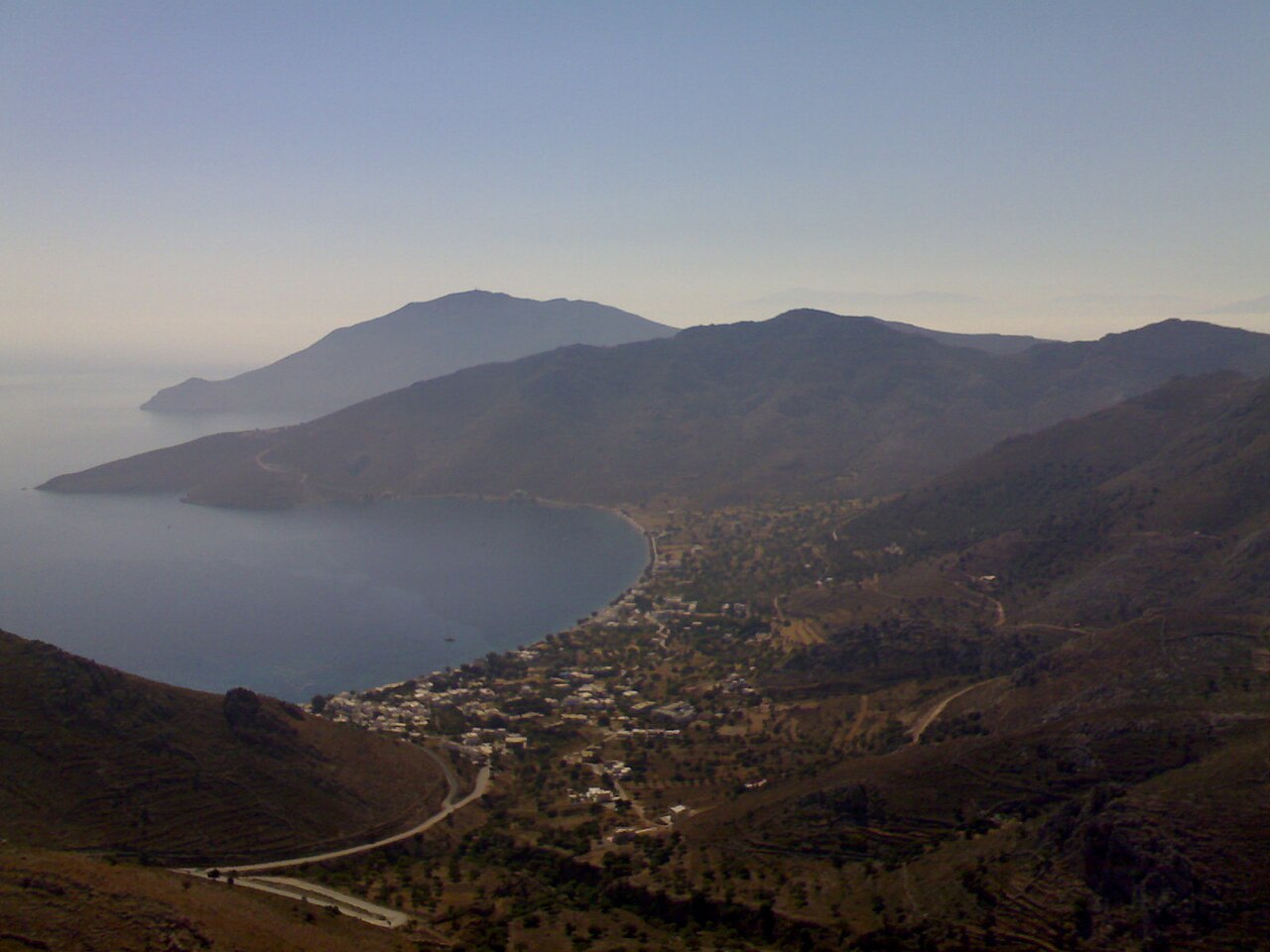
I began my journey at the port of Livadia on the east side of Tilos which is the main entry point for most visitors to this small, intimate island that is home to 250 residents. As you step onto the dock, the village of Livadia quietly hugs the shore next to the port at the foot of the mountains that shelter Livadia Bay. As you face eastward, the silky silhouette of the mountains of Turkey appear to rise out of the morning sea mist in the distant background while early morning fishermen can be seen guiding their boats out of the harbor before fanning out into the open waters of the Aegean. As your gaze drifts upward to the sky, Agriosykia Castle emerges from the rocky mountaintop to cast its watchful eye over Livadia as it has done unfailingly for the past six hundred years.

As the sun slowly rose, I was captivated by the changing pastel hues of the mountains above Livadia which stood in contrast to the unremarkable architecture prevailing in the village below. There are a few noticeable exceptions which include the gracefully sculpted Italian architecture of the Tilos Police Station building at the port, reminiscent of the Italian domination of the island from 1912 until 1948 at which time the Dodecanese reverted to the modern arms of its maternal Hellenistic past. Another welcome exception can be found dotting the foothills of the mountainside where you will see scattered white, cubed buildings in which small, fully equipped apartments have been constructed and tastefully landscaped with spectacular views overlooking the pristine bay.

Livadia Beach begins its graceful mile-long curve twenty meters from the port, but it will test the reliability of your shoes with pebbles blanketing the shore by the village before gradually refining to sand at its distant end. This slight inconvenience underfoot will not deter enthusiastic beachgoers who enjoy swimming and snorkeling in warm, crystal clear water; breezing along the smooth surface of the protected bay on colorful windsurf boards, canoes and pedaloes easily available for hire; and sunbathing on comfortable lounge chairs that peak out from the welcome shade of tall pine trees scattered along the beach.

When the spirit moves, you can drop into any one of a multitude of small tavernas that overlook the beach or are tucked away in the village, which fulfills the needs of the visitors and local residents with the exception of island banking services that are limited to those offered at the Livadia post office.

The overall feeling I had from the town is one that reflects its recent history. The village of Mikro Horio, established in the 15th century in the hills above Livadia, was abandoned after World War II by its residents, some of whom moved to Livadia to build a new life as business developed around the port. The incongruity of recent building designs and colors in some portions of Livadia reveal the underlying dreams of hard-working people whose visions reflect a commendable self-reliance tainted by a blindness to their cultural heritage and the merits of community coordination. On balance, though, I found a refreshingly relaxed atmosphere in this town with genuinely accommodating residents.

Eager to explore the rest of the island, I took the main road out of town toward the direction of Megalo Horio which is only a ten minute drive (7 km) from Livadia. Visitors can select from a variety of transport options, including a car or scooter available for hire at the port, a surprisingly reliable city bus, or a taxi, all of which are easy to procure. A petrol station is conveniently located on this road halfway between the two villages.

As I wound my way through the mountain, I marveled at the ancient stone walls made centuries ago to corral the animals, the plethora of tiny churches with their ruggedly rustic architecture barely perceptible against the stony hillsides, and the venerable, twisted trunks of windswept oak and olive trees that guard the secrets of the island’s past.

The history of this island, dating

Guide

Bars and Cafes

**Aghios Antonios: **

Delfini (Dolphin) Taverna, Cafe & Snack Bar Telephone: +30-224-604-4252

Sotiris Halios Taverna Telephone: +30-224-604-4229

**Eristos: **

Eristos Beach Snack Bar Telephone: +30-224-604-4024

NAFSIKA Taverna Telephone: +30-224-604-4306

Tropicana Taverna Telephone: +30-224-604-4020

Livadia:

Akti (Seashore) Café Telephone: +30-224-604-4056

Calypso Restaurant Telephone: +30-224-604-4382 E-mail: [email protected]

Armeno Taverna Telephone: +30-224-604-4134

BOTZI Bar Telephone: +30-224-604-4082

Eleni Beach Café Snack Telephone: +30-224-604-4062

Elias Lardopoulos Taverna Telephone: +30-224-604-4364** **

Faros Taverna Telephone: +30-224-604-4068****

Giorgos Café/Snack Bar Telephone: +30-224-604-4257

Ino Café Telephone: +30-224-604-4002

Irina Taverna Telephone:+30-224-604-4206

Marina Beach Taverna Telephone: +30-224-604-4064

Michalis Taverna (Michael’s) Telephone: +30-224-604-4359****

Oasis Pizzaria Telephone: +30-224-604-4377

O Kritikos Taverna (The Cretan) Telephone: +30-224-604-4170

Omonoia (Unity) Traditional Coffee Shop & Snack Bar Telephone: +30-224-604-4287

Sofia’s Economou Taverna Telephone: +30-224-604-4340

Souvlaki-Barbecue Nikos Daniel Telephone: +30-224-604-4148

Megalo Horio:

Aliferis Elias Coffee Shop Telephone: +30-224-604-4010

Anemona (Anemone) Bar Telephone: +30-224-604-4090** **

To Castro (The Castle) Taverna Telephone: +30-224-604-4232

Mikro Horio:

Mikro Horio Bar Telephone: +30-224-604-4081

* *St. Panteleimon Monastery:

Snack Bar Telephone: +30-224-604-4298

Konstantinos Mentzelopoulos

Minor corrections on 20 October 04

Guide

Day Trips

Livadia:

Tilos Marine (Wind Surf, Canoes)

Adrien Bordrez Telephone: +30-224-604-4382 E-mail: [email protected]

Walking Days on Tilos (Trekking Guides)

Iain & Lyn Fulton, Licensed Guides, Telephone: +30-224-604-4128 & 694-605-4593, E-mail: [email protected]

Tilos Boat Trips

Stelios Lardopoulos, Telephone: +30-694-605-9320

Konstantinos Mentzelopoulos

Minor corrections on 21 October 04

Guide

Eating Out

Aghios Antonios: ****

Delfini (Dolphin) Taverna, Cafe & Snack Bar Telephone: +30-224-604-4252

Sotiris Halios Taverna Telephone: +30-224-604-4229

**Eristos: **

“En Plo” Snack Bar Telephone: +30-224-604-4176

Eristos Beach Snack Bar Telephone: +30-224-604-4024

NAFSIKA Taverna Telephone: +30-224-604-4306

Tropicana Taverna Telephone: +30-224-604-4020

Livadia:

Calypso Restaurant Telephone: +30-224-604-4382

Armeno Taverna Telephone: +30-224-604-4134

BOZI Bar Telephone: +30-224-604-4082

Eleni Beach Café Snack Telephone: +30-224-604-4062

Elias Lardopoulos Taverna Telephone: +30-224-604-4364** **

Faros Taverna Telephone: +30-224-604-4068****

Irina Taverna Telephone:+30-224-604-4206

Marina Beach Taverna Telephone: +30-224-604-4064

Michalis Taverna (Michael’s) Telephone: +30-224-604-4359

O Kritikos Taverna (The Cretan) Telephone: +30-224-604-4170

Omonoia (Unity) Traditional Coffee Shop & Snack Bar Telephone: +30-224-604-4287

Sofia’s Economou Taverna Telephone: +30-224-604-4340

Megalo Horio:

Aliferis Elias Coffee Shop Telephone: +30-224-604-4010

Anemona (Anemone) Bar Telephone: +30-224-604-4090** **

To Castro (The Castle) Taverna Telephone: +30-224-604-4232

Mikro Horio:

Mikro Horio Bar Telephone: +30-224-604-4081

Konstantinos Mentzelopoulos

Minor corrections on 15 April 04

Guide

Festivals

St. George Day is celebrated on a different date each year. Small festivals and feasts are held in small churches all around the island.

St. Irene Day is celebrated on the 5th of May each year. A festival with traditional food and dancing is held at the church that is located in the Eristos valley near Megalo Horio.

St. Panteleimon Day is celebrated on the 27th of July each year. It takes place at the Monastery of St. Panteleimon. This is the biggest festival with traditional food, local music and dancing begins on July 26 and lasts two days. St. Panteleimon is the Patron Saint of Tilos and this is by far the biggest and most celebrated festival for all Tilians.

The Dance of the Grail is celebrated on the 28th of July every year in the Plaza of Archangel Michael in Megalo Horio.

Virgin Mary Nine Days is celebrated on the 23rd of August each year with festivals at the churches of Livadia and Saint Antonios.

Holly Belt Day is celebrated on the 31st of August each year at the church of Mikro Horio. The festival that is held in this abandoned village is an opportunity for the sons and daughters of Mikro Horio to return and celebrate life in the birthplace of their ancestors.

St. John Day is celebrated on the 2nd of September every year with a festival that is held at a small church near Livadia.

Christmas, New Year’s Day, Epiphany, Easter and Virgin Mary’s Day (on the 15th of August every year) are celebrated with communal feasts, traditional island music and dancing.

Konstantinos Mentzelopoulos

Minor corrections on 19 October 04

Guide

Getting Around

**Buses **

Please contact the Municipal Visitor Information Center for daily municipal bus service schedules that are seasonal.

**Taxi **

Nikos Logothetis Telephone: +30-224-604-4059 Mobile tel.: +30-694-498-1727

Car/Bike/Bicycle Rental

Stefanakis Telephone: +30-224-604-4310

Windsurf canoe rentals:

Livadia Tilos Marine Adrien Bordrez Telephone: +30-224-604-4382

TOUR GUIDES:

Walking Days on Tilos, Telephone: +30-224-604-4128 & 694-605-4593

Tilos Boat Trips, Telephone: +30-694-605-9320

Konstantinos Mentzelopoulos

Minor corrections on 15 April 04

Guide

Getting There

FERRY SERVICES:

Tilos Sea Star

Telephone: +30-22460-44000

Fax: +30-224-604-4044

E-mail: [email protected]

In just ninety minutes, the Tilos Sea Star, a high-speed catamaran hovercraft, can transport you from Rhodes (International Airport) to Tilos.

Konstantinos Mentzelopoulos.

Minor corrections on 01 May 04

Guide

Museums

The World of Elephants - International Congress, Rome 2001**

1. INTRODUCTION

The purpose of this short presentation is to summarize available knowledge on the Tilos elephants, and to briefly mention some of the latest results on their taphonomy from the analysis of hundreds of drawings and pictures taken at different depths and sites in the cave (Theodorou, in prep). During the first 10 years, our efforts were aimed at gathering information on the stratigraphy, from the surface of the sediment up to a depth of 8.5 meters. Slowly it became clear that in order to answer some crucial questions about the cave fauna, research should give special emphasis to the detailed taphonomy. The extinction event of the elephants had to be correlated with Late Quaternary climatic events, volcanic activity or the possible co-occurrence of man and elephant on the Island during the Holocene. We had to deal with absolute dating, fossilization and taphonomy. The occurence of newly born, juvenile, adult and aged animals had to be explained. Morphological and biometrical studies produced significant information (Theodorou 1983) and allowed the recognition of two size groups belonging to males and females. The lack of complete skeletons, significant articulated parts, a complete vertebral column or significant cranial remains prevented us until now from giving a complete presentation and description of the elephants, and provisionally the name “Palaeoloxodon antiquus falconeri” was used, though it was clear (Theodorou 1983) that there was no direct contact between the populations of different Mediterranean Islands. We also had to answer some important questions. If deposition of the bones in the sediment was natural, could it be correlated with a catastrophic event, or did humans introduce the fossil bones while residing in the cave? Did people use the elephants for food? Did they transfer elephant body parts into the cave after killing the animals in the open? Did people arrive on the island before or after the extinction of the elephants?

2. EXCAVATIONS OF THE LAST DECADE

During the last 10 years we have begun to collect data that could give answers to the above-mentioned questions. We changed our way of working. Instead of digging deeper, we started to uncover large surfaces, good for taphonomical studies. To do this we had to face many serious technical problems, some still unsolved. Most of the sediment surface of the first cave chamber is covered by rocks.**

The excavations of the last ten years at Charkadio cave on Tilos Island, Dodekanese, Greece**

G.E. Theodorou, N.K. Symeonides* *

*Department of Historical Geology and Palaeontology, University of Athens, Athens, Greece

***SUMMARY: **

The excavations at Charkadio cave on the island of Tilos have brought to light a very rich fauna of endemic fossil dwarf elephants. The excavations, by the Department of Historical Geology and Palaeontology of University of Athens, started in 1971 and continue until today (Symeonides 1972, Bachmayer et al. 1976, 1984, Theodorou 1983, 1984, 1988, Theodorou et al. 1997). Recent excavations (July 2000 and July 2001) revealed for first time significant dwarf elephant skeletal remains, such as anterior and posterior legs and vertebrae from different juvenile and adult animals in anatomical position. The findings are presented to the public at the Town Hall of Megalo Chorio on Tilos Island. *

The excavations of the last ten years in the Charkadio elephant Cave on Tilos Island, Dodekanese, Greece*

3. DISCUSSION AND CONCLUSIONS

The taphonomical study allowed us in July 2000 and July 2001 to document the existence of articulated long bones, vertebrae in natural sequence, carpal and tarsal bones etc., all in situ. The excavations also revealed also for first time (July 2000) inclined fossiliferous layers dipping toward the southeastern corner of the cave. Skeletal remains have been used for DNA analysis (Poulakakis, in prep.) revealing a relationship to recent Asiatic elephants. Separate studies carried out on the fossilization (Theodorou et al. 1985, Stathopoulou 2000) and studies on the micromorphology of tusks and bones (Theodorou et al, in prep.) have allowed us better to understand the morphology and evolution of the Tilos elephants, the last European elephants. These studies make up the database necessary to allow the study of elephant remains found in archaeological collections all over Greece and especially on islands with endemic elephants. It is well known that all such remains are usually attributed to trade and not to the collection of fossils by Man. The relation of the Tilos elephants to Man is still unclear. The findings in anatomical position in layers that correspond to the last eustatic minimum cannot be correlated with human activity, making the problematic tusks fragments published long ago the only indication of Man in the cave.

4. PRESENTATION OF SCIENTIFIC RESULTS **TO THE PUBLIC **

An exhibition about the excavations opened in 1994 at the Town Hall of Tilos, and it will be soon transferred to a new building close to the cave that is being constructed. The small openair summer theater, which was constructed by the Municipality of Tilos near Charkadio, and the asphalt road to the cave, have given a new dimension to the fossiliferous locality. All of these have allowed us to bring Vertebrate Palaeontology where it belongs: to the people of Greece and of Europe, who have to understand the very important environmental changes that occurred during Quaternary and the quality and fragility of the fossil treasures from our past that have to be studied, protected and preserved.

5. ACKNOWLEDGEMENTS

During each of the last 10 years excavations have been financed by the Ministry of the Aegean, and during the last 3 years they are cofinanced by the General Secretary of Research and Technology at Athens. Our efforts to present to the public the results of our research programme have been strongly supported by the Major of Tilos, Mr. A. Aliferis.

6. REFERENCES

Bachmayer, Fr., Symeonidis, N., Seeman, R. & Zapfe, H. 1976. Die Ausgrabungen in der Zwergelefantenhohle “Charkadio” auf der Insel Tilos (Dodekanes, Griechenland) in der Jahren 1974 Und 1975. Ann. Naturhistor. Mus. Wien, 80: 113-144.

Bachmayer, Fr., Symeonidis, N. & Zapfe, H. 1984. Die Ausgrabungen in der Zwergelefantenhöhle der Insel Tilos (Dodekanes, Griechenland) im Jahr 1983, Sitzung. der Österr. Akad. der Wissenschaften Mathem.-naturw. Kl., Abt. I., 193: 6-10.

Lampropoulou, G. 1999. Taphonomical Observations on the fossil material of excavation 1997, at the dwarf elephant cave Charkadio, on the Tilos Island (Dodekanese, Greece). Unpublished Diplome Paper: 1-100. UOA.

Michalopoulou, M. & Fasoulaki, M. 1998. Absolute dating by ESR in dental remains of Palaeoloxodon antiquus falconeri) from Charkadio Cave on Tilos Island (Dodekanese, Greece). Unpublished Diplome Paper: 1-97. UOA.

Stathopoulou, E. 2000. Study of the processes of fossilization and the interaction with the environment of Neogene and Quaternary vertebrate bones, Unpublished MSC Thesis: 207. UOA.

Stathopoulou, E. & Theodorou, G. 2001. Observations on the diagenesis of dwarf Elephant skeletal remains from the island of Tilos (Dodekanese, Greece). This volume. Symeonidis, N.K. 1972. Die entdeckung von Zwergelefanten inder Höhle “Charkadio” auf der Insel Tilos (Dodekanes, Griechenland). Ann. Geol. Pays Hell., 24: 445-461.

Symeonidis, N. &. Theodorou, G. 1997. The story of the last European Elephants. Int. Ecological Congress. Peace, Environment, Culure and Tourism. Mediterranean 2000, Tilos Dodecanese, 14-21 Sept. 1997. Unesco, Tilos, Dodecanese: 27-28.

Theodorou, G.E. 1987. Environmental factors affecting the evolution of island endemics. The Tilos Example. EUG IV,13-16 April 1987, Strasbourg. Modern Geology, 13: 183-188.

Theodorou, G. & Agiadi, K. 2001. Observations on fossil tusks from the Charkadio Cave (Tilos, Dodekanisa, Greece) under optical and scanning Electron Microscope. This volume. Theodorou, G.E. 1983. The dwarf elephants of the Charkadio cave on the island of Tilos (Dodekanese, Greece), PHD, Dissertation: 1-231. UOA (In Greek).

Theodorou, G. 1983/4. Die Fossilen Zwergelefanten der Höhle Charkadio auf der Insel Tilos (Dodekanes, Griechenland). Österreichische Akad. der Wissenschaften, Math.- natur-wissenschaftliche Kl. Anzeiger, 120: 83-85.

Theodorou, G.E. 1985. On the occurrence of normal size pleistocene elephants on Crete island. EUG III, 1-4, April 1985, Strasbourg. Terra Cognita, 5 (2-3): SH15.

Theodorou, G.E. 1988. Environmental Factors Affecting The Evolution Of Island Endemics: The Tilos Example From Greece. Modern Geology, 13: 183-188.

Theodorou, G.E., Bassiakos, J.E. & The excavations of the last ten years in the Charkadio elephant Cave on Tilos Island, Dodekanese, Greece

The World of Elephants - International Congress, Rome 2001

Papadopoulos, N.N. 1986. Uranium microdistribution in vertebrate skeletal remains from Caenozoic localities in Greece. Int. Symposium on Archaeometry. 19-23 May 1986, Abstract Volume: 184. Archaeometry. Proc. of the 25th Int. Symposium. 1989: 75-85.

Theodorou, G.E., Karistineos, N.K. & Papadopoulos, N.N. 1985/6. Uranium in fossil Caenozoic Vertebrates from Greece. Ann. Geol. Pays Hell. 33/1: 39-49.

Minor corrections on 20 October 04

Guide

People

Culinary Capers.

This week I had my first encounter with the criminal underworld that boldly rampages throughout our beautiful island. Maigret, our beloved Scottish terrier, nervously aroused me at five o’clock one morning to warn me about the infamous intruders about whom I had sadly heard so much and who were at that very moment lurking right outside our bedroom window, stealthily seizing the cloak of darkness to mask their nefarious deeds from the innocent, sleeping civilian population. Armed to the teeth, these savage brutes used every weapon in their personal arsenal to callously and indiscriminately pilfer what they wanted without just compensation to the rightful owners. Oh, the injustice of it all!

Deciding that discretion is indeed the better part of valor, I desperately searched for something to grab in my sleepy state so that I could render myself something short of completely defenseless. Having two instant choices before me, I selected the miniature European Union flag over my floppy fishing hat for sentimental reasons. I then realized that the only chivalrous deeds I could successfully perform with my quickly converted “armament” made entirely of collapsible cloth was to either diaper a baby or signal my support of an expanded European Union, so I tossed it aside and cast my fate to the wind as I threw open my front door to boldly face the unknown. What I saw at that moment with sleep filled eyes completely took my breath away.

To a culinary enthusiast, a devotee of gardening and a lover of flowers, the razing and grazing of my kitchen herb garden, English marigolds, sunny yellow bell peppers, and mouth-watering melons, [all raised from seed I might hasten to add, but I won’t because the thought is more painful than my gardening callouses] was a bit overwhelming before coffee. My wife joined me by the front door and her first emotional utterance was “Aren’t they adorable, dear?” I thereupon instantly melted from the former self-image of Sir Lancelot du Lac into a more appropriate version of the Knight of the Sad Countenance, also known as Don Quixote of La Mancha.

These savage scoundrels, criminal compatriots, and perilous perpetrators of malicious misdeeds were none other than two beautiful goats that I half heartedly saw smile at us with innocent looking eyes before dancing out of our garden into the distant hillside as the first rays of sunlight peeked over the mountains. In truth, these lovable creatures who visited our garden “taverna” sampled everything we have been growing, including vine-ripened tomatoes, sunflowers, courgettes and spinach. We witnessed the remains of their clear culinary preferences which turned out to be the parsley (both Italian flat leaf and frize`), marigolds and yellow peppers. They thankfully missed the wild strawberries, orange thyme and lemon verbena which I harvest on a daily basis.

I walked back home to get dressed and while I was putting the espresso pot on the fire, Maigret began barking again. This time I was prepared. Armed with a walking stick (used exclusively to help me keep my balance during hillside hikes and, more importantly, to retrieve winter hats from the top shelf of my closet), I chased these persistent pests all the way up the nearby mountain thinking that this time I had gotten rid of them for sure. I confidently returned home where I found my wife serving espresso and a beautiful banana and walnut cake that she made for her “heroes”. (Yes, Maigret likes to sample the patisserie, although truth be told he likes plain bananas better.) I devoured the morning pastry, relished my espresso and truly thought that I would never see these goats again but Maigret proved me wrong.

When I saw the goats this time and being the lawful citizen that I am, I decided to call our local constabulary and ask for their intervention. The sleepy voice on the other end of the phone line responded that these goats are reportedly wild and that I am free to do anything that I wanted to do with them since every goat herder on the island will refuse to admit their ownership in order to avoid responsibility for the damages that they had caused. Of course, being more experienced than I am in this line of possible pursuit, the policeman emphasized with understandable and unrestrainable laughter that “if I can catch them” I could do anything that I wanted with them.

For those of you unfamiliar with the nuances of trying to catch a wild goat, permit me to declare here and now that I find it to be as easy as catching Halley’s comet. I thought to myself, “I wish I were chasing cows” and right then I had what proved to be a workable idea.

On the plains of Eastern Washington, I was taught to lasso a herded animal by a wonderful friend, dedicated cowboy and fellow fisherman. I got some rope, put my lessons to work and chauffered my two new captives to a place where they could break bread with a higher authority. I left them off at the foot of an ancient Monastery on the other side of he island, several miles away. There they will find hectares of wild thyme, marguerites, fennel and even religion to hopefully lead them from going astray!

I love Tilos criminals. I find them to be cute, cantankerous, clever, and definitely driven!

Konstantinos Mentzelopoulos

Guide

Practical Information

CITY HALL:

Office of the Mayor Telephone: +30-224-604-4212 E-mail: [email protected]

Visitor Information /Paleontological Museum/Festival Info./Tilos Park Telephone/Fax: +30-224-604-4075 E-mail: [email protected]

CIVIL PROTECTION:

Police Department Telephone: +30-224-604-4222

Coast Guard/Port Authority Telephone: +30-224-604-4350

MEDICAL OFFICES/PHARMACIES/HEALTH SERVICES:

Livadia Medical Office/Pharmacy Telephone: +30-224-604-4219 and 607-0884

Telemedicine Office (http://users.otenet.gr/~timtem/panel.html)

Megalo Horio Medical Office/Pharmacy/Ambulance Service Telephone: +30-224-607-0883 and 604-4210

POST OFFICE and BANKING SERVICES:

Livadia Greek Postal Service Telephone: +30-224-604-4249

The Post Office serves as a Savings Bank and provides cash for account holders only through the Greek Postal Savings Society. There is no Bank or ATM machine currently on the island. Some businesses accept certain credit cards.

PUBLIC UTILITIES:

Telephone Public Company (OTE) Telephone: +30-224-604-4099

Mobile telephony is operational on Tilos. Public phones require the use of a prepaid phone card, which can be purchased at the Post Office or at local markets. Public phone booths exist in Aghios Antonios (1), Aghios Panteleimon Monastery (1), Eristos (1), Livadia (3), and Megalo Horio (3). Several stores and cafes host public phones also.

Electricity Public Company (ΔΕΗ) Telephone/Fax: +30-224-604-4218

Electrical appliances must utilize 220V to operate on Tilos.** **

SCHOOLS:

Livadia:

Tilos Elementary School Telephone: +30-224-604-4201

Megalo Horio:

Tilos Pre-School Telephone: +30-224-604-4141

Tilos High School & Junior College Telephone: +30-224-604-4248

PROFESSIONAL ENVIRONMENTAL & CULTURAL ASSOCIATIONS:

Tilos Farmers Association Telephone: +30-224-604-4358

Tilos Hotel Owners Association Tel.: +30-224-604-4062

Tilos Cultural Association Τelephone: +30-224-607-0885

Tilos Park Foundation Telephone/Fax: +30-224-604-4075

CHURCHES:

Livadia:

Saint Nicholas Greek Orthodox Church Telephone: +30-224-604-4325

Megalo Horio:

Taxiarchon Greek Orthodox Church Telephone: +30-224-604-4397

St. Panteleimon Monastery Administrative Office Telephone: +30-22460-44236

Saint Panteleimon:

St. Panteleimon Monastery Telephone: +30-224-604-4298

Konstantinos Mentzelopoulos

Minor corrections on 15 April 04

Guide

Shopping

Livadia:

Anna Parliara Jewellery Designer (Silversmith) Telephone: +30-224-604-4245

Sally Watson Art Gallery Telephone: +30-224-604-4030

Kosmos Used Books/E-mail service Telephone: +30-224-604-4074

Nefeli Herbs and Natural Products of Tilos Telephone: +30-224-604-4246

To Stolidi (The Ornament) Telephone: +30-224-604-4307

State Lottery Agency Telephone: +30-224-607-0882

Megalo Horio:

Petros Bordrez Painter Telephone: +30-224-604-4382

Anna Parliara Jewellery Designer (Silversmith) Telephone: +30-224-604-4114

GROCERY MARKETS:

Livadia:

Bakery Telephone: +30-224-604-4159

Supermarket Economou Telephone: +30-224-604-4131

Mini Market Stefanakis Telephone: +30-224-604-4251

Megalo Horio:

Supermarket Economou Telephone: +30-224-604-4268

Butcher Shop Giannourakis Telephone: +30-224-604-4242

GAS & PETROL STATION/AUTO REPAIR:

* *Megalo Horio:

Gas Station Economou Telephone: +30-224-604-4022

Auto Service & Repairs Dionysis Kafentzis (Certified Auto Mechanic) Telephone: +30-697-283-5413 & +30-224-604-4034

Konstantinos Mentzelopoulos

Minor corrections on 15 April 04

Guide

Sights

The region of Tilos constitutes a relatively isolated island cluster in the southern Dodecanese Islands of Greece in the Aegean Sea.

Tilos is a relatively small island (63 square km) that presents unique features in topography, geology and landscape variety. The main island is characterized by intense bas-relief with autonomous semi-mountainous volumes, numerous bays, dozens of small capes and a plethora of small coastal plains. The main island is surrounded by 14 small islands and several small anonymous rocky islands. Because of the intense bas-relief and the varied geology, there are numerous natural springs that supply a network of small underground rivers of fresh water.

The biotic environment has been shaped by a human presence of long duration and by the geographic isolation of the island. Notwithstanding this long human presence on Tilos, the current ecological physiognomy of the island reflects a notable emigration of island residents in the 1950’s resulting in the abandonment of two village settlements and a significant portion of agricultural cultivation.

Observable evidence indicates that, following this abandonment of agricultural cultivation, natural vegetation reclaimed previously cultivated terraces and an extension of indigenous tree vegetation occurred in certain flat areas. As a result, the island currently supports a wide variety of vegetation. The variety of biotopes as well as the presence of different aviary species is remarkable. Sixteen (16) different types of biotopes recognized by the European Union Community Directive 92/43 have been recorded with three types of biotopes characterized as biotopes of priority for the protection of nature in the European Union. On the island of Tilos and the surrounding islands of Tilos, three hundred seventy-seven (377) native classified units of plants (types and subspecies) have been recorded.

Tilos has a remarkable aviary population. One hundred and two species of birds, of which forty-six (46) species are characterized as requiring protection by special arrangement, have been recorded on the island. Twenty-six (26) strictly protected aviary species have been recorded that are included in the annex of I of the European Union Community Directive 79/409. Certain aviary species, numbering at least eleven (11), maintain important populations on the island. Their presence inherently lends a significant value to the island, and lends a scientific importance with regard to the protection of these species in the southern Aegean. Remarkable are the populations of Phalacrocorax aristotelis, Hieraaetus fasciatus, Buteo rufinus, Falco eleonorae, Falco peregrinus, Laurus audouinii, Coracias garrulus, Hippolais olivetorum and Emberiza caesia. Tilos also maintains one of the densest populations of Islander Partridge in the southern Aegean. This is significant because this species is an important food source for threatened birds of prey. Because of the sixteen-year hunting ban on the island inaugurated in 1987, there is no hunting pressure.

In addition to its aviary importance, the Tilos cluster of islands presents a special scientific interest due to the presence of the Mediterranean Seal and certain species of reptiles that are rare on the European continent because they expand mainly into Asia Minor and Western Asia.

An abundance of natural dwellings and places of refuge, the natural and artificial collections of water (including small wetlands), the rocky protrusions, the isolation of the islands, the natural tree clusters including the recent extension of relatively young thinly forested areas into the abandoned agricultural fields, collectively serve to attract and create a domicile for numerous species of flora and fauna, resulting in cores of biodiversity.

The long duration of human activity on the island has left scattered and appreciable testimonies that are dated from prehistoric times to the recent past. The environment of Tilos presents a mosaic of cultural landscapes where anthropogenic elements are present throughout the island. Such elements primarily consist of the ancient, medieval and recent settlements; two existing, traditional settlements of habitation; various defensive constructions (small castles, fortresses, observatories etc); infrastructure developments (paths, etc.); temples, churches and monasteries; agricultural production and related facilities; livestock-farming and other evidence of human existence. Tilos demonstrates the presence of a complex ecosystem shaped by people where human activities have been harmonized with the natural environment.

The island of Tilos presents particular interest for the protection of nature in Greece. The region has been included in the List of Corine Biotopes Project, as an important region for the protection of nature in the European Union, the list of Important Regions for the Birds of Europe (IBA), and the new list of Areas of Special Protection (SPA), pursuant to the European Union Community Directive 79/409 “for the protection of birds”. Upon completion of the pending administrative procedures in accordance with EU regulations, the region of Tilos is expected to be characterized as an Area of Special Protection and included in the European Ecological Network "Natura 2000".

Compared to the other main islands of the south-eastern Dodecanese, Tilos is more isolated geographically, as much from the Asia Minor coast as from all other big islands (as Kos and Rhodes), resulting in a significant biological and geographical area of interest.

Tilos has many flat areas of land that have been abandoned or are not cultivated intensively. Here, the tree vegetation has been reborn' shaping thin forestry areas with a particular tree indigenous to Asia known as the Gramithia (Pistacia terebinthus palaestina). The resulting evolution of these new landscape areas predominantly populated by the presence of this Asian tree in what may be correctly characterized as “forests” is extremely significant because forested plains have almost disappeared on other islands of the Dodecanese and their presence in the Aegean islands is limited. As a result, these new “forests” on Tilos possess significant value for many aviary species.

According to Annex I of European Union Community Directive 92/43), Tilos is host to sixteen (16) different biotopes, of which three (3) are designated as biotopes of priority for the protection of nature in the European Union. The significance of this finding is that it represents a relatively large number of biotopes for only one island, notwithstanding the fact that the main island and surrounding islands are predominantly covered by one main biotope, i.e. bushes.

Tilos has dozens of small natural fresh water springs that are active during most of the year. Compared to other islands of proportional size in the southern Aegean, Tilos has an abundance of fresh spring water to support its natural landscape.

Tilos currently has a small permanent resident population living in two village settlements. Historically to the present, human activities that could adversely affect the natural environment of Tilos have been very limited.

Tilos has vast expanses of land with indigenous plant and animal life in good condition free from artificial interference. These areas are characterized by difficulty of access (absence of roads) as well as by lack of recent human interventions. These conditions give rise to a particular character that is called wild nature (wilderness). Areas of wild nature exist in significant coastal and abandoned landscapes of the island. The areas of wild nature have particular importance for the birds of prey. Most species of birds of prey nest and hunt in and around the inaccessible, rocky mountains.

Significant regions exist where the harmful effects of human activities on the natural environment have been limited. In some cases, these harmful effects have been obviated or reversed due to the mid-twentieth century population reduction and settlement abandonment, resulting in the progressive recovery of nature in these formerly occupied colonies and the previously cultivated regions visible in the terraced mountainsides. Such natural and semi natural areas exist to a limited extent on the main islands of the Dodecanese as a result of the relatively recent construction of new roads, public and private works, tourist accommodations, and related activities. In Tilos, the natural and semi natural areas contribute a significant ecological value, and they offer nourishing resources and habitat to threatened aviary species that depend on these areas for survival.

Tilos is characterized by the presence of mountains and coastal precipices that are the largest and most extensive in the Dodecanese. The mountains reach an altitude of hundreds of meters above sea level and constitute natural shelters for the threatened species of indigenous fauna and flora.

The structural portions of the ancient and medieval castles, towers, fortresses, stone walls, churches and towers as well as the two recently abandoned settlements contribute a significant ecological value to the natural environment. The stone masonries are important shelters for reptiles and birds, such as the Coracias garrulus that nests in the ruins. Consequently, these cultural and historical monuments of Tilos have been incorporated in the natural landscape of the island.

Tilos offers a significant aviary interest on an international level because of the presence of important populations of protected birds. Twenty-six (26) species of birds found on Tilos are included in Annex I of the European Union Community Directive 79/409 as threatened species.

Particularly important is the marine presence of the Mediterranean Seal recognized worldwide as an endangered species. This mammal has found refuge in the numerous underwater caves around the island.

Finally, the flora of the island consisting of certain rare and endemic types, provides a significant bio-geographic interest.

The geology of Tilos is rich. The Harkadio cavern, in which the fossilized pygmy elephants were discovered along with other ancient artifacts, has been proposed as a Monument of Geological Heritage. Important geological elements also include volcanic turf in the wider region of Messaria, the beach rocks along the seashore of San Antonios bay, and the strata visible along the imposing coastal precipices in the NW and SE parts of the island.

Konstantinos Mentzelopoulos

Guide

Things to do

Trekking, Bird-Watching, Snorkeling, Swimming, Wind-Surfing, Fishing.

Here you can awaken to the radiating warmth of the sun, the sounds of the waves gently lapping the shores, treat yourself to a lazy morning overlooking the sparkling azure blue sea or you can enjoy a hike along the ancient paths that are graced by dozens of small churches with ancient frescoes. The venerable, twisted trunks of windswept oak and olive trees that guard the secrets of the island’s past also, ironically, serve as nature’s guide to the medieval castles that dot the island’s high mountain tops, which are shared by the native eagles and island explorers who have a passion for rugged adventure steeped in history.

With more than 100 species of birds, Tilos offers birders of all levels of expertise an unrivaled bird watching experience. In spring, autumn and winter, Tilos becomes an artist’s canvas painted with brightly colored wildflowers against a backdrop of the pastel hues of the mountains that shelter fertile green valleys and sandy beaches. With the onset of warm, sunny days and summer balmy nights, these natural floral bouquets recede giving way to the prominent green and golden hues of unspoiled wildlife habitat. The fields of chamomile and the pungent aroma of thyme and sage wafting through the air will enhance your discoveries.

Whether you enjoy the quiet charm of a traditional Tilian village that will soothe your senses with the fragrance of plumeria and roses, the vision of a smiling host, the flavors of the Mediterranean and the songs of generations that can be heard in the tavernas or whether you are inspired by a more energetic pace of Greek life in a resort setting with every modern convenience, Tilos offers more than a red carpet to its guests. The island welcomes each visitor with a seasonal tapestry of vivid colors enriched by unforgettable sights, sounds, flavors and fragrances that can only be found in a natural environment where your spirits are free to soar like its eagle.

Konstantinos Mentzelopoulos

Minor corrections on 20 October 04