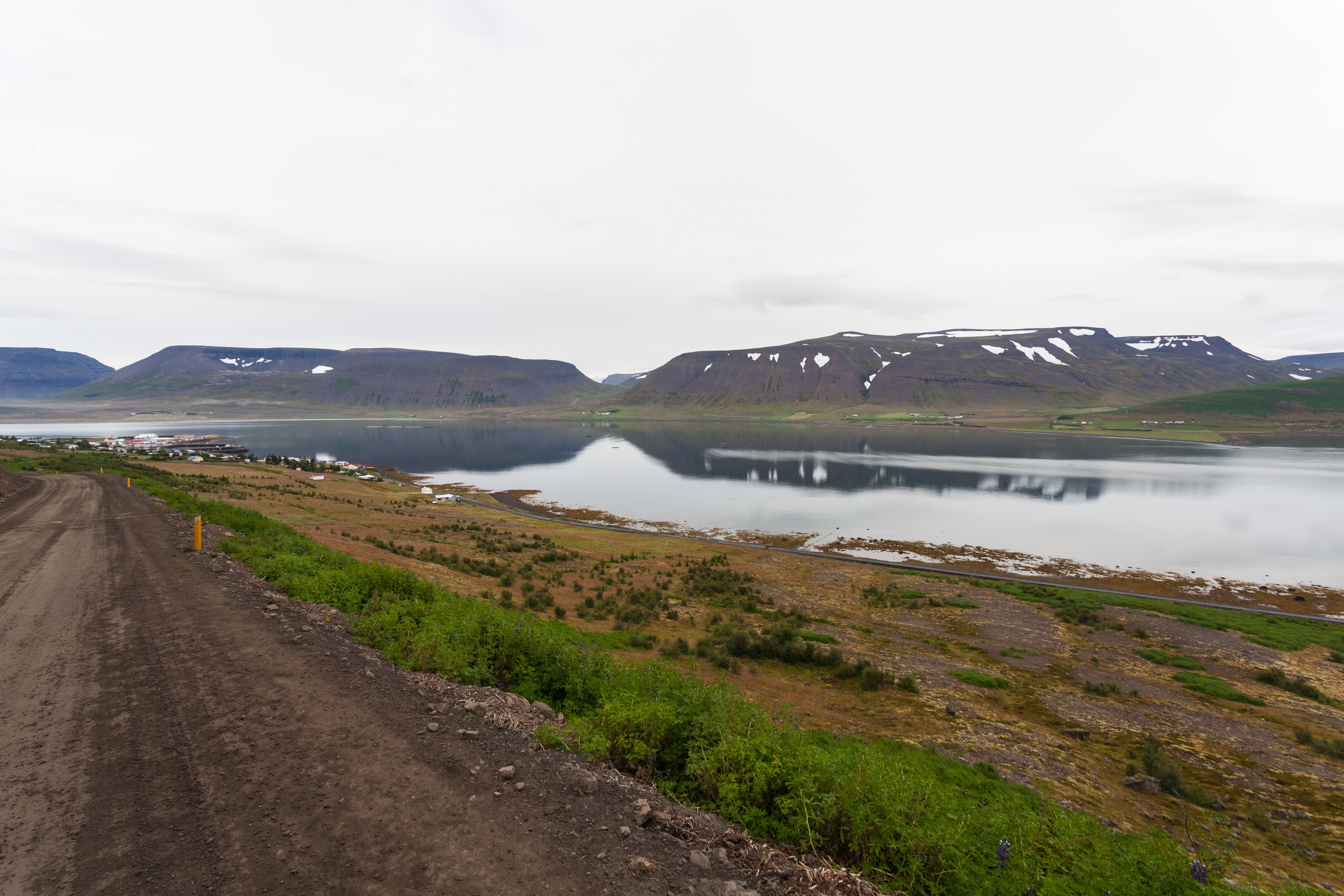
Remote Icelandic peninsula of deep fjords, winding roads, and sea cliffs reaching toward Greenland
The Westfjords — Vestfirðir in Icelandic — are a rugged peninsula in Iceland's northwest, a tangle of deep fjords and mountains that is the country's least visited and most dramatic region. The peninsula juts into the sea between the Greenland Sea and the Denmark Strait, connected to the rest of Iceland by a neck of land barely 7 kilometres wide. This near-isolation has shaped everything about it: the roads are slow and winding, the population is small, and the landscape is relentless.
The Westfjords have the longest coastline of any region in Iceland — the endlessly folded fjord coastline means that driving the perimeter takes days. Most visitors come for the big set pieces: Dynjandi, the tiered waterfall that drops 100 metres into the sea in a series of diminishing falls; Látrabjarg, the westernmost point in Europe, where kilometres of sea cliffs host Iceland's largest puffin colony; and Rauðasandur, a beach of rust-red sand impossible to believe is real until you stand on it. The uninhabited Hornstrandir nature reserve, accessible only by boat from Ísafjörður, offers one of the most remote hiking experiences in Europe.
Ísafjörður is the region's only real town, with around 2,600 people, a surprising concentration of good food, and an airport with one of the more dramatic landing approaches in commercial aviation. The Westfjords Heritage Museum there is excellent. Hólmavík in the south has a museum dedicated to Icelandic witchcraft and sorcery that is genuinely interesting. The hot springs at Drangsnes and Grettislaug can be reached by those willing to drive the mountain roads.
Getting here takes effort. The drive from Reykjavik is at least five hours in good conditions, much of it on narrow single-lane roads with steep switchbacks. Domestic flights to Ísafjörður take 40 minutes and offer views that justify the ticket price. Some fjords can only be crossed by seasonal ferry, cutting hours off overland routes. The region rewards the journey.
Guide
Getting Around
A car is necessary for any real exploration of the Westfjords. The main ring road of the region (Route 60) connects Ísafjörður to Hólmavík in the south, but the highlights — Dynjandi, Látrabjarg, Rauðasandur — require detours on slower roads. Many of these are unpaved and require a vehicle with reasonable ground clearance; a small hatchback will manage in summer, but a 4WD is more comfortable.
Distances are deceptive. The fjord coastline means that places that look close on a map can take an hour or more by road, following fjord walls rather than cutting across. The seasonal Vestfjarðaferðir ferry service connects some fjords in the north of the region during summer, saving significant driving time and providing a practical alternative to backtracking.
Petrol stations are widely spaced; fill up whenever possible. Ísafjörður, Patreksfjörður, and Hólmavík are the main service points.
Guide
Getting There
By air: Eagle Air operates domestic flights from Reykjavik's domestic airport (Reykjavík Airport) to Ísafjörður Airport. The flight takes about 40 minutes, costs considerably less than a rental car plus fuel, and the approach between the mountains is itself worth experiencing. Flights connect to Bíldudalur in the southern Westfjords.
By car: The drive from Reykjavik to Ísafjörður takes about five to six hours in summer via the Ring Road and Route 60. Much of the route involves mountain roads and single-lane sections; a normal car is fine in summer but a 4WD is advisable for mountain passes in September and essential from October onwards. GPS is useful; coverage varies in remote fjords.
By ferry: The Baldur ferry crosses Breiðafjörður from Stykkishólmur (Snæfellsnes) to Brjánslækur in the south Westfjords in about 2.5 hours, cutting driving time to the southern attractions significantly. It runs twice daily in summer (June to mid-August) and once daily in late summer.
Guide
When to Go
The Westfjords have a narrow window of genuinely good visiting weather. Mid-June through August offers the most reliable conditions and nearly permanent daylight — the sun doesn't fully set at this latitude in midsummer, giving long evening light for photography and driving. The puffin colonies at Látrabjarg are at their most active in June and July; Hornstrandir boat trips run June through mid-August.
September sees the first autumn colours and fewer visitors, but weather becomes unpredictable and some mountain roads close early. Winter travel is possible but demanding — many roads are closed or impassable, ferry services reduce, and conditions can be severe. The compensations are northern lights on clear nights and a level of solitude that summer can't match. Come from mid-June to late July for the best combination of accessible roads, active wildlife, and light.